July 31, 2026
How to Use a Snuffle Mat for Dogs: Feeding & Safety Guide
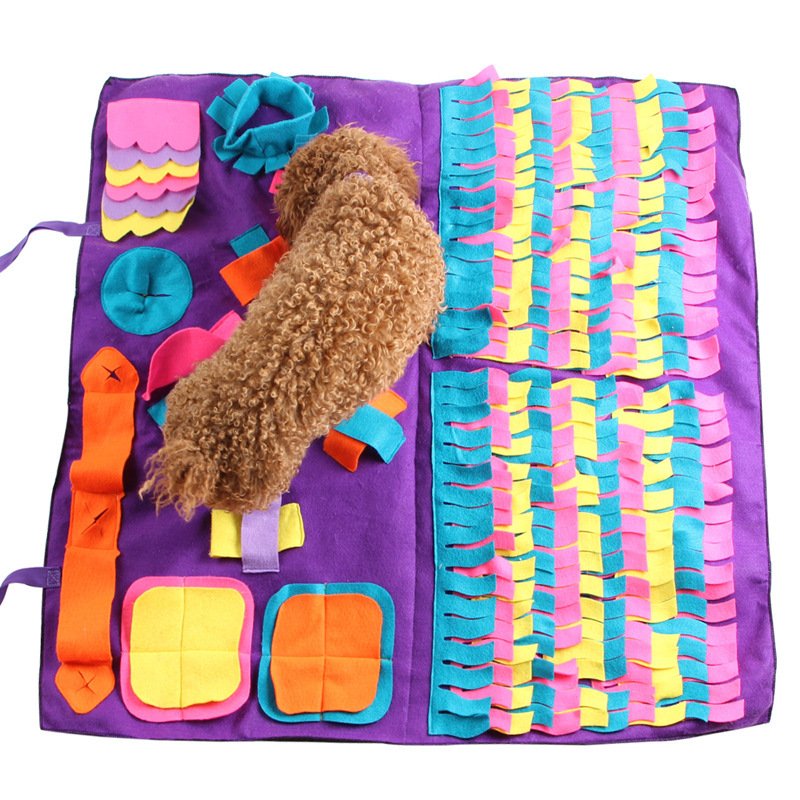
A snuffle mat turns dry food into a simple scent-searching activity. Instead of eating from an open bowl, a dog uses the nose to locate pieces hidden between fabric folds, pockets and textures.
This guide explains how to use a snuffle mat for dogs, how much food to hide, how to introduce the game, when it is unsuitable and how to clean and store it safely.
How to use a snuffle mat: quick answer
- Place the clean mat flat on a non-slip floor.
- Sprinkle a small amount of familiar dry kibble visibly on top.
- Give a release cue and supervise the search.
- End the session if sniffing changes to pulling or chewing fabric.
- Pick up the empty mat immediately.
- Remove crumbs, wash as instructed and dry fully.
What is a snuffle mat?
A snuffle mat is a fabric feeding puzzle designed to hide small pieces of dry food. The American Kennel Club describes snuffle mats as a way to encourage sniffing and foraging, while recommending supervision, separating multiple dogs and counting the food to avoid overfeeding.
It can add enrichment and slow access to individual pieces, but it is not a chew toy, a substitute for walking or a guaranteed treatment for stress.
How to introduce a snuffle mat
1. Make the first search easy
Place a few pieces on top where they are visible. Let the dog discover that calm sniffing finds food.
2. Add a clear start cue
Ask the dog to wait while you prepare it, place the mat down and use a cue such as “find it”. This keeps fingers away once searching begins.
3. Increase difficulty gradually
Move a few pieces deeper only after the dog searches without biting, flipping or becoming frustrated.
4. Keep sessions short
Finish while the dog is still successful. Remove the mat when food is gone so the fabric does not become a chewing activity.
What food can go in a snuffle mat?
Use small, dry pieces that are easy to find and do not smear into fabric. The dog’s measured kibble is often the simplest choice. Dry training treats can be used sparingly and still count toward daily calories.
Avoid wet, oily or sticky foods unless the exact mat is designed for them and will be washed immediately. A lick mat is generally better for spreadable food.
How much food should you hide?
Start with a handful taken from the dog’s normal ration, not an unmeasured layer of extra treats. A snuffle mat changes delivery, not nutritional requirements. Measure the full daily allowance first and subtract what goes into enrichment.
Dogs with prescription diets, allergies, pancreatitis, diabetes or weight-management plans need veterinarian-approved food choices.
Is a snuffle mat good for dogs that eat too fast?
Searching for individual pieces can slow delivery for some dogs. It is one option among several and may not suit dogs that grab mouthfuls of fabric or guard food. Compare approaches in our guide to slowing down a dog that eats too fast.
Snuffle mat safety checklist
- Supervise the entire session.
- Use a stable surface and stop the mat sliding.
- Separate pets to prevent competition.
- Remove it if the dog chews, shakes or tears fabric.
- Inspect stitching and detachable pieces before each use.
- Discard damaged material; do not offer loose fabric strips.
- Do not leave it in a crate with an unattended dog.
- Contact a veterinarian if any material may have been swallowed.
Which dogs should not use one?
A fabric snuffle mat may be unsuitable for persistent fabric chewers, dogs with pica, dogs that swallow objects or dogs showing severe food guarding. Puppies need particularly close supervision. A dog recovering from surgery or with neck, breathing or mobility concerns may need a feeding position recommended by a veterinarian.
How to clean a snuffle mat
- Shake out every loose crumb after use.
- Check pockets and folds by hand.
- Follow the product’s washing instructions.
- Use a suitable mild detergent and rinse thoroughly.
- Reshape detachable sections if required.
- Air-dry completely before storing.
Saliva and food residue make routine washing necessary. Do not store it damp or return it to the dog when fabric smells stale, shows mould or has loose stitching.
Snuffle mat vs lick mat vs puzzle feeder
| Tool | Best food type | Main activity |
|---|---|---|
| Snuffle mat | Small dry kibble or treats | Sniffing and foraging |
| Lick mat | Spreadable wet food | Repeated licking |
| Puzzle feeder | Compatible dry pieces | Nudging and problem-solving |
| Slow-feeder bowl | Food approved for the bowl | Eating around fixed obstacles |
Frequently asked questions
Can a dog use a snuffle mat every day?
Yes, when sessions remain supervised, food is measured and the mat is cleaned and inspected. Rotate other activities to keep enrichment varied.
How long should a session last?
There is no required duration. End when the measured food is gone, the dog loses interest or safe sniffing changes to chewing.
Can puppies use snuffle mats?
They can use an appropriately designed mat under close supervision. Begin easy and remove it immediately if the puppy mouths or pulls fabric.
Why does my dog flip the mat?
The search may be too difficult or flipping may have been rewarded by food falling out. Use fewer pieces on top, hold the mat stable and reward nose work.
Does sniffing tire a dog out?
Scent activities provide mental engagement, but they do not replace suitable exercise, rest, training or veterinary care.
Build difficulty gradually
Begin with food visible on top of the fabric. When the dog searches calmly, hide a few pieces more deeply and spread them across a wider area. Use part of the normal meal rather than unmeasured extras, supervise throughout and put the mat away as soon as searching becomes chewing or fabric pulling.
This article provides general enrichment guidance and does not replace veterinary or behavioural advice.