July 31, 2026
Why Is My Cat Active at Night? Causes & Calm Routine
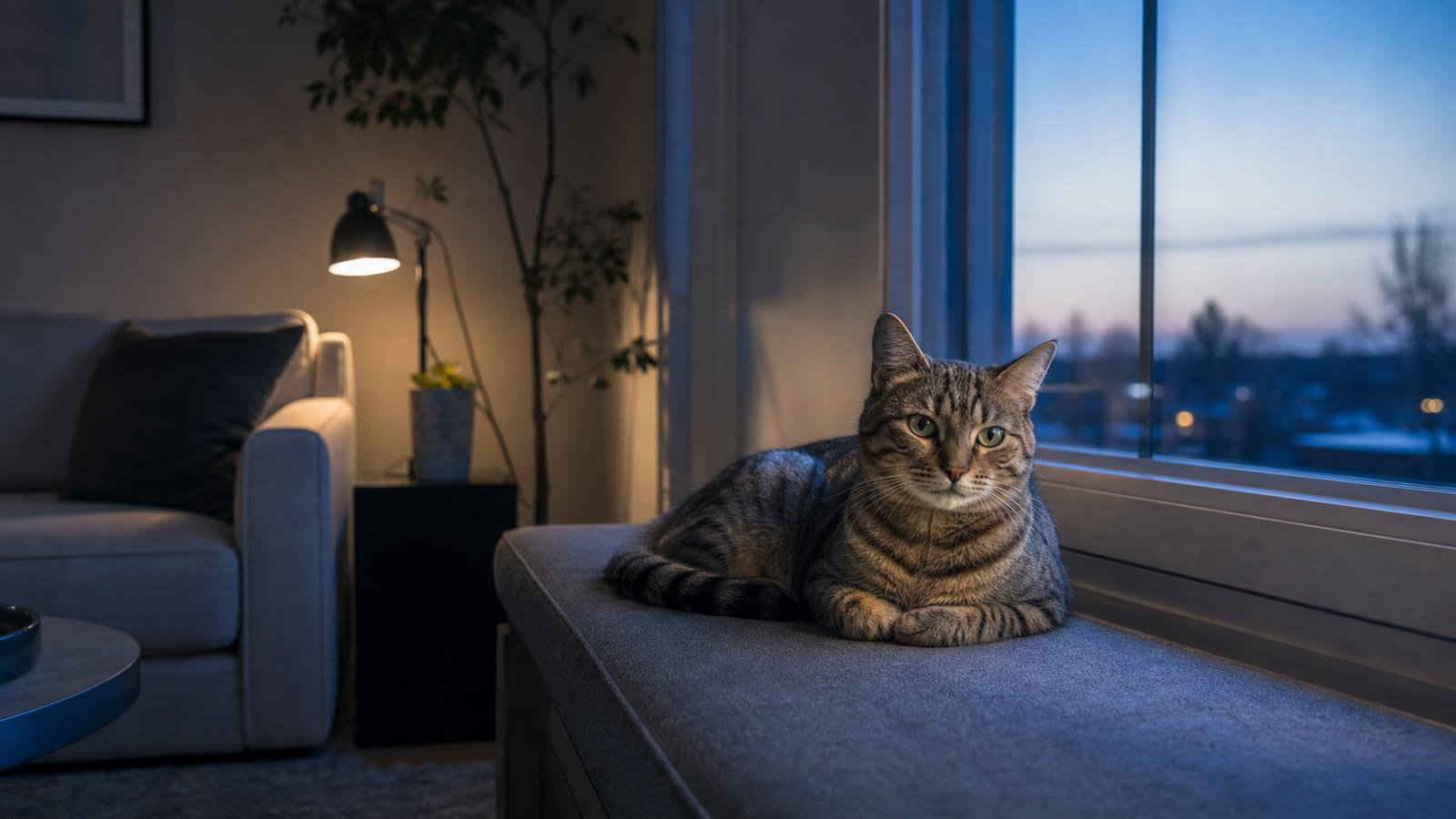
Cats are often most active around dawn and dusk. That natural rhythm can turn into night-time running, scratching, meowing or an early-morning wake-up call, but the behaviour is not always “just a cat being a cat”. Hunger, an unrewarding daytime routine, stress and health changes can also contribute.
This guide explains why your cat is active at night, how to identify the likely cause and how to build a calmer routine without punishment.
Why is my cat active at night?
Cats are crepuscular, meaning activity naturally rises near dawn and dusk. Indoor cats may also sleep through a quiet day and seek food, play or attention when people go to bed. A sudden change, persistent crying or restlessness in an older cat should be assessed by a veterinarian.
Seven common reasons cats wake people at night
- Natural activity pattern. Sunrise and sunset are normal high-activity periods.
- Stored energy. Long quiet days can shift play and exploration into the night.
- Hunger or learned feeding cues. Food given after meowing can teach the cat that waking you works.
- Attention. Talking, getting up or pushing the cat away can still reward the behaviour.
- Environmental triggers. Outdoor cats, wildlife, lights or noises may prompt watching and vocalising.
- Stress. Changes in people, pets, schedule or territory can disrupt sleep.
- Health or ageing. Pain, thyroid disease, sensory change or cognitive dysfunction can cause restlessness.
Cats Protection explains that cats are naturally more active at dawn and dusk and recommends ruling out medical causes when night waking or crying becomes a concern.
How to build a calmer evening routine
- Schedule an interactive play session before the household winds down.
- Let the cat stalk, chase and catch a safe toy rather than simply watching it move.
- Follow play with part of the measured evening meal.
- Provide fresh water, a clean litter tray, a comfortable bed and safe elevated spaces.
- Close blinds if outdoor movement triggers prolonged watching or agitation.
- Keep bedtime and morning routines consistent.
Do not attempt to “exhaust” a cat with one extreme session. Several short, predictable opportunities to play during the day are more appropriate.
Should you ignore night-time meowing?
First confirm that essential needs are met and there is no health problem. Once medical and welfare causes are excluded, responding inconsistently can maintain attention-seeking behaviour. Avoid shouting, spraying water or frightening the cat. Punishment adds stress and does not teach a useful alternative.
If hunger is the pattern, divide the normal daily food allowance into smaller meals. Do not add unmeasured calories. A timed feeding schedule can separate food delivery from waking a person, but diet changes should respect the cat’s health plan.
When night activity needs veterinary advice
- The change is sudden or escalating.
- An older cat appears confused or cries in unfamiliar places.
- There is increased thirst, hunger, weight loss or toileting change.
- The cat seems painful, breathless or unable to settle.
- Vocalising accompanies vomiting, weakness or reduced appetite.
Frequently asked questions
Are cats nocturnal?
Domestic cats are better described as crepuscular: they often become more active around dawn and dusk rather than remaining active all night.
Why does my cat run around at 3 a.m.?
The cat may have stored energy, encountered a trigger or learned that night activity earns attention. Review daytime enrichment and the evening routine.
Should I keep my cat out of the bedroom?
That is a household choice, but apply the boundary consistently and ensure the cat has comfortable sleeping, water and toileting options elsewhere.
Will feeding later stop early waking?
It may help when hunger is the cause. Keep the total daily portion unchanged and look for other reasons if the pattern continues.
Why has my senior cat started yowling at night?
Pain, sensory decline, thyroid disease and cognitive changes are among the possibilities. Arrange a veterinary assessment rather than assuming it is normal ageing.
This educational article is not a diagnosis. Seek veterinary advice for sudden behaviour change, distress or other symptoms.