July 31, 2026
Why Does My Dog Follow Me Everywhere? 9 Reasons
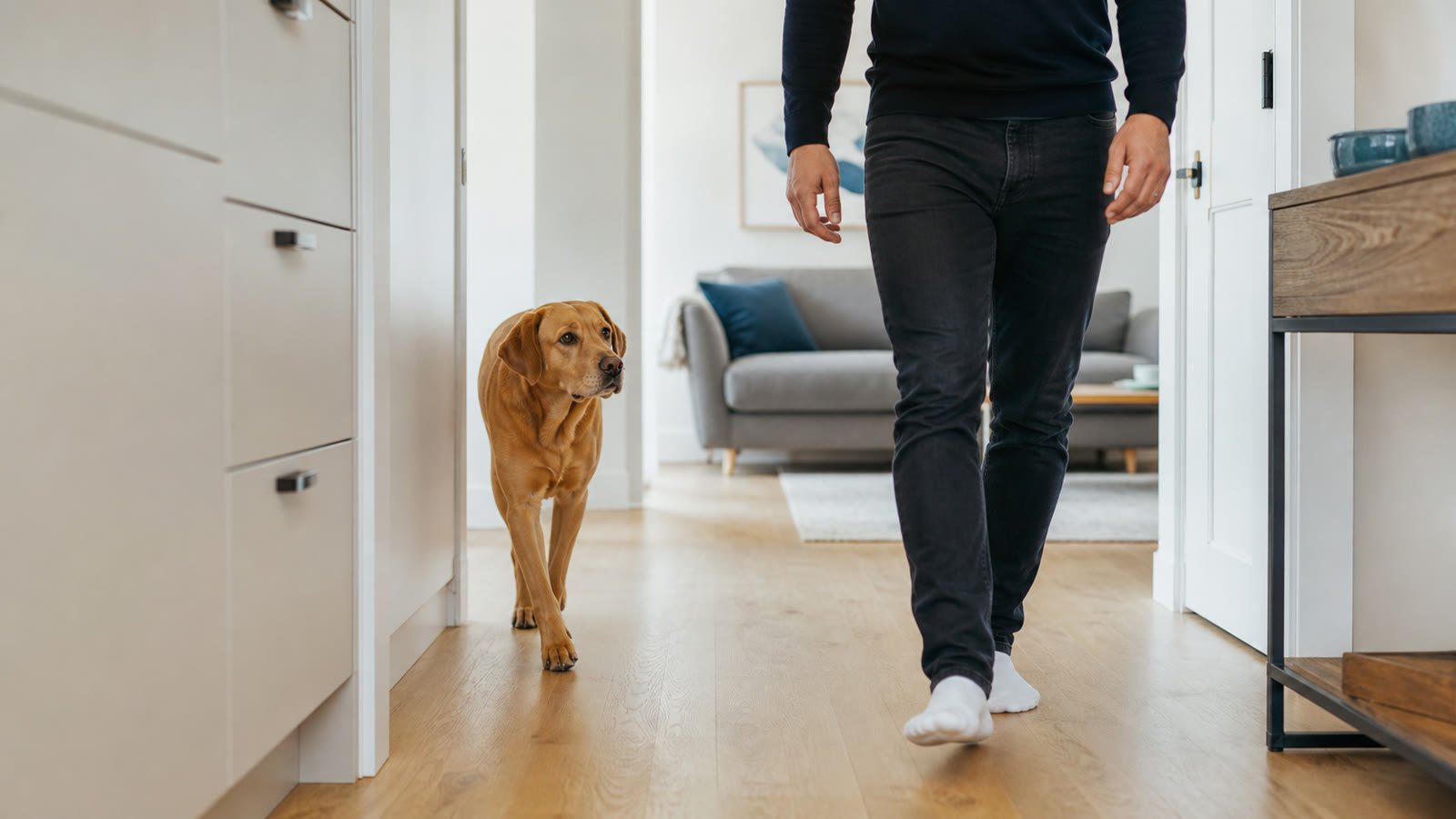
A dog following you from room to room is often expressing attachment, habit or simple curiosity. For some dogs, staying close is part of a relaxed relationship. For others, constant shadowing reflects uncertainty, a learned expectation of food or attention, or discomfort that deserves investigation.
This guide answers why does my dog follow me everywhere, shows how to distinguish a sociable “Velcro dog” from separation-related distress and explains how to build independence without rejecting the dog.
Why does my dog follow me everywhere?
Dogs follow people because proximity has repeatedly led to food, walks, play, security or useful information. Breed traits, age and previous experiences can strengthen the habit. Following is not automatically separation anxiety: the key question is whether the dog can relax when you are elsewhere and cope when left alone.
Nine common reasons your dog stays close
- Social attachment. Dogs are social animals and many naturally prefer company.
- Reinforcement. If following produces eye contact, food or access, it becomes worthwhile.
- Routine prediction. Your movement may signal a meal, walk, door opening or bedtime.
- Working history. Some dogs were selected to cooperate closely with people.
- Age. Puppies seek guidance; older dogs may rely more on familiar people.
- Uncertainty. A new home, visitor or schedule may make proximity feel safer.
- Boredom. When little else is available, following becomes the day’s main activity.
- Sensory change. Reduced sight or hearing can increase dependence.
- Pain or illness. A sudden need for closeness can accompany discomfort.
The American Kennel Club notes that reinforcement, breed history, early experience and health can all influence following. A sudden behavioural change is a good reason for a veterinary check.
Velcro dog or separation anxiety?
| Relaxed preference for company | Possible separation-related distress |
|---|---|
| Follows you but can settle on a bed | Cannot settle as departure cues begin |
| Eats, rests and plays when another person is present | Pants, paces, vocalises or tries to escape |
| Accepts a closed door after gradual practice | Panics, damages exits or toilets when alone |
| Recovers normally when you leave the room | Remains intensely distressed through the absence |
Destruction alone does not prove anxiety; boredom and access to tempting items can also cause it. A camera can reveal what happens after departure, but footage should be interpreted with a veterinarian or qualified behaviour professional when distress is suspected.
How to encourage healthy independence
- Meet needs first. Provide appropriate exercise, sniffing, toileting, food and social contact.
- Create a comfortable station. Teach the dog that a bed or mat predicts calm rewards.
- Reward staying, not only following. Quietly place a reward when the dog remains relaxed as you move a step away.
- Build distance gradually. One step, one second and one doorway are legitimate starting points.
- Share caregiving. Where possible, let other trusted adults provide walks, meals and play.
- Protect rest. Dogs need uninterrupted sleep and should not feel obliged to monitor every movement.
- Practise tiny absences. Return before concern appears, then increase duration slowly.
Independence training should feel easy. If the dog stops eating, gets up repeatedly, stares at the exit or vocalises, the step was too difficult.
Habits that accidentally increase shadowing
- Giving a snack every time the dog enters the kitchen behind you
- Only offering attention after nudging, barking or pawing
- Calling the dog to follow for every movement around the home
- Increasing absence from seconds to hours without preparation
- Physically shutting the dog away while it is already distressed
You do not need to ignore the dog throughout the day. Predictable shared time and predictable independent time create a clearer routine than alternating constant attention with abrupt isolation.
When should you contact a veterinarian?
Arrange an assessment when following begins suddenly, especially with appetite change, drinking change, restlessness, pain, confusion, altered sleep, reduced vision or hearing, or reluctance to be touched. For separation-related panic, ask about referral to a clinical or accredited behaviour professional.
Frequently asked questions
Why does my dog follow me into the bathroom?
The bathroom is simply another place you go, and following has likely become part of the routine. It does not by itself indicate a problem.
Why does my dog follow one person most?
That person may provide the most valued resources, have the most predictable behaviour or match the dog’s preferred interaction style.
Should I stop my dog following me?
Not completely. The goal is choice and emotional flexibility: enjoying company while also being able to rest independently.
Does following mean my dog is protecting me?
Usually no. Attachment, anticipation and habit are more common explanations. Guarding behaviour requires professional assessment.
Why is my senior dog suddenly clingy?
Pain, sensory decline, cognitive change or another health problem may be involved. Schedule a veterinary examination.
Can following become separation anxiety?
Following does not automatically progress to anxiety, but a dog that never practises comfortable independence may struggle with unavoidable absences.
This article provides general behavioural education and is not a diagnosis. Seek professional help for sudden change, distress or safety concerns.