September 23, 2026
Homemade Sweet Potato Chews for Dogs
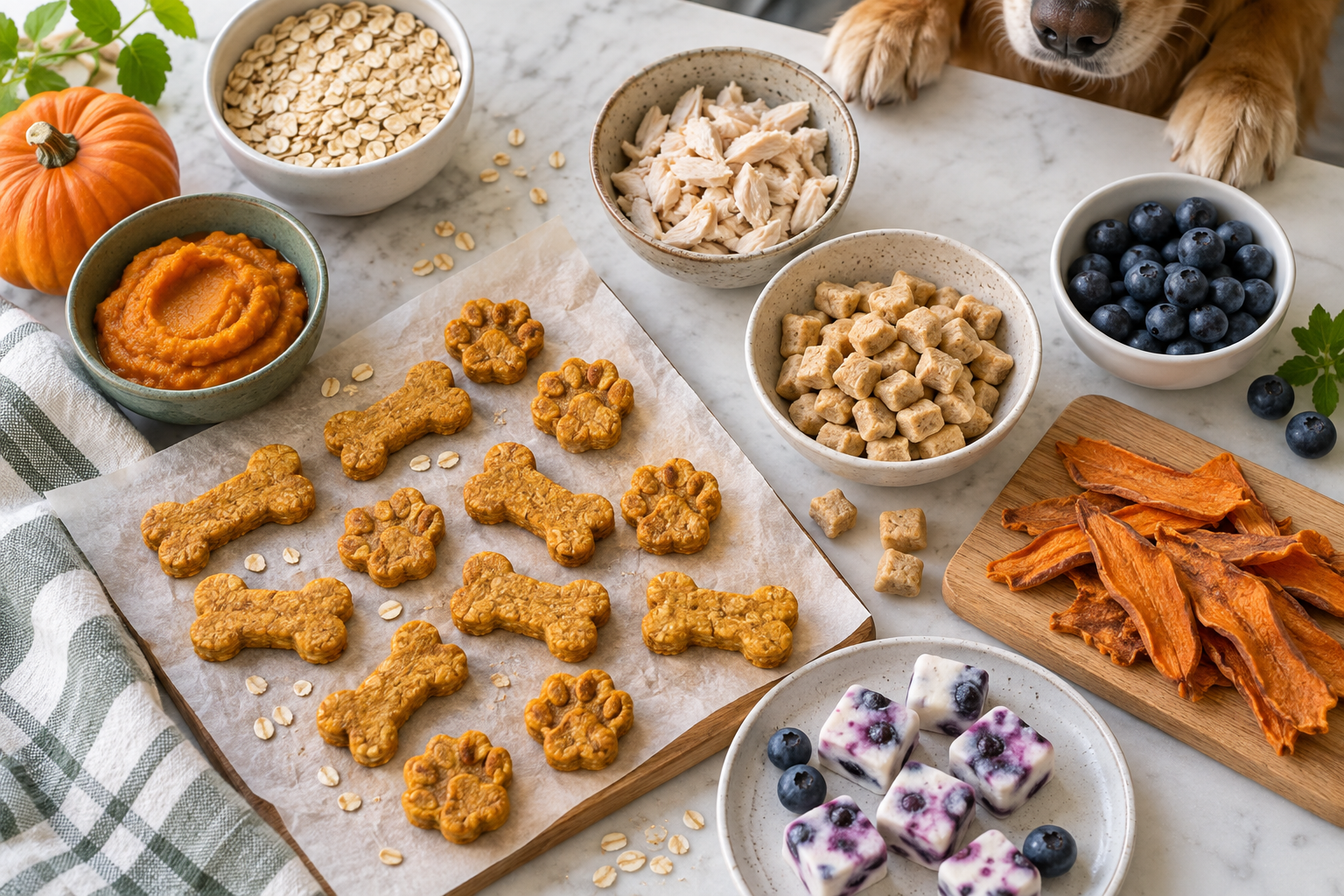
Single-ingredient baked sweet potato chews with guidance on slicing, drying and safe serving.
This recipe is not formulated to replace balanced dog food. Keep all treats and extras to 10% or less of daily calories unless your veterinarian gives a different plan.
Ingredients
- 1 medium sweet potato, scrubbed
How to make homemade sweet potato chews for dogs
- Heat the oven to 250°F (120°C).
- Slice the potato lengthwise into pieces about 1/4 inch thick; keep the slices even.
- Arrange in one layer on a parchment-lined tray.
- Bake 2–3 hours, turning halfway, until dry at the edges but still slightly flexible. Cool completely.
Portion guide
Begin with one piece no larger than your dog’s usual training reward. Break treats smaller for little dogs and account for every piece in the daily treat allowance. The practical limit depends on body size, usual food, activity and medical history. When introducing any new ingredient, offer one small piece and observe appetite, stool, skin and behaviour before offering it again.
Storage and food safety
Refrigerate up to 5 days; freeze extras. Discard any moist chew that smells altered or develops mould. Label the container with the recipe and date. Use clean hands, separate raw animal ingredients from ready-to-eat food and wash bowls, boards and utensils promptly.
Poultry should reach 165°F (74°C), fish 145°F (63°C), ground meat 160°F (71°C), and egg dishes 160°F (71°C). A thermometer is more reliable than colour. Cool cooked treats promptly and never leave moist meat-based treats at room temperature for extended periods.
Before you offer the first piece
- Check every packaged ingredient for onion, garlic, chives, xylitol, excess salt and added flavourings.
- Do not use this recipe during an elimination diet unless the veterinarian supervising that trial approves every ingredient.
- Ask first if your pet has pancreatitis, kidney disease, diabetes, urinary disease, food allergy, gastrointestinal disease or a prescription diet.
- Stop and seek veterinary advice for repeated vomiting, diarrhoea, facial swelling, marked itching, weakness or breathing difficulty.
Recipe note
These are treats, not dental chews. Supervise and choose a piece too large to swallow whole.
Frequently asked questions
Can this replace a meal?
No. It does not contain the complete balance of amino acids, fats, vitamins and minerals required for long-term feeding. A home-prepared main diet needs an individual recipe from a board-certified veterinary nutrition specialist.
How many can I give?
There is no universal piece count because the size and calories of homemade treats vary. Keep pieces tiny, weigh ingredients when possible and keep all extras within 10% of daily calories.
Can I change the ingredients?
A substitution changes texture, calories and suitability. Do not improvise with sweeteners, seasoning, stock, flavoured spreads or mixed baby foods. When an allergy or medical condition is involved, ask your veterinarian.
What foods should never be added?
Do not add chocolate, caffeine, alcohol, grapes, raisins, onion, garlic, chives, macadamia nuts, xylitol, raw yeast dough or cooked bones. Avoid unnecessary salt, sugar and fat.
Educational recipe for healthy adult pets. Individual veterinary advice takes priority.