July 31, 2026
Signs of Stress in Cats: Body Language & Home Checklist
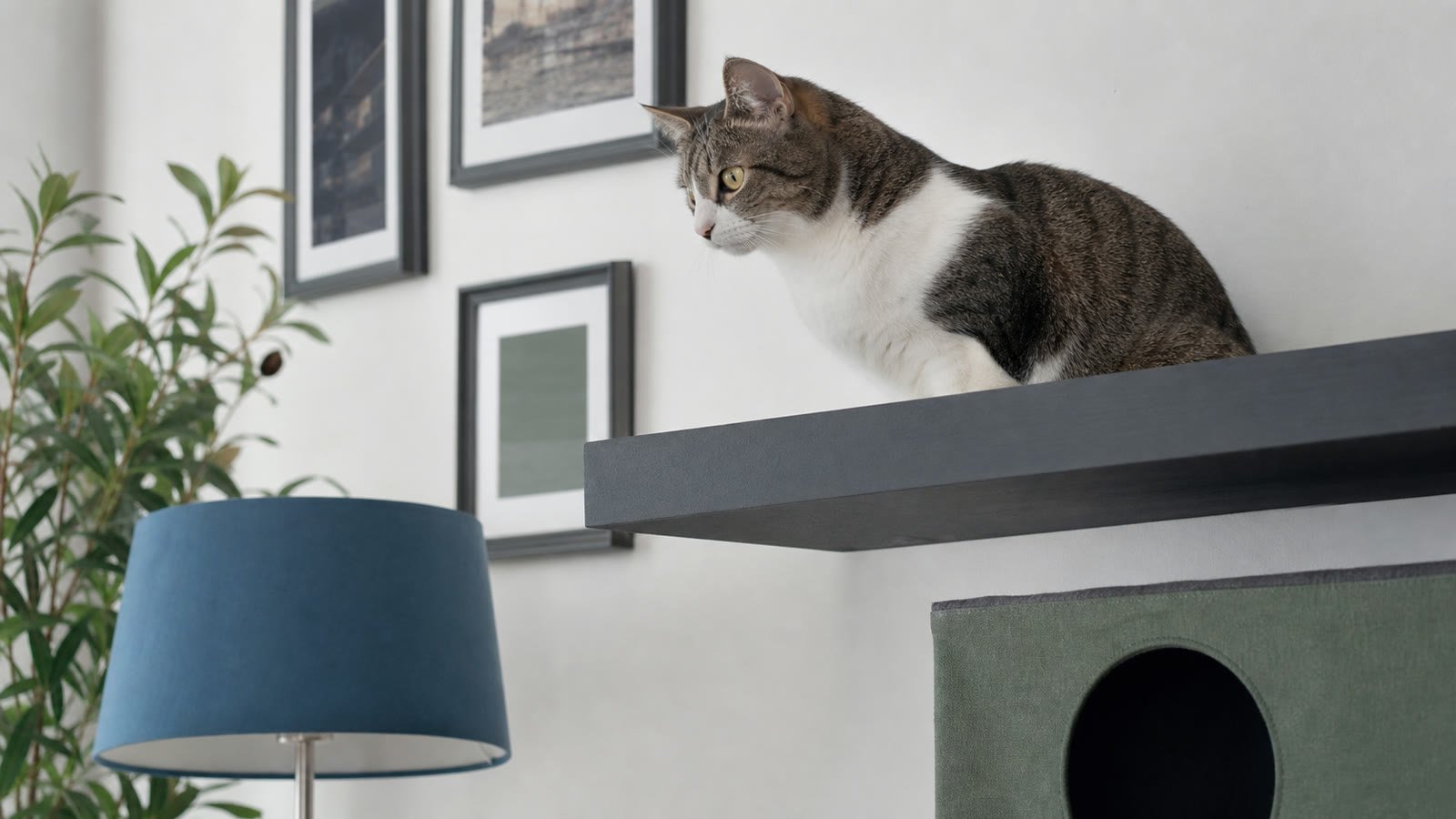
Cats often respond to pressure by becoming quieter, hiding or changing routines rather than making their discomfort obvious. Stress can be brief and adaptive, but persistent stress affects welfare and may accompany medical problems.
This guide explains signs of stress in cats, common triggers, the difference between acute and chronic patterns, how to audit the home and when veterinary care is needed.
What are the signs of stress in a cat?
Possible signs include hiding, flattened or rotated ears, wide pupils, a tense crouch, reduced play, appetite or toileting change, overgrooming, scratching or spraying in new places, conflict and increased vigilance. No single sign proves stress. Pain and illness can look similar, so sudden or physical changes need veterinary assessment.
Acute stress body language
- Crouched body with weight shifted back
- Ears flattened or rotating toward sounds
- Wide pupils outside low-light conditions
- Whiskers pushed forward or held tightly back
- Tail wrapped close, twitching or lashing
- Freezing, fleeing, hissing or swatting
- Rapid breathing unrelated to heat or exertion
Cats Protection notes that cats can hide signs of stress and pain. Body language must be interpreted in context: large pupils can also reflect dim light, play or disease.
Subtle signs of chronic stress
- Spending more time hidden or high up
- Moving only when the home is quiet
- Reduced appetite or eating very quickly
- Overgrooming, hair thinning or poor coat care
- Spraying, scratching or toileting outside usual areas
- Playing less or losing interest in interaction
- Sleeping in a tense posture rather than relaxed positions
- Becoming irritable during handling
- Blocking or being blocked by another cat
- Repeatedly scanning windows, doors or corridors
Common triggers in the home
- A new cat, dog, baby, visitor or household member
- Conflict between cats sharing space
- Neighbourhood cats visible through windows
- Building work, loud appliances or unpredictable noise
- Moving furniture or removing familiar scent
- Too few separated litter, food, water, rest and scratching resources
- Forced handling, restraint or unwanted attention
- Boredom and lack of hiding or climbing opportunities
- Changes in feeding or caregiver routine
Stress or medical problem?
Do not assume a physical sign is behavioural. Appetite loss, vomiting, diarrhoea, weight change, excessive thirst, urinary changes, breathing change, skin damage, limping and pain require veterinary investigation. Stress and illness can also interact: discomfort creates stress, while stress may worsen some conditions.
Straining to urinate or producing no urine is an emergency, especially in male cats.
A room-by-room welfare audit
Resources
Provide food, water, litter, scratching, resting and hiding options in separate locations. In multi-cat homes, duplicate and distribute them so no cat can guard everything.
Escape and height
Every important room should offer a route away and, where safe, an elevated option. Dead ends increase vulnerability.
Scent
Avoid washing all bedding simultaneously or adding strong fragrance. Familiar scent helps a territory feel predictable.
Windows
Use privacy film or close blinds at the height where outdoor cats trigger vigilance, without removing all access to daylight and views.
Routine
Keep meals and essential care predictable. Introduce unavoidable changes gradually where possible.
How to help a stressed cat
- Arrange a veterinary check for new or persistent change.
- Identify when and where the behaviour occurs.
- Remove or reduce the trigger without forcing exposure.
- Add safe hiding places and high resting locations.
- Separate competing resources.
- Let the cat initiate contact and leave freely.
- Use short, predictable play matched to the cat’s preference.
- Track appetite, toileting, sleep and behaviour daily.
- Ask for referral to a qualified feline behaviourist if needed.
What not to do
- Do not pull a hiding cat out.
- Do not punish hissing, scratching, spraying or toileting.
- Do not force cats to share beds, bowls or litter boxes.
- Do not introduce a new pet face to face immediately.
- Do not rely on a calming product while leaving the trigger unchanged.
How to keep a stress diary
A short daily record can reveal patterns that memory misses. Note appetite, water intake, litter use, hiding, grooming, play, social contact and unusual events. Record where and when the behaviour occurred rather than labelling the cat as anxious. “Stayed under the bed for three hours after builders arrived” is more useful than “had a bad day.” Photos or short videos of posture can help a veterinarian, provided filming does not intrude.
Also log changes that seem unrelated: new cleaning products, furniture moves, outdoor cats at a window, altered work hours or one household member being away. Review the record weekly. Improvement may appear as faster recovery and more normal routines before the original sign disappears completely.
Stress in multi-cat homes
Conflict is often subtle. One cat may stare, block a doorway, occupy the route to a litter tray or consistently displace another from a resting place without obvious fighting. Resources placed side by side count as one location, not several independent choices. Spread litter trays, water, food, scratching and resting areas across the territory, including routes that do not force one cat to pass another.
Do not assume cats sharing a sofa are bonded. Look for mutual grooming, relaxed physical contact and reciprocal approaches. Each cat should still have private options. When tension continues, a veterinarian should exclude illness before a qualified feline behaviour professional assesses the social arrangement.
Helping a cat through predictable change
For a move, renovation or new family member, prepare a quiet base room in advance with familiar bedding and essential resources. Preserve feeding times and scent where possible. Introduce new spaces or people in small, voluntary steps and let the cat retreat. Synthetic pheromone products may support some cats, but they do not replace adequate resources, pain assessment or environmental change.
Recovery is rarely perfectly linear. A noisy day may temporarily increase hiding even when the overall trend is improving. Judge progress across weeks and prioritise the cat’s ability to choose distance, height and concealment.
Frequently asked questions
How can you tell if a cat is stressed or just hiding?
Consider duration, context and other changes. Normal resting in a favourite hide differs from sudden prolonged withdrawal with appetite or toileting change.
Can indoor cats become stressed?
Yes. Conflict, lack of control, noise, boredom and insufficient resources can affect indoor cats.
Does purring mean a cat is relaxed?
Not always. Cats may purr during discomfort, so assess posture, context and health.
How long does cat stress last?
Brief recovery may occur after a single event, while ongoing triggers sustain stress. Persistent change needs investigation.
Can stress make a cat sick?
Stress can affect welfare and interact with health, but symptoms still need veterinary diagnosis.
Should I get another cat for company?
Not automatically. Cats do not universally want feline companionship, and another cat may increase pressure.
Contact a veterinarian promptly for physical symptoms, appetite loss, urinary change or sudden behaviour change.