July 31, 2026
How to Stop a Dog Jumping on People: Complete Training Plan
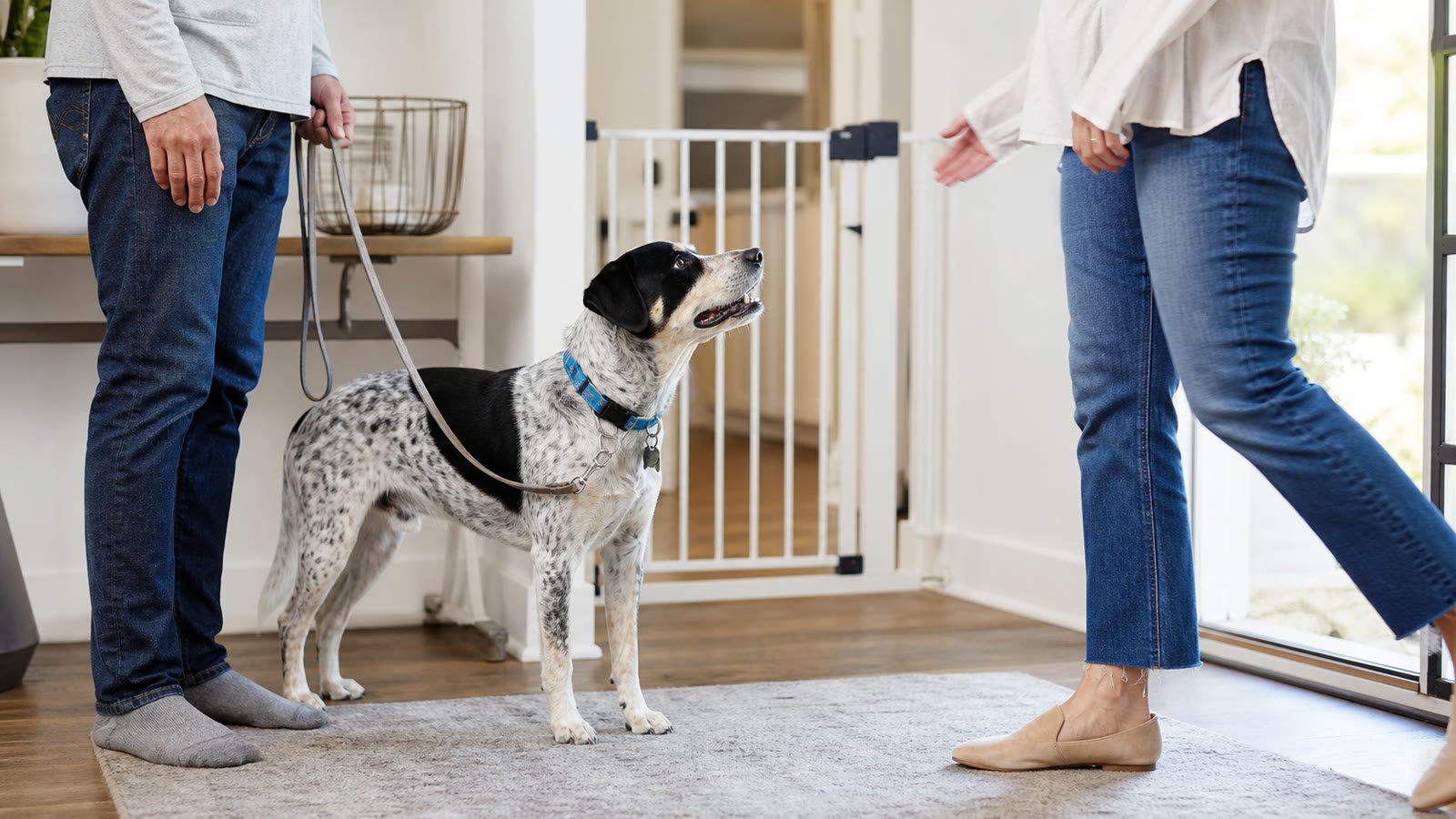
Dogs jump up because reaching a person’s face reliably creates interaction. Talking, touching, laughing, pushing and even scolding can all reward the behaviour. Effective training therefore has two parts: prevent rehearsal and teach a clear greeting that earns attention.
This guide explains how to stop a dog jumping on people at home, at the door and on walks using “four paws on the floor”, calm management and consistent practice.
How do you stop a dog jumping up?
Arrange enough distance or use a lead or barrier so jumping cannot occur. Reward the dog before its front feet leave the floor. If it jumps, the person calmly steps away; when four paws return to the ground, attention resumes. Practise with cooperative helpers before expecting success with strangers.
Why jumping becomes persistent
- Face-to-face contact is naturally social and exciting.
- People usually look, speak or touch when jumped on.
- Some visitors reward jumping while others punish it, making the rule unclear.
- The dog has practised the behaviour hundreds of times.
- Doorbells, leads and arrivals predict high arousal.
- The alternative behaviour has not been taught around distractions.
AKC guidance recommends preventing rehearsal and teaching an alternative greeting. Negative attention can still reinforce jumping, while pushing may feel like play.
Choose one greeting rule
“Do not jump” is not an action a dog can perform. Choose something observable: four paws on the floor, stand on a mat, or sit. Four paws down is often easiest for very excited dogs because sitting adds another criterion. Whichever rule you choose must apply to work clothes, weekend clothes, adults and consenting visitors.
Teach four paws on the floor
- Begin with the dog on a loose lead in a quiet room.
- A helper approaches only while all four paws remain down.
- Deliver small rewards to the floor before jumping begins.
- The helper briefly greets while rewards continue low.
- The helper steps away before the dog becomes too excited.
- If paws lift, the helper turns and creates distance without speaking.
- Repeat until calm approach itself predicts keeping feet down.
- Gradually reduce food frequency while maintaining access to greeting as the reward.
Teach sit for greetings
First make sit reliable without visitors. Then the helper begins several metres away. If the dog stands, the helper pauses or retreats. If the dog remains seated, the helper approaches and delivers calm attention. Do not physically push the dog into position.
Doorway management while training
- Use a secure gate, closed interior door or loose lead before opening the entrance.
- Ask visitors to message before arriving when possible.
- Prepare rewards away from the door.
- Let the guest enter and settle before the dog approaches.
- Use a mat at a comfortable distance rather than directly beside the threshold.
- End access if excitement exceeds the dog’s current skill.
What should visitors do?
Explain the rule before they enter: turn slightly sideways, avoid leaning over, keep hands still and greet only when paws are down. Children and older adults should remain behind a barrier until the dog is demonstrably calm. Nobody is required to greet a dog.
Training on walks
Prevent greetings with random strangers during early training. Move aside, reward attention and let the person pass. Later, use a helper who stops at a distance. Permission to approach is earned by loose-lead, four-paw behaviour. If the dog surges, increase distance rather than correcting harshly.
Why common corrections fail
| Response | Problem | Better option |
|---|---|---|
| Push the dog down | Touch can reward or start play | Remove attention and manage distance |
| Knee the chest | Risk of pain, fear or injury | Prevent approach and teach an alternative |
| Repeat “off” | Attention arrives after jumping | Reward before jumping begins |
| Allow it sometimes | Intermittent rewards make behaviour persistent | Use one consistent rule |
When excitement is actually fear or conflict
Jumping can accompany frantic licking, mouthing, barking or attempts to create distance. Observe the whole dog: tucked tail, pinned ears, avoidance, stiffness and refusal of food suggest the situation needs more space, not greeting practice. Sudden jumping or behaviour change also warrants a veterinary check.
A practical two-week training progression
During the first three days, practise only with one familiar person in a quiet room. Approach, reward four paws on the floor and step away before the dog jumps. On days four to seven, add a door sound or a second familiar person while keeping the lead and barrier ready. During the second week, rehearse with one informed visitor who agrees to follow the same rule. Real greetings should remain brief and easy.
Count successful repetitions, not minutes. Five calm approaches are more valuable than a long session in which jumping is rehearsed repeatedly. If performance deteriorates, reduce excitement by increasing distance, asking the visitor to become still or ending the exercise. Dogs do not generalise automatically, so practise with different people, clothing and locations only after the basic response is dependable.
Special considerations for puppies and large dogs
Puppies need management from the beginning because habits strengthened by hundreds of greetings become harder to change. Keep arrivals quiet and protect sleep; an overtired puppy often has less self-control. For large or powerful dogs, safety margins must be greater. Use sturdy barriers, a well-fitted walking setup and enough space that the handler is not pulled toward a guest.
Children, older adults and anyone with limited balance should not serve as training helpers until the dog can succeed reliably. Their safety takes priority over creating a realistic scenario. A qualified reward-based trainer can design staged practice where jumping has already caused injury.
How everyone in the household can stay consistent
Agree on one greeting cue and one consequence: calm behaviour makes attention continue; jumping makes attention pause. Put the rule somewhere visitors can see before entering. Consistency does not mean being harsh. It means making the desired behaviour predictable enough that the dog no longer needs to experiment. Reward frequently at first, then vary rewards gradually while preserving greetings, access and praise as everyday reinforcement.
Frequently asked questions
How long does it take to stop jumping?
Often weeks or months, depending on rehearsal history and consistency. Improvement should appear first in controlled practice.
Should I ignore my dog when it jumps?
Removing attention can help, but management and teaching what to do instead are essential.
Why does my dog jump only on guests?
Guests are less predictable and more exciting, and they may have rewarded jumping previously.
What if my dog mouths while greeting?
Increase distance, lower arousal and use professional reward-based help if mouthing is forceful or unsafe.
Can I hold the dog’s collar?
Collar restraint may increase frustration and create negative associations with arrivals. Use a prepared lead or barrier.
Is jumping aggressive?
Usually it is social excitement, but stiff posture, growling or threatening behaviour needs individual assessment.
Consult a qualified reward-based trainer or veterinary behaviour professional when greetings create safety risks.