July 31, 2026
How to Introduce a Cat to a Dog: Safe Step-by-Step Guide
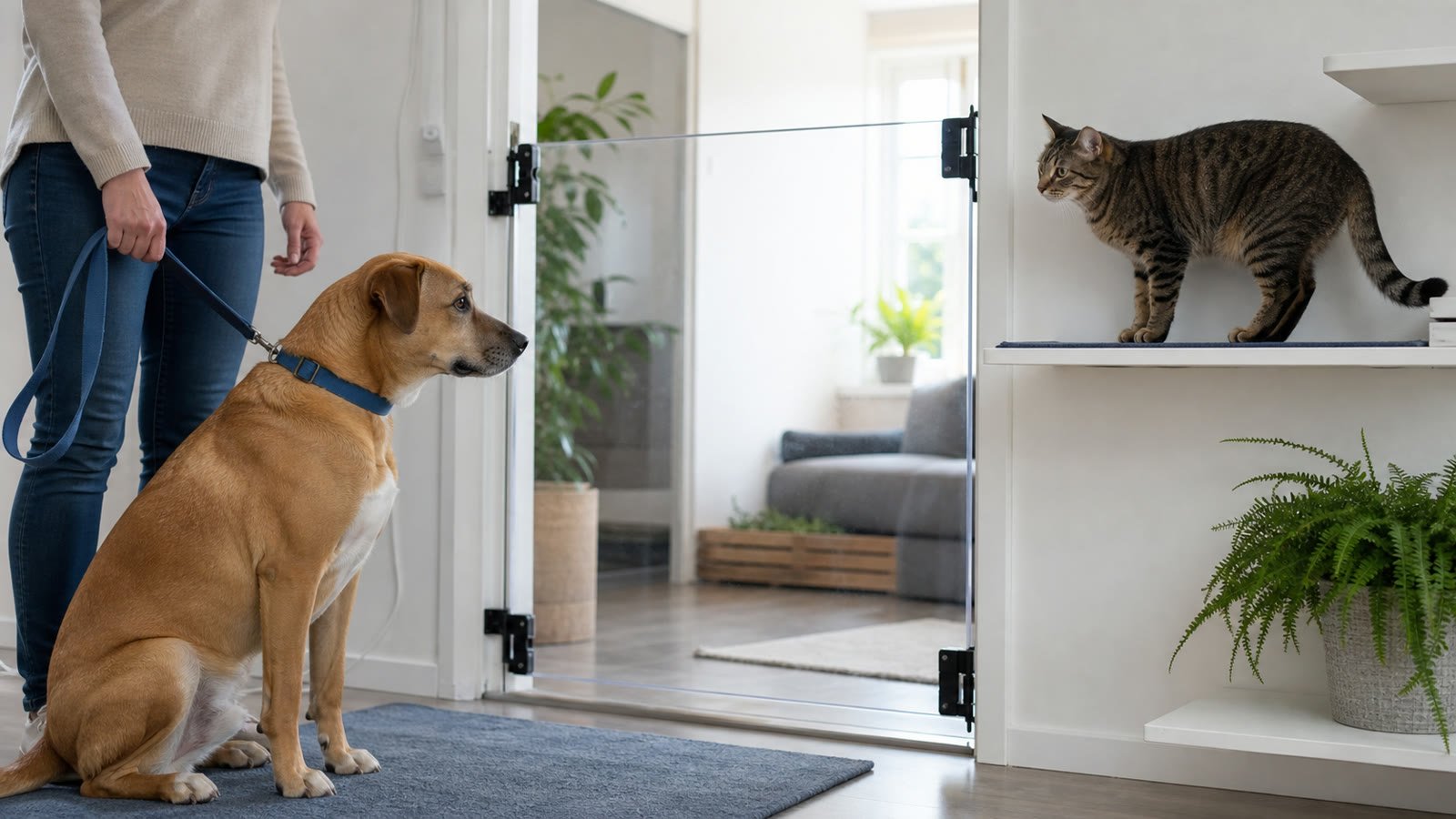
The safest cat-and-dog introduction is deliberately uneventful. They should not be placed together to “work it out”. Separate spaces, scent exchange and short controlled sessions give both animals time to learn without chasing or feeling trapped.
This guide explains how to introduce a cat to a dog step by step, which body-language signals matter and when to pause.
How to introduce a cat to a dog: quick plan
- Give the cat a dog-free sanctuary room.
- Exchange scent before visual contact.
- Introduce sight through a secure barrier.
- Keep the dog on a loose lead and reward calm behaviour.
- Give the cat height and an unrestricted exit.
- Repeat short sessions and progress at the slower animal’s pace.
Prepare the home before they meet
The cat needs a room containing food, water, litter, scratching space, hiding places and height. The dog must not be able to enter. Put food and litter where the dog will never gain access, including after introductions progress.
Practise simple reward-based cues with the dog, such as looking toward the handler, settling on a mat and moving away. A dog that cannot disengage from a cat needs professional guidance before direct access.
Step 1: exchange scent
Use separate soft cloths to collect scent gently from each animal’s cheek or resting area. Place the cloth in the other animal’s space at a distance, allowing investigation or avoidance. Swap bedding or rooms only when it can be done without forcing contact.
Continue until both can notice the scent without sustained hiding, barking, growling or agitation. Cats Protection recommends gradual introductions and scent swapping before the first face-to-face meeting.
Step 2: controlled visual introductions
- Exercise the dog appropriately beforehand, without exhausting it.
- Use a secure barrier and keep the dog on a loose lead.
- Give the cat an elevated retreat and a clear route back to its room.
- Begin far enough apart that both can eat rewards and respond normally.
- Reward the dog for looking away, relaxing and responding to the handler.
- Let the cat leave. Never hold or carry it toward the dog.
- Finish after a few calm minutes rather than waiting for tension.
Body language: continue or pause?
| More comfortable | Pause and increase distance |
|---|---|
| Soft body, normal blinking, sniffing, taking food | Fixed staring, stalking, lunging or barking |
| Dog can turn away and respond to cues | Dog cannot disengage from the cat |
| Cat explores or rests with an exit available | Cat crouches, hides, hisses repeatedly or tries to bolt |
A wagging tail does not automatically mean a dog is safe, and a quiet cat is not automatically relaxed. Read the entire posture.
When can the lead come off?
Only after many calm sessions in which the dog reliably disengages and the cat moves confidently. Start in a controlled room, keep escape routes open and supervise closely. Do not leave them alone together until you are genuinely certain both are safe; some households will always need separation when unattended.
Frequently asked questions
How long does introducing a cat to a dog take?
It may take days, weeks or longer. A calendar deadline is less important than relaxed behaviour at each stage.
What if the dog chases the cat?
Separate them immediately without punishment. Return to barriers and greater distance, and consult a qualified behaviour professional.
Should I let the cat hit the dog?
No. Claw injuries and defensive escalation are preventable. Use distance and a barrier rather than allowing conflict.
Can a kitten be introduced faster?
No. Kittens are vulnerable and may trigger chase behaviour. Use the same gradual, supervised process.
Can all cats and dogs live together?
No. Individual prey drive, fear and history matter. In some cases permanent management or separate homes may be safest.
Seek a qualified behaviour professional for aggression, predatory behaviour, intense fear or any safety concern.