July 31, 2026
How to Get a Cat to Drink More Water: 10 Practical Steps
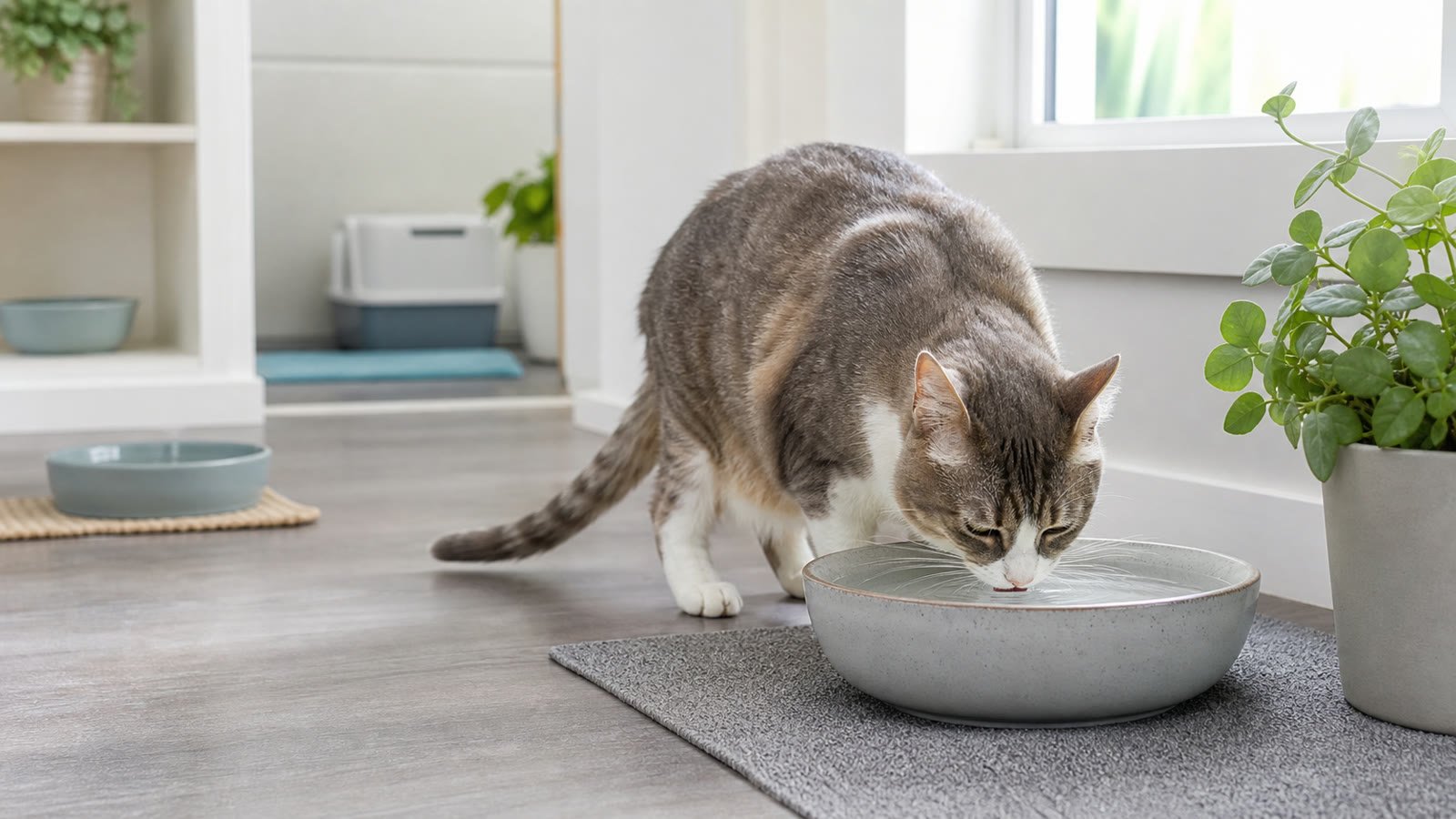
Cats obtain water from both drinking and food, so a cat eating wet food may visit the bowl less than one eating dry food. The useful goal is not forcing a particular number of visible drinks; it is providing appealing, clean water choices and noticing meaningful changes.
This guide explains how to get a cat to drink more water, how bowl shape and location affect preference, how diet contributes to intake and when drinking more—or less—needs veterinary attention.
How can you encourage a cat to drink more?
Place several wide glass, ceramic or metal bowls in quiet locations away from food and litter. Refresh them daily, wash them regularly and test different heights, materials and still or moving water. Wet food can add dietary moisture when appropriate, but sudden changes in thirst or urination require veterinary assessment.
Why some cats appear to drink very little
Diet makes a major difference. Cats Protection notes that wet food is around 70% water, so a wet-fed cat may drink less separately than a dry-fed cat. Bowl visits also happen when nobody is watching.
Do not assess hydration by counting visits alone. Appetite, urine output, energy, gums, illness and environmental temperature all matter, and home “skin tent” tests are not reliable enough to replace a veterinary examination.
Ten ways to improve the water setup
- Offer several locations. Use different quiet rooms rather than clustering bowls.
- Separate water from food. Many cats prefer drinking away from the feeding area.
- Keep it away from litter. Avoid contamination and an unattractive location.
- Use a wide bowl. The cat should drink without whiskers repeatedly touching the sides.
- Test materials. Ceramic, glass and stainless steel do not retain odour like scratched plastic can.
- Refresh daily. Empty, rinse and refill rather than topping up old water.
- Wash the bowl. Remove slippery residue with warm soapy water and rinse fully.
- Test depth and height. Some cats prefer a full shallow surface; seniors may value a modest raised position.
- Try moving water. A fountain suits some cats, provided it is cleaned thoroughly and introduced alongside familiar bowls.
- Observe preferences. Change one factor at a time and record which station is used.
Still bowl or fountain?
| Option | Possible advantage | Maintenance |
|---|---|---|
| Wide still bowl | Quiet, simple and easy to inspect | Daily washing and fresh water |
| Water fountain | Movement interests some cats | Pump, filter, reservoir and crevices need cleaning |
| Multiple bowls | Choice and reduced competition | Every bowl needs the same hygiene routine |
A fountain is not automatically more hygienic. Recirculating water still contacts saliva, fur and food debris. Keep ordinary bowls available during introduction so the cat is never left without a familiar source.
Can wet food increase water intake?
Wet food contains substantial moisture and may contribute to total intake. Any diet must remain complete, balanced and appropriate to health, life stage and body condition. Change food gradually and discuss urinary, kidney, heart, digestive or prescription diets with a veterinarian.
Adding a small amount of water to familiar wet food may suit some cats, but abrupt texture changes can reduce eating. Never compromise calorie and nutrient intake in an attempt to add water.
What should cats drink?
Fresh drinking water is the default. Cow’s milk can cause digestive upset and adds calories; “cat milk” is not necessary for hydration. Avoid salty broths, stock cubes, onions, garlic, caffeine, alcohol and sweetened drinks. Do not flavour water without veterinary guidance because ingredients safe for humans may be unsuitable for cats.
Signs of possible dehydration or illness
- Weakness, lethargy or collapse
- Dry or tacky gums
- Vomiting or diarrhoea
- Reduced appetite
- Very small urine amounts or no urine
- Sudden change in drinking or urination
Dehydration requires veterinary assessment. A cat straining without passing urine needs emergency care.
Why drinking more can also be a warning
Increased thirst can occur with kidney disease, diabetes, thyroid disease and other conditions. Measure the water added and remaining across all bowls if your veterinarian requests it, but do not restrict access. Schedule an examination for a sustained change, especially with weight loss, increased urine or appetite change.
A seven-day preference test
- Keep the familiar bowl unchanged as a control.
- Add one wide ceramic or glass bowl in a quiet location.
- Refresh both at the same time daily.
- Record visible use without hovering.
- After several days, test a different location or material.
- Change only one variable at a time.
- Retain multiple options if the cat uses them.
How to monitor water intake without creating stress
For one cat, use a measuring jug to record how much enters each bowl and how much remains after 24 hours, allowing for a small amount of evaporation. In a multi-cat home, total household measurement cannot reveal which cat drank. Separate observation, a camera positioned without disturbing the cats or veterinary guidance may be needed. Never restrict access simply to obtain a cleaner measurement.
Look at trends rather than one imperfect figure. Bowl shape, spills, wet food and warm weather all affect the result. Litter output, appetite, weight and behaviour provide important context. A sudden sustained change in either direction deserves veterinary advice.
Water station hygiene and placement checklist
- Use stable, food-safe vessels with no chips, cracks or trapped residue.
- Rinse away every trace of detergent after daily washing.
- Replace fountain filters on the maker’s schedule and clean the pump, not only the visible bowl.
- Keep electrical cords inaccessible and place fountains where spills cannot create a hazard.
- Offer at least one silent still-water alternative if a fountain is used.
- Do not place all water stations together; distribute genuine choices.
What to do when a cat refuses a new fountain
Leave the familiar bowl available. Introduce the unplugged fountain first, then add water, and only later turn on the motor at a distance the cat accepts. Reward voluntary investigation without lifting the cat toward it. Some cats dislike vibration, reflections or moving water and may never prefer a fountain. The goal is dependable hydration, not persuading the cat to use a particular device.
Questions to take to the veterinarian
Bring a short timeline, diet details, medication list, approximate intake trend and observations about urine, vomiting, stool, appetite and weight. Ask whether the cat’s age or health requires blood, urine or other testing. Clear evidence helps distinguish a simple preference issue from a medical change more quickly.
Frequently asked questions
How much water should a cat drink?
Total need varies with body size, diet, temperature, activity and health. Ask a veterinarian for an individual target rather than relying on one internet number.
Why does my cat drink from my glass?
The location, freshness, height or wide opening may be more appealing. Offer a stable cat-only glass or similar safe bowl.
Should water be beside cat food?
Many cats prefer separation. Offer at least one station well away from both food and litter.
Can I use filtered water?
You can test it if tap odour appears to deter the cat, while maintaining appropriate drinking-water safety.
How often should bowls be washed?
Wash water bowls daily and more often when dirty, using warm soapy water followed by a complete rinse.
When is not drinking an emergency?
Seek prompt care when reduced drinking accompanies illness, vomiting, weakness or no urine. Do not wait for obvious severe dehydration.
Never restrict water. Sudden thirst or urination changes require veterinary assessment.