July 31, 2026
How Should a Dog Harness Fit? Measuring & Safety Guide
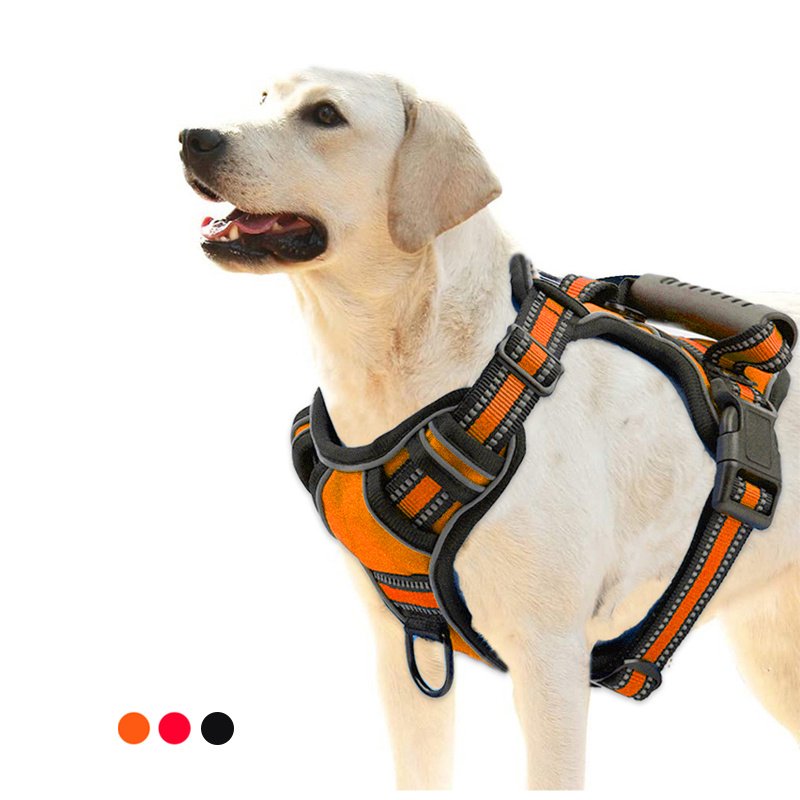
A dog harness should feel secure without pinching, sliding or changing the dog’s natural stride. Size labels alone are not enough: two dogs called “medium” can have very different necks, chests and body shapes.
This guide explains how a dog harness should fit, how to measure chest girth, adjust each strap, check movement and recognise when a no-pull harness is the wrong size or shape.
Dog harness fit: quick checklist
- Measure the lower neck and widest part of the rib cage.
- Use the exact manufacturer’s size chart.
- Adjust it snugly while the dog is standing.
- Check that straps do not press the throat or rub behind the front legs.
- Confirm the shoulders can extend freely.
- Test gently in every direction so the dog cannot back out.
- Recheck after grooming, growth or weight change.
How to measure a dog for a harness
- Use a soft tape. Keep the dog standing naturally on a level surface.
- Measure the lower neck. Follow the area where the harness will sit at the base of the neck, not the narrow collar position.
- Measure chest girth. Wrap the tape around the widest part of the rib cage, usually behind the front legs.
- Record both measurements. Do not rely on breed or weight alone.
- Compare with the product chart. If the dog falls between sizes, follow the manufacturer’s fitting guidance.
AKC harness guidance recommends measuring the base of the neck and widest part of the chest. Measure again rather than using an old number for a growing puppy or a dog whose weight or coat has changed.
How tight should a dog harness be?
It should be snug enough not to rotate or pull over the head, but loose enough to avoid pinching and allow normal breathing and movement. The familiar two-finger check is a starting point, not the whole test. You should need to slide two fingers underneath rather than having a large loose gap.
Check several locations because one strap can be loose while another is tight. Long or thick coats can hide space and compress during movement.
Where should each strap sit?
- Neck opening: near the base of the neck and upper chest, not pressing the throat.
- Chest section: centred rather than pulled to one side.
- Girth strap: around the rib cage, not on the soft abdomen.
- Behind the legs: leave enough clearance to prevent rubbing in the armpit area.
- Shoulders: straps should not block the front legs reaching forward.
Seven tests before the first walk
- Slide fingers under every strap and check for pressure points.
- Ask the dog to sit and stand; the harness should not tighten sharply.
- Walk indoors and observe shoulder and elbow movement.
- Gently pull the harness forward, backward and sideways.
- Check that it cannot pass over the head when the dog reverses.
- Confirm buckles are fully closed and webbing is not twisted.
- Start with a short walk and inspect the skin and coat afterward.
Signs a harness is too tight
- Indentation, pinched skin or compressed coat
- Chafing, redness or hair loss
- Shortened stride or reluctance to move
- Coughing, gagging or pressure at the throat
- Difficulty sitting or lying down
- Avoidance when the harness appears
Stop using it and seek veterinary advice for pain, breathing difficulty, persistent skin damage or a sudden gait change.
Signs a harness is too loose
- The body panel rotates noticeably during a walk.
- Straps sag or a leg can enter the wrong opening.
- The chest section slides toward the throat.
- The dog can reverse and pull a shoulder or head through.
- The leash attachment moves far from its intended position.
Does a no-pull harness stop pulling?
A no-pull or front-control design can help manage direction and reduce leverage, but equipment does not teach loose-leash walking by itself. Pair it with reward-based training and avoid jerking the lead.
AKC fitting advice warns that poorly fitted harnesses can affect movement and create pressure. No attachment point compensates for the wrong size or a shape that blocks the shoulders.
How often should fit be checked?
Check before every walk and perform a closer fit review regularly. Puppies can outgrow adjustments quickly. Recheck after grooming, coat changes, weight gain or loss, and after washing the harness.
Frequently asked questions
Can a harness be left on all day?
Removing it indoors avoids continuous rubbing and prevents it catching on household objects. A harness should not be left on an unattended dog unless a professional has given a specific reason.
Should the harness touch the dog’s armpits?
No. The girth strap needs clearance behind the front legs so repeated movement does not cause chafing.
Can my dog wear a collar and harness together?
Many dogs wear identification on a correctly fitted collar and attach the walking lead to a harness. Neither item should interfere with the other.
Why does my dog freeze in a harness?
It may feel unfamiliar, restrictive or frightening. Remove pressure, introduce it gradually with rewards and confirm the fit is comfortable.
What harness is best for an escape artist?
A securely fitted multi-point design may provide more security, but individual anatomy matters. Test carefully in a controlled area and seek professional fitting help.
Run a movement check after fitting
After adjusting every strap, watch the dog walk, turn, sit and lower their head. The harness should remain stable without crossing the throat, rubbing behind the elbows or restricting the shoulder blades. Recheck the fit after coat changes, weight changes and washing.
This guide provides general fitting information. Consult a veterinarian or qualified canine professional about pain, breathing issues, mobility problems or specialised equipment.