July 31, 2026
How Often Should You Clean a Litter Box?
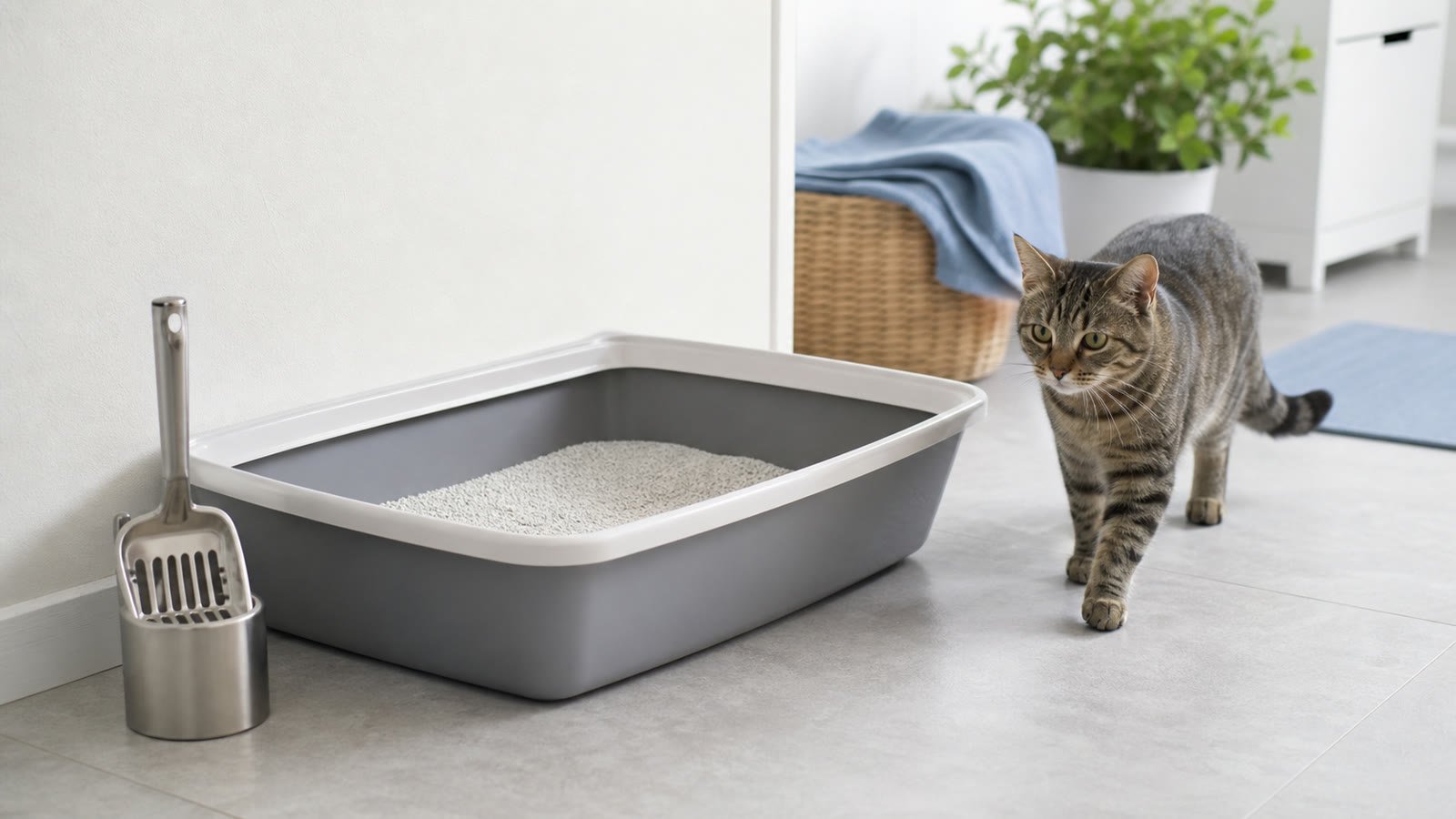
A litter box can look acceptable to a person while already being unpleasant to a cat. Regular scooping protects hygiene, helps the cat keep using the tray and makes changes in urine or stool easier to notice.
This guide answers how often to clean a litter box, explains the difference between scooping and full cleaning, and covers safe products, litter depth and multi-cat homes.
How often should you clean a litter box?
Remove urine clumps and faeces at least twice a day, and more often for cats that avoid a used tray. Empty and wash the full box at least weekly, adjusting for litter type, number of cats and manufacturer instructions. Replace damaged boxes that retain odour or are difficult to clean.
Daily, weekly and monthly litter-box care
| Frequency | Task |
|---|---|
| At least twice daily | Remove stool and urine clumps; inspect output and surrounding floor |
| Weekly or as needed | Discard litter, wash the box, rinse, dry and refill |
| Regular inspection | Check for scratches, cracks, odour retention and unsuitable size |
Cats Protection recommends removing deposits twice daily and completely cleaning the tray at least weekly. Some cats need deposits removed even more frequently.
How to clean a litter box step by step
- Wear disposable gloves and wash hands thoroughly afterward.
- Remove all litter into a sealed waste bag; never flush litter unless local rules and the manufacturer explicitly allow it.
- Wash the tray with hot soapy water or a cat-safe cleaner.
- Scrub corners and scratches where residue collects.
- Rinse completely so no detergent or fragrance remains.
- Dry the box before adding clean litter.
- Refill to the depth preferred by the cat; around 3 cm is a useful starting point.
Which cleaning products should you avoid?
Avoid strong fragrances, ammonia-heavy products and cleaners not labelled for the intended use. Cats have a sensitive sense of smell, and a powerful scent can discourage use. Never mix household chemicals.
Pregnant people and anyone with a weakened immune system should ask a healthcare professional about litter-handling precautions. Where possible, another household member should manage the tray.
How many litter boxes do cats need?
A common starting point is one tray per cat plus one extra, distributed in different quiet locations. Two trays beside each other may function like one resource. Each cat must be able to reach a tray without passing another cat or a noisy appliance.
When a clean box still goes unused
- The box may be too small, covered or difficult to enter.
- The litter texture or fragrance may be unacceptable.
- The location may feel exposed, noisy or blocked.
- Another pet may guard access.
- Pain, urinary disease, constipation or stress may be involved.
Never punish toileting outside the box. A sudden change, straining, frequent small urinations, blood or inability to pass urine requires prompt veterinary attention; inability to urinate can be an emergency.
Frequently asked questions
Should you scoop a litter box every day?
Yes. Scoop at least twice daily and whenever the cat requires a cleaner tray.
How often should all the litter be replaced?
At least weekly is a useful general routine, adjusted for litter type, tray design and usage.
Can I use bleach to clean a litter box?
Routine hot soapy water or a cat-safe product is usually simpler. If disinfection is needed, follow veterinary or public-health guidance exactly and never mix chemicals.
Why does the litter box smell after cleaning?
Scratched plastic can retain residue, the tray may not be fully dry, or hidden waste may remain around it. Replace damaged boxes.
Can two cats share one litter box?
Even if they sometimes do, provide multiple separated trays so neither cat can block the other’s access.
This guide is general hygiene information. Contact a veterinarian about elimination changes, pain or urinary symptoms.