July 29, 2026
AirTag Cat Collar Guide: Safety, Fit and How It Really Works
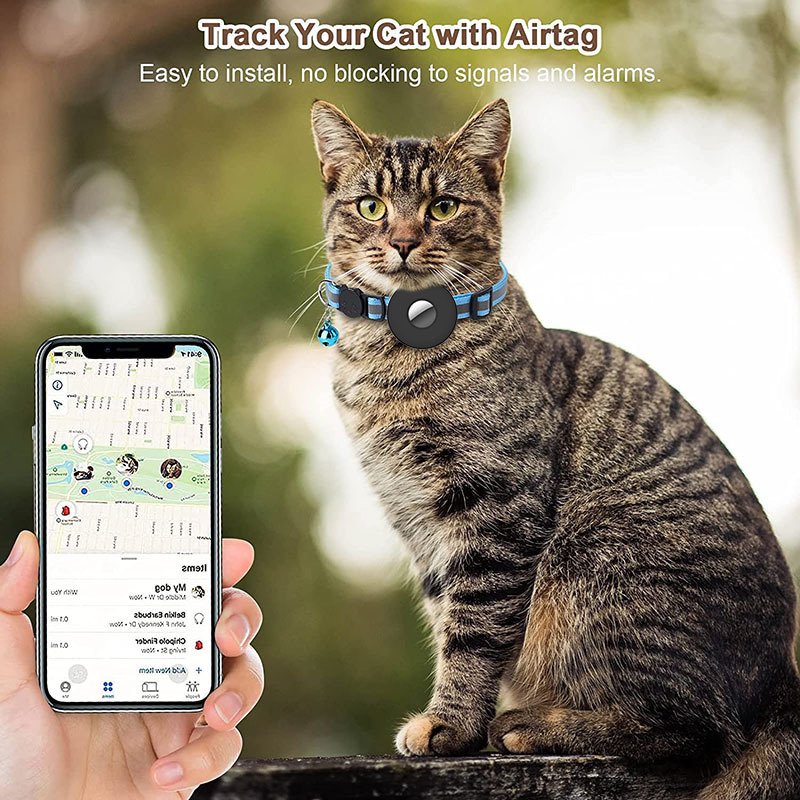
A missing cat can turn an ordinary day into an anxious search. That is why many pet parents consider an AirTag cat collar: it is compact, familiar to iPhone users and does not require a monthly subscription. But an AirTag is not the same as a live GPS pet tracker, and the collar holding it matters just as much as the technology.
This guide explains how an AirTag collar works, where it can help, its limitations, the safety features to look for and how to fit one correctly. The goal is simple: help you make a calm, informed choice for your cat or small dog.
What is an AirTag cat collar?
An AirTag cat collar is a collar with a secure holder designed for an Apple AirTag. The AirTag communicates through Bluetooth and Apple’s Find My network. When a participating Apple device detects the tag, its approximate location can be relayed privately to the owner through the Find My app.
The collar itself does not add GPS or mobile connectivity. It simply keeps the AirTag attached in a position that should be secure, comfortable and difficult for the pet to reach. An AirTag is normally purchased separately unless a product explicitly says otherwise.
Does an AirTag work for tracking a cat?
It can provide useful location clues, especially around homes, streets and populated areas where Apple devices are nearby. Find My may also help you play a sound when the AirTag is within reach. However, an AirTag does not provide guaranteed, continuous, real-time pet tracking.
Updates depend on the tag being detected by compatible devices. In a quiet rural area, dense woodland or any place with few nearby Apple devices, location updates may be delayed or unavailable. Apple markets AirTag for locating personal items, not as a dedicated pet tracker. Treat it as an additional recovery aid, never as a substitute for supervision, secure doors and windows, identification details or microchipping where available.
AirTag collar vs GPS pet tracker
| Feature | AirTag collar | Dedicated GPS tracker |
|---|---|---|
| Location method | Bluetooth and the Find My network | GPS, usually with a mobile connection |
| Live tracking | No continuous live GPS | Often available, depending on model and coverage |
| Subscription | No monthly tracking plan | Often requires a subscription |
| Battery | Long-life replaceable coin battery | Usually rechargeable more frequently |
| Best suited to | Extra peace of mind in populated areas | Owners who need active outdoor tracking |
Choose according to your pet’s routine. For a mostly indoor cat who occasionally hides nearby, an AirTag holder may be a practical extra layer. For a roaming outdoor cat or a dog that runs long distances, a purpose-built GPS tracker can offer more suitable tracking features.
The 6 features that matter in an AirTag collar
1. A safety-release buckle
Cats climb, squeeze through narrow spaces and explore furniture, branches and fences. A safety-release or snap-off buckle is designed to release under sufficient pulling force if the collar becomes caught. Check the mechanism regularly and follow the product instructions. For dogs being walked on a lead, attach the lead to an appropriate harness or walking collar rather than relying on a breakaway-style cat collar.
2. A secure, low-profile AirTag holder
A holder should keep the AirTag close to the collar instead of letting it swing freely. A low-profile position is generally less distracting and makes it harder for the pet to bite or paw at the tracker. Inspect the holder for stretching, cracks or loose edges.
3. The correct adjustable fit
A collar that is too loose can catch on objects; one that is too tight can cause discomfort. Measure your pet’s neck with a soft tape and use the manufacturer’s size range. After adjustment, you should generally be able to slide one or two fingers between the collar and the neck without forcing them. Recheck growing kittens and puppies frequently.
4. Lightweight materials
Small pets notice extra weight more than large ones. Look for a narrow, lightweight collar and consider the combined weight of the collar, holder and AirTag. Introduce it for short supervised periods and watch for scratching, freezing, head tilting or repeated attempts to remove it.
5. Reflective detailing
A reflective strip can make a pet easier to notice when light hits the collar at night. It does not make a pet fully visible in every condition, so it should complement responsible supervision rather than replace it.
6. A removable bell
A bell can help you hear a pet moving nearby and may alert wildlife. Some cats dislike the sound, so monitor your pet’s response and remove the bell if it causes persistent stress. Comfort comes first.
How to fit an AirTag collar safely
- Measure first. Measure around the neck without pulling the tape tight and compare it with the listed collar range.
- Insert the AirTag correctly. Make sure the holder closes fully and has no exposed loose edges. The AirTag is sold separately from most collars.
- Adjust the collar. Use the one-to-two-finger check and make sure it cannot slip over the head during normal movement.
- Begin indoors. Let your pet wear it during short, supervised sessions before longer use.
- Test the buckle and Find My setup. Confirm that the safety mechanism works as intended and that the AirTag appears in your Find My app.
- Inspect it regularly. Look for wear, rubbing, looseness or skin irritation and readjust as your pet grows or changes weight.
Who is an AirTag collar best for?
An AirTag-compatible collar may suit an iPhone owner who wants an affordable, subscription-free additional location aid for a cat, kitten, puppy or small dog. It is most useful where the Find My network is active and when the pet is comfortable wearing a correctly fitted collar.
It may not be the right choice for a pet that cannot tolerate collars, frequently loses breakaway collars, roams far from populated areas or needs reliable live GPS tracking. No single accessory can eliminate the risk of a pet becoming lost.
Frequently asked questions
Is an AirTag a GPS tracker?
No. An AirTag uses Bluetooth and Apple’s Find My network. It does not contain the same continuous GPS and cellular tracking system used by many dedicated pet trackers.
Does an AirTag collar need a subscription?
AirTag does not require a monthly Find My subscription. You need a compatible Apple device and an AirTag, which is normally sold separately from the collar.
Can I put an AirTag collar on a kitten?
Only if the complete collar setup is appropriately sized and light enough for that kitten. Check the minimum neck measurement, supervise the introduction and ask your veterinarian if you are uncertain. Growing kittens need frequent fit checks.
Should cats wear breakaway collars?
A safety-release design can reduce snagging risk by allowing the collar to come away under sufficient force. That safety trade-off means the collar may sometimes be lost. Always inspect the buckle and follow the collar manufacturer’s guidance.
Can I use the collar for walking a dog?
Do not attach a lead to a safety-release collar unless the manufacturer specifically approves that use. Use a properly fitted walking harness or suitable dog collar for restraint.
Use trackers as one layer of identification
A tracker can support a search, but it does not replace a registered microchip and a readable identification tag. Check battery status, attachment security and collar fit regularly. Location updates depend on the technology and nearby network conditions, so practise using the associated app before an emergency occurs.
Published by Pawtigo Pets. This guide is reviewed as responsible-care guidance changes. Always inspect pet accessories regularly and consult a veterinarian for advice specific to your pet.