October 10, 2026
Are Manx Cats Aggressive? Temperament, Triggers and Socialisation
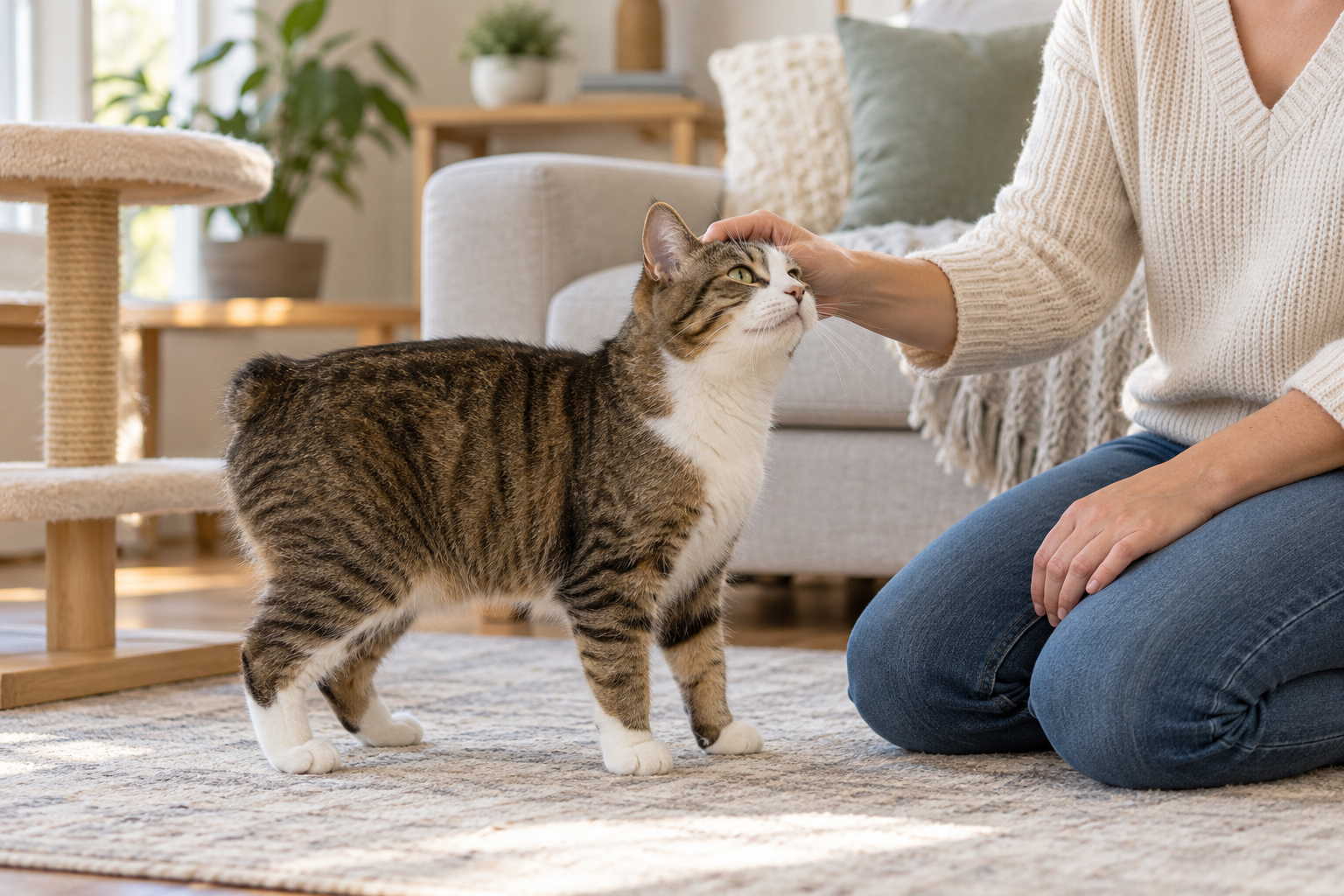
Manx cats are not considered an inherently aggressive breed. They are generally described as affectionate, intelligent and playful. As with any cat, however, fear, pain, overstimulation, competition for resources or a rushed introduction can produce defensive behaviour that people interpret as aggression.
Are Manx cats aggressive? The short answer
No breed label can predict an individual cat’s behaviour. A well-socialised Manx with appropriate resources will often be an engaged family companion. Sudden swatting, biting, growling or avoidance should be understood in context, especially when the behaviour is new. Start by asking what the cat was doing, what happened immediately before the response and whether pain could be involved.
What is a typical Manx temperament?
The International Cat Association describes the Manx as even-tempered, calm, people-oriented and playful. Many form close bonds with their families, enjoy interactive games and learn household routines quickly. These are useful tendencies, not guarantees. Early experience, genetics, handling, health and the home environment all shape the adult cat.
Some Manx cats are confident with visitors; others need time and distance. Some enjoy living with compatible animals, while others prefer more control over their space. A cat that retreats rather than greeting a stranger is not unfriendly, and a cat that communicates a limit is not automatically aggressive.
Aggression, play or normal feline communication?
Context and body language matter more than one isolated action. During balanced play, cats usually take turns, pause and return voluntarily. Their bodies remain comparatively loose. Defensive behaviour is more likely to include a crouched posture, flattened ears, a tucked or lashing tail, dilated pupils, growling, hissing and attempts to escape.
| What you observe | What it may mean | Best response |
|---|---|---|
| Loose bouncing, brief pauses, re-engagement | Social or object play | Supervise and provide suitable toys |
| Tail lashing, skin twitching, head turning during petting | Overstimulation | Stop before the cat needs to escalate |
| Hissing while backing away | Fear or request for distance | Create an exit; do not pursue |
| Sudden biting when touched in one area | Possible pain | Avoid testing the area and contact a vet |
| Blocking food, litter or doorways | Inter-cat tension | Separate resources and assess the household |
Why might a Manx cat bite or swat?
Fear and insufficient choice
A cat that is cornered, held tightly or approached too quickly may defend itself. Allow the cat to initiate contact, provide elevated routes and hiding places, and never pull a frightened cat from cover.
Petting overstimulation
Some cats enjoy only short periods of touch. Watch for a still body, rippling back, rotating ears or tail movement. End the interaction while the cat is still comfortable instead of waiting for a bite.
Play directed at hands or ankles
Fast movement can trigger chasing. Use wand toys at a safe distance and finish play with a catchable object or part of the cat’s normal meal. Avoid wrestling with hands, which teaches that skin is a toy.
Competition in a multi-cat home
One food station or litter tray can create conflict even when no fight is visible. Distribute litter trays, water, food, scratching areas and resting places so one cat cannot guard them all. Separate locations are more useful than several bowls placed side by side.
Pain or illness
Any cat in pain may become less tolerant of touch. This point deserves particular care in a Manx because some individuals can have spinal, mobility, bowel or bladder problems associated with abnormal tail and spinal development. Behaviour cannot diagnose these conditions, but a new reaction to handling, altered gait, difficulty jumping, constipation or toileting changes warrants veterinary assessment.
How to help a Manx feel secure
- Build predictable routines. Keep meals, play and quiet periods reasonably consistent.
- Offer vertical and hidden space. The cat should be able to observe or withdraw without being followed.
- Use consent-based handling. Invite contact, pause frequently and let the cat leave.
- Provide daily interactive play. Several short sessions usually work better than one exhausting session.
- Spread essential resources. This is especially important in homes with more than one cat.
- Reward calm choices. Reinforce approaching, settling and using scratching areas; do not punish warning signals.
Introducing a Manx to children, cats or dogs
Breed reputation should never replace a gradual introduction. Begin with separate safe areas and exchange scent before close contact. Use barriers and short sessions, ending while both animals remain calm. Children should sit quietly, allow the cat to approach and avoid lifting or chasing. Dogs should be managed on lead initially and rewarded for disengaging from the cat.
Progress is not measured by how quickly animals share a room. Relaxed eating, normal toileting, play and the ability to move through the home without staring or blocking are better indicators. See our detailed guide to introducing two cats and learn to recognise signs of stress in cats.
What not to do
- Do not punish hissing, growling or swatting. These warnings communicate discomfort.
- Do not force handling to “show who is in charge”. It increases fear and injury risk.
- Do not assume every bite is behavioural before considering pain.
- Do not use hands as toys or encourage rough play with people.
- Do not expect unfamiliar animals to resolve conflict without management.
When professional help is appropriate
Arrange a veterinary examination when behaviour changes suddenly, touch becomes painful, mobility or toileting changes, appetite falls, the cat hides more, or aggression is intense or unpredictable. Keep a factual log of the situation, distance, body language and recovery time; video can help if it can be captured safely.
After medical causes have been assessed, a qualified feline behaviour professional can create a plan based on triggers and reinforcement. Seek urgent care after a serious bite or when a cat cannot urinate, cannot walk normally, collapses or has breathing difficulty.
Frequently asked questions
Are male Manx cats more aggressive?
Sex alone does not reliably predict aggression. Reproductive status, socialisation, pain, previous learning and the current environment are more useful factors.
Are Manx cats good with children?
Many live successfully with respectful children, but every interaction requires supervision. The cat needs escape routes and children must learn to stop when the cat withdraws.
Do Manx cats get along with other cats?
They can, provided personalities are compatible and introductions are gradual. Breed does not remove the need for separate resources and careful observation.
Why does my Manx attack my ankles?
Ambush play, excess arousal or an established response to movement are common possibilities. Redirect to appropriate interactive toys and avoid rewarding the chase with dramatic movement.
Can a Manx become aggressive because of pain?
Yes. Pain can reduce tolerance in any cat. A new response to touch, jumping or toileting should prompt veterinary advice rather than discipline.
Explore the complete Manx breed profile for size, coat, care and health context.
This guide is educational and cannot diagnose a medical or behavioural condition. Sudden or severe behaviour change requires veterinary advice.