August 1, 2026
Dog Body Language: How to Read 25 Important Signals
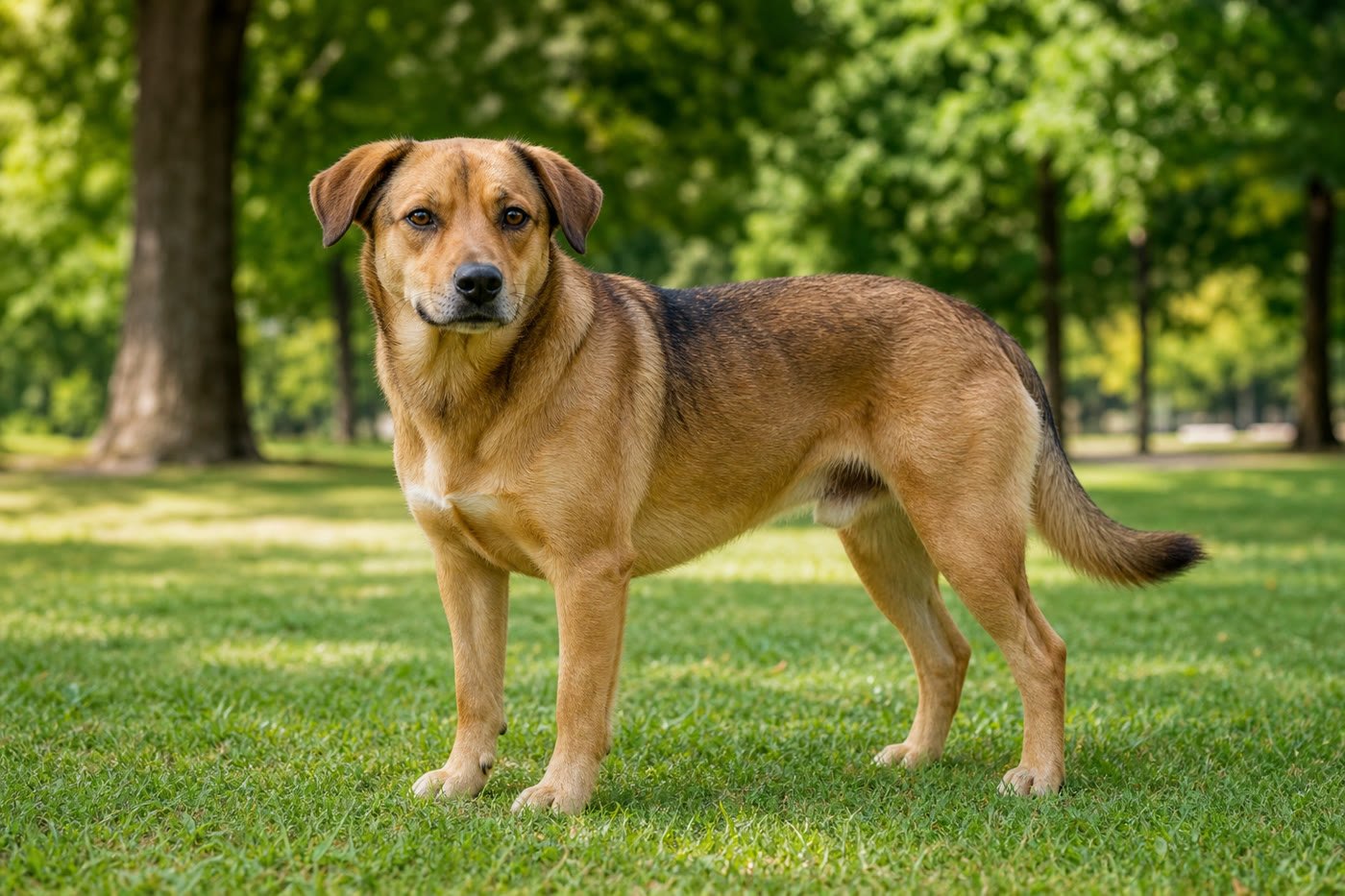
Dogs communicate continuously through posture, movement, facial tension, ears, tail, weight distribution and distance. A wagging tail or exposed belly never has one fixed meaning. Accurate interpretation comes from reading the whole dog, the surrounding context and the change from that individual’s normal behaviour.
This guide to dog body language explains relaxed, worried, playful and defensive signals, plus how to respond before discomfort escalates.
How do you read dog body language?
Observe the entire body rather than one feature. Loose muscles, curved movement and soft eyes usually suggest lower arousal. Freezing, closed mouth, hard staring, weight shifted away or forward, tucked or rigid tail and repeated avoidance signal concern. Give space whenever signals conflict or the dog cannot leave freely.
Start with context and baseline
A greyhound’s neutral tail differs from a spitz’s, cropped ears cannot move normally and pain can change posture. First ask what is happening, what the dog was doing immediately before and what normal looks like for this individual. Then watch for several signals that change together.
The RSPCA advises reading the complete body and describes lowered posture, avoidance, lip licking and ears held back among signs of worry, while stiffness, forward weight and staring can indicate a very unhappy dog that needs space.
Signs of a relaxed dog
- Body looks loose rather than braced
- Movement follows soft curves
- Eyes appear soft with no fixed stare
- Mouth may be gently open without facial tension
- Ears rest in their natural position
- Weight is balanced rather than leaning away or driving forward
- The dog can sniff, disengage and choose distance
Relaxed does not automatically mean the dog wants touch. Invitation and consent still matter.
Early signs of worry
- Turning the head or entire body away
- Repeated lip licking when food is absent
- Yawning outside a tired context
- Sudden sniffing or scratching
- Showing the whites of the eyes
- Lowering the head or body
- Lifting one paw
- Ears moving back and tail lowering
- Trying to hide behind a person or object
These behaviours are often called displacement or appeasement signals, but no label replaces context. The practical response is to pause, reduce pressure and let the dog move away.
Signals that require immediate space
Freezing, intense staring, a stiff forward posture, growling, snarling, snapping or a rigid high or tucked tail indicate a dog is struggling. Stop approaching, turn slightly sideways, avoid staring and create distance slowly. Do not punish a growl; it provides valuable warning. Suppressing it can make future escalation less predictable.
What does a wagging tail mean?
A wag indicates arousal, not necessarily friendliness. Consider height, speed, stiffness, the movement of the dog’s hips and all other signals. A broad loose wag with a relaxed body differs from a rapid rigid wag paired with a fixed stare. Tail anatomy and breed shape also change appearance.
Play body language
A play bow, bouncy movement, curved approaches and role reversals can signal play. Healthy play contains pauses, and both dogs repeatedly choose to return. Interrupt when one dog continually pursues, pins or ignores escape attempts. Call dogs apart briefly; if both return with loose bodies, play may resume. If one stays away, respect that choice.
Common signals in context
| Signal | Possible meanings | What to check |
|---|---|---|
| Rolling over | Relaxation, solicitation or conflict avoidance | Loose body versus frozen tension |
| Panting | Heat, exertion, stress or pain | Temperature, activity and health |
| Yawning | Tiredness or tension | Timing and accompanying avoidance |
| Raised hackles | Arousal, surprise, fear or excitement | Whole posture and trigger |
| Barking | Alert, play, fear, frustration or learned response | Pitch, rhythm, distance and body |
Dog-human greetings
- Let the dog choose whether to approach.
- Stand slightly sideways and avoid leaning over.
- Keep hands still instead of reaching toward the face.
- Pet briefly on the shoulder or chest only when the dog seeks contact.
- Pause after a few seconds and see whether the dog requests more.
- Stop if the dog turns away, stiffens, licks lips or moves off.
Never require a dog to greet a stranger. For excitable greetings, see how to stop a dog jumping on people.
Children and dogs
Adults must supervise actively, not from another room. Children should not hug, climb on, corner, wake or disturb a dog eating or chewing. Every dog needs an undisturbed resting area and a route away. A child cannot be responsible for recognising all warning signals.
Pain can change body language
New withdrawal, irritability, guarding, stiffness, reluctance to move, changed sleep or handling sensitivity can indicate pain or illness. Arrange veterinary assessment before treating a sudden behaviour change as a training issue. Video captured without provoking the dog can help show movement at home.
How to improve your observation
Watch short videos with the sound off and note objective details: mouth closed, weight back, head turned, tail still. Avoid labels such as guilty, dominant or stubborn until you have described what the body actually did. Track what happened before and after. This turns vague impressions into useful information for a trainer or veterinarian.
Frequently asked questions
What does “whale eye” mean?
Visible eye white can occur when a dog turns the head while watching something. In a tense context it can indicate discomfort.
Why does my dog shake off when not wet?
A shake-off may appear after tension or physical contact, but it can also be ordinary coat adjustment. Check the sequence.
Does a dog showing its belly want a rub?
Sometimes, but a worried dog may roll over to reduce conflict. Loose posture and active solicitation matter.
Is growling always aggression?
Growling communicates discomfort or a need for distance. Treat it as information and address the cause safely.
What is a play bow?
The front lowers while the rear stays raised. It often invites play, especially with loose, bouncy movement.
When should I seek professional help?
Seek veterinary and qualified reward-based support for sudden change, pain, bites, escalating threats or any safety concern.
Body language is contextual. Give space when uncertain and obtain professional help before deliberately testing a dog’s tolerance.