July 31, 2026
Are Retractable Dog Leashes Safe? A Practical Use Guide
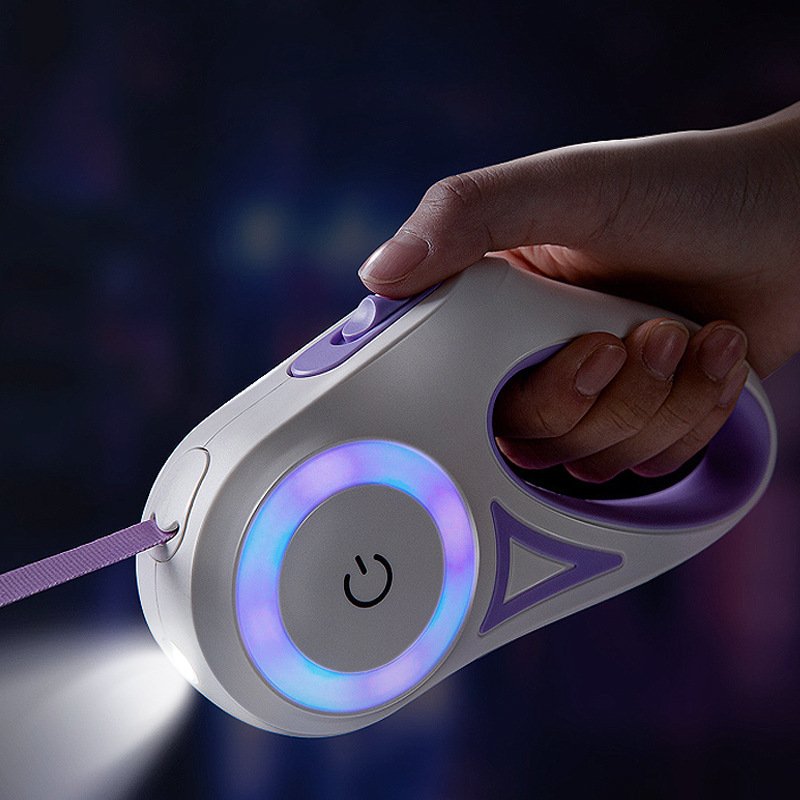
A retractable leash can offer controlled distance in a quiet open area, but it is not the safest choice for every dog or every walk. The long line, moving handle and delayed control create risks that a standard fixed lead does not.
This guide answers are retractable dog leashes safe, explains when to use one, when to switch to a fixed lead and how the brake should be handled.
Are retractable dog leashes safe?
They can be used more safely by a leash-trained dog in a spacious, predictable area away from roads, crowds and other dogs. Use a correctly rated model, allow only the distance needed and keep a finger ready on the brake. Choose a fixed lead whenever close, immediate control is required.
How does a retractable leash work?
Tape or cord winds onto a spring-loaded spool. It extends as the dog moves away and retracts only while slack is available. The brake stops more line from leaving the handle; it does not pull a dog back toward you.
AKC guidance explains that a pulling dog cannot simply be reeled back. This is why distance must be managed before a hazard appears.
When can a retractable leash be useful?
- A large, open and quiet area with clear visibility
- An unfenced garden used for supervised exploration
- A trained dog that responds to recall, “leave it” and attention cues
- A handler able to operate the brake without looking down
Start with a short working distance. More available length does not mean all of it should be used.
When should you use a fixed leash instead?
- Near roads, driveways, bicycles or car parks
- On crowded pavements, in shops or at the veterinary clinic
- Around unfamiliar dogs, children or wildlife
- When practising loose-leash walking
- Where tape can wrap around people, trees or street furniture
- With a dog that lunges, bolts or cannot yet return on cue
Main retractable-leash risks
Too much reaction distance
A dog several metres away can reach traffic, food, another animal or a person before the handler can close the gap.
Cord or tape injuries
A moving line can burn or cut skin and can tangle around legs. Never grab the line with a bare hand or wrap it around your wrist.
A dropped handle
The hard handle may bounce behind the dog and trigger panic. Use a secure grip and stop if your hands cannot operate it reliably.
Impact at full extension
A dog running to the end experiences a sudden stop. Do not allow a high-speed launch, and match the equipment to the dog’s size and strength.
How to use a retractable leash safely
- Inspect the tape or cord, clip, casing and brake before every walk.
- Confirm the model’s weight rating suits the dog.
- Practise brake and lock operation at home without the dog attached.
- Begin in a quiet, open area and keep the working length short.
- Lock the leash before reaching a path, person, dog or obstacle.
- Call the dog back rather than dragging the line through the mechanism.
- Stop using equipment that frays, sticks, fails to retract or has been chewed.
Collar or harness with a retractable leash?
A well-fitted harness can reduce direct pressure on the neck if the dog reaches the end, but it does not make sudden stops safe. Confirm the attachment point and equipment are compatible. Use our guide to check how a dog harness should fit.
Retractable leash vs fixed lead vs long line
| Tool | Useful context | Main limitation |
|---|---|---|
| Retractable leash | Supervised freedom in a clear open area | Variable distance and mechanical handle |
| Fixed lead | Daily pavements, crowds and close control | Less roaming distance |
| Long line | Recall training in open space | Requires handling skill and space |
Frequently asked questions
Are retractable leashes good for puppies?
A fixed lead is usually clearer for early loose-leash skills. A retractable mechanism can reward pulling because forward pressure releases more distance.
Can I use one beside a road?
No. Use a fixed lead with close control near traffic, driveways and car parks.
Should I lock a retractable leash all the time?
If it stays locked at a short length throughout the walk, a fixed lead is simpler. Lock before hazards; use variable length only in a suitable open area.
Can I attach two dogs to one retractable leash?
No. Use separate, appropriate equipment and handlers where necessary to prevent tangling and loss of control.
Does a retractable leash teach recall?
It can provide a managed distance for a dog that already understands cues, but training requires planned rewards and should often use a safely handled long line.
Choose the lead for the environment
A fixed lead gives predictable control beside roads, in crowds and during training. A long line can provide controlled freedom in an open area when it is attached to a suitable harness and handled without wrapping it around hands or limbs. Retractable leads are best reserved for spacious places where the cord cannot cross other people, animals or obstacles.
This guide provides general safety information. A qualified trainer can advise on pulling, lunging, recall or individual handling needs.