Dog breed profile
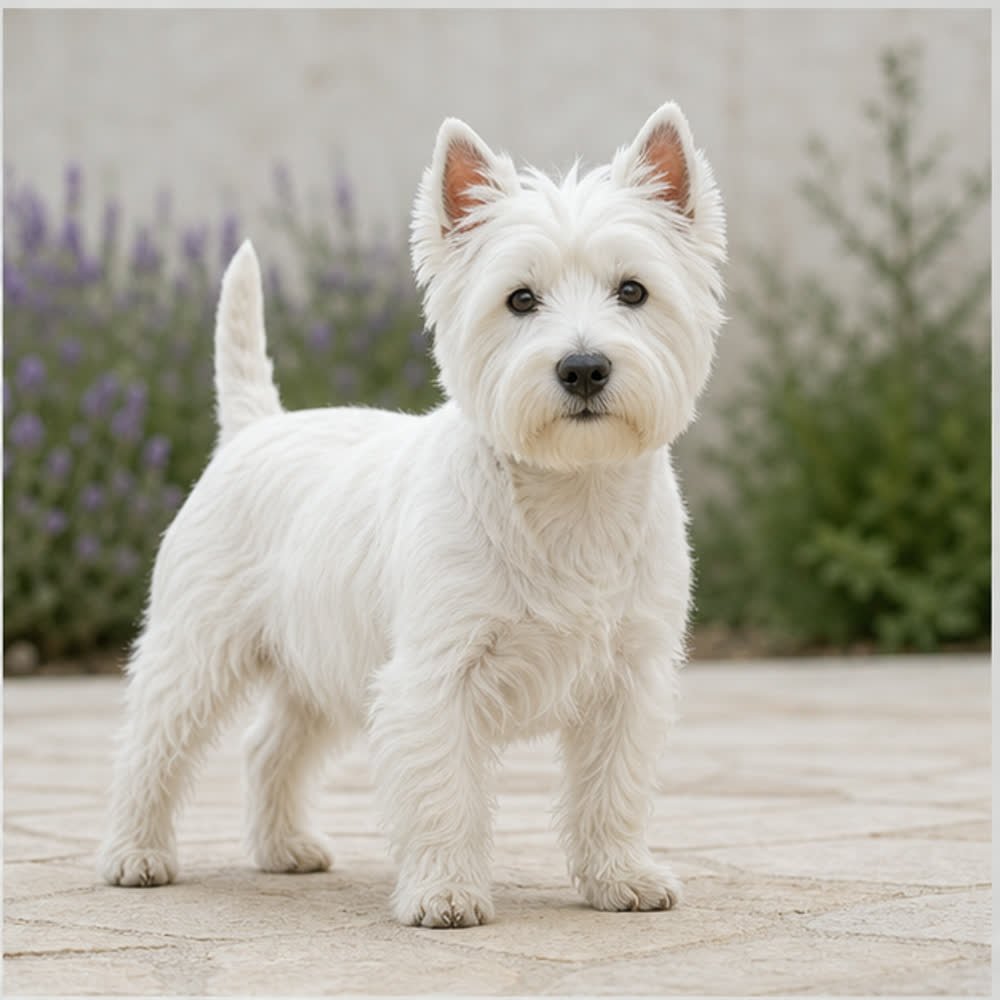
West Highland White Terrier
A sturdy small terrier with confidence, digging instincts and a ready response to movement and sound.
- Species
- Dogs
- Size
- Small
- Origin
- Scotland
- Typical lifespan
- 13-15 years
- Adult size
- 15-20 lb (7-9 kg)
- Coat
- Wiry double coat
- Activity
- Moderate to high
- Grooming
- Weekly plus regular trimming
- Best suited to
- Active homes comfortable with terrier behaviour, skin care and grooming
Temperament and everyday life
A sturdy small terrier with confidence, digging instincts and a ready response to movement and sound.
Breed tendencies are useful context, not a prediction of every individual. Early experience, health, learning and environment all shape behaviour. Respectful handling and reward-based teaching remain essential.
Activity and enrichment
Use daily walks, scent games and training while supervising around small pets and securing outdoor spaces.
Match activity to age, fitness and health, provide genuine rest and introduce changes gradually.
Coat and routine care
The wiry double coat requires weekly plus regular trimming. Nail, dental and cooperative carrier or handling routines should begin before they are urgently needed.
Health and responsible selection
Ask about kneecap and eye evaluation and family history of skin, jaw and neurological conditions.
A responsible breeder or rescue should discuss temperament and health transparently. This profile supports informed questions but does not replace individual veterinary advice.
West Highland White Terrier care in everyday life
The West Highland White Terrier developed from Scotland and today needs to be understood as more than a recognisable appearance. With an adult size commonly described as 15-20 lb (7-9 kg) and an activity level of moderate to high, this breed needs a household that can match care decisions to the individual animal rather than to assumptions about the name alone.
For a West Highland White Terrier, early experience, inherited traits, current health and the quality of daily routines can all alter behaviour. Ask for veterinary history, socialisation details and an honest description of how the individual responds to handling, unfamiliar people, other animals and periods without company.
Movement and enrichment for a West Highland White Terrier
West Highland White Terrier usually needs purposeful daily movement plus mental work; physical exercise alone may leave an active mind without a suitable outlet.
For West Highland White Terrier, vary route, surface and sniffing opportunities while increasing distance only when movement and recovery remain comfortable. Any limping, coughing, weakness, distress or unusual recovery in a West Highland White Terrier should prompt a pause and veterinary advice.
West Highland White Terrier coat and handling routine
A West Highland White Terrier typically has a wiry double coat, while the profile’s practical grooming baseline is weekly plus regular trimming. Adjust that baseline for season, lifestyle, age and the condition of the individual coat rather than following a calendar without observation.
For West Highland White Terrier grooming, include calm checks of skin, ears, eyes, mouth, paws and nails. Pair each new tool with something positive, keep early sessions short and seek professional assessment for pain, odour, redness, sudden hair loss or persistent irritation.
Creating the right home for a West Highland White Terrier
Although West Highland White Terrier is classed as small, the success of a home depends more on routine, safe movement and access to rest than floor area alone. This breed is described as best suited to active homes comfortable with terrier behaviour, skin care and grooming.
Before West Highland White Terrier arrives, check gates, doors and garden boundaries, then create a sleeping area away from the busiest household route. Measure the individual West Highland White Terrier before selecting beds, carriers, harnesses or safety equipment; breed averages are not a reliable fit guide.
A West Highland White Terrier settling-in plan
- Keep West Highland White Terrier's first days quiet, with frequent toilet opportunities, consistent meals and a protected place for uninterrupted sleep.
- In week one, teach West Highland White Terrier a small number of useful cues and reward calm observation instead of arranging many introductions.
- During weeks two and three, build West Highland White Terrier's walks, handling and alone-time practice gradually around a moderate to high activity profile.
- At week four, review West Highland White Terrier's digestion, sleep, movement, body condition and recovery with a veterinarian or qualified reward-based professional when needed.
Before choosing a West Highland White Terrier
- Confirm that a moderate to high routine for a West Highland White Terrier is realistic during ordinary working weeks, not only at weekends.
- Budget for the West Highland White Terrier grooming expectation of weekly plus regular trimming as well as preventive veterinary and dental care.
- Compare the West Highland White Terrier adult-size reference of 15-20 lb (7-9 kg) with housing, transport and equipment constraints.
- Ask which health screening and medical records are relevant to the specific West Highland White Terrier being considered.
- Check whether the observed individual matches the stated home fit: active homes comfortable with terrier behaviour, skin care and grooming.
Common West Highland White Terrier questions
What activity routine suits a West Highland White Terrier?
The West Highland White Terrier profile indicates moderate to high activity. Build from manageable sessions and use movement quality, body condition, enthusiasm and recovery to adjust the routine for that animal.
What grooming does a West Highland White Terrier require?
Plan around weekly plus regular trimming for the West Highland White Terrier coat, described here as wiry double coat. Shedding, skin health and lifestyle may justify more frequent attention.
Which household is appropriate for a West Highland White Terrier?
The strongest general match for a West Highland White Terrier is active homes comfortable with terrier behaviour, skin care and grooming. The final decision should still be based on the individual animal’s health, history and demonstrated temperament.
What lifespan is typical for a West Highland White Terrier?
The reference range for a West Highland White Terrier is 13-15 years. Weight management, preventive examinations, dental care, appropriate nutrition and safe activity all contribute to quality of life.
Continue with the West Highland White Terrier owner’s care library or use the Pawtigo planning calculators. These West Highland White Terrier notes are educational and cannot replace advice from a veterinarian who has examined the animal.
Source and review note
Core breed details were checked against the linked official breed resource. Health information is educational and does not replace veterinary advice.