October 10, 2026
Why Does My Dog Keep Licking Their Lips?
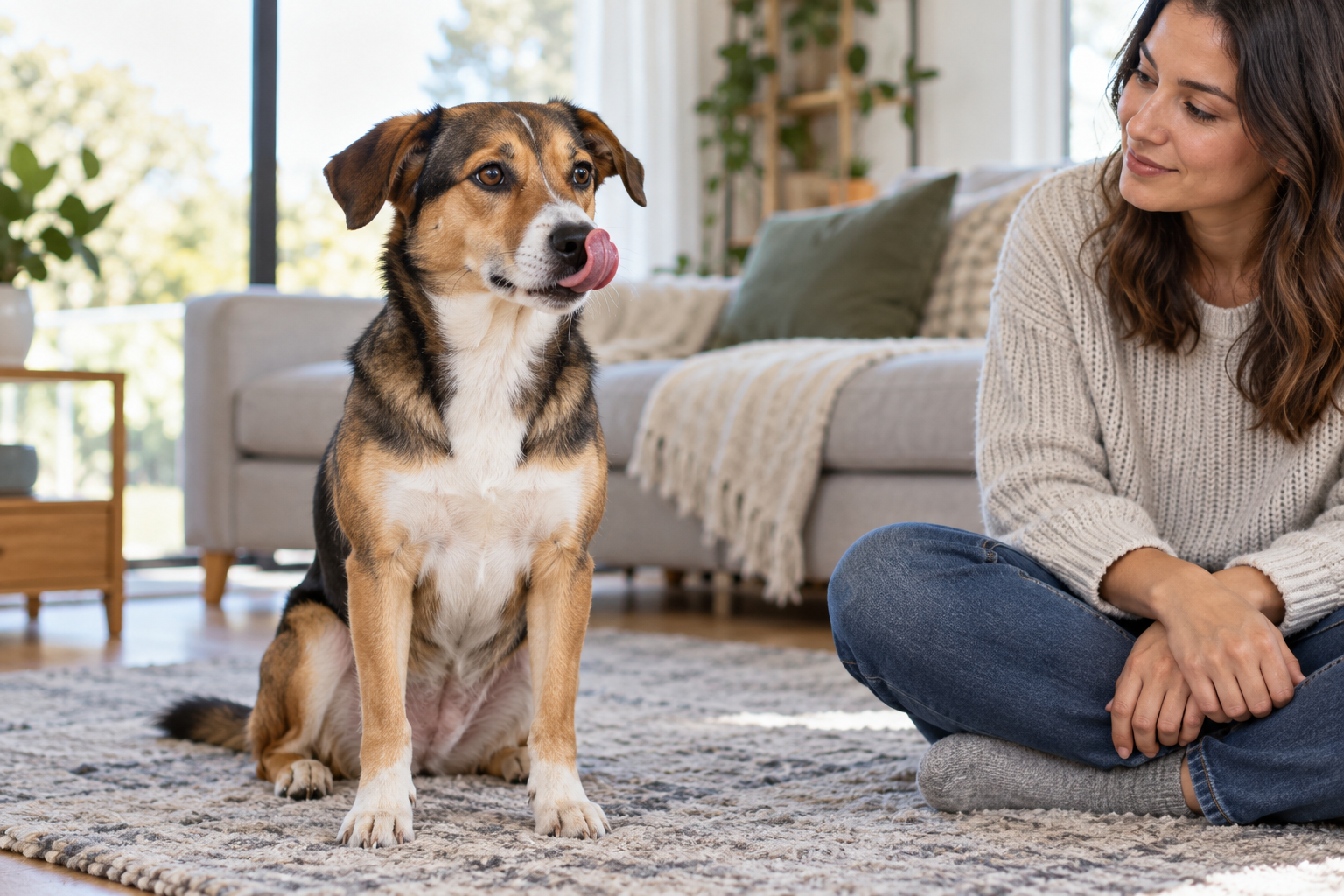
A dog may lick their lips after eating, smelling food or drinking, but repeated lip licking can also signal nausea, stress, mouth pain or something caught between the teeth. The useful clues are what happened immediately beforehand, how long the licking lasts and whether it appears with drooling, retching, appetite change, restlessness or difficulty breathing.
Why does my dog keep licking their lips?
Brief lip licking around food is usually normal. Lip licking during a tense interaction may be a request for space. Repetitive licking with drooling, swallowing, restlessness or vomiting can indicate nausea, while sudden persistent licking may accompany dental pain or a foreign object in the mouth. Seek urgent veterinary help if breathing is difficult, the face is swelling, the dog repeatedly tries to vomit without producing anything, collapses or may have swallowed a toxin.
Common reasons dogs lick their lips
| Possible reason | Clues you may notice | What to do |
|---|---|---|
| Food anticipation or normal cleaning | Occurs briefly near meals; dog is otherwise relaxed | Observe; no action is usually needed |
| Stress or appeasement | Turning away, lowered posture, pinned ears, yawning or avoiding contact | Increase distance and reduce pressure |
| Nausea | Drooling, repeated swallowing, pacing, grass eating, poor appetite or vomiting | Contact a veterinarian if persistent or recurrent |
| Dental or oral pain | Bad breath, pawing at the mouth, dropping food, chewing on one side | Arrange an oral examination |
| Foreign material | Sudden onset after chewing; gagging, pawing or inability to settle | Do not reach blindly into the mouth; seek veterinary help |
| Dry mouth, heat or thirst | Panting, warm environment, recent exercise | Move to a cool place and offer fresh water |
| Neurological or compulsive episode | Repetitive pattern, staring, unusual awareness or inability to interrupt | Record video and arrange veterinary assessment |
When lip licking is normal
A few licks can simply move food or moisture around the mouth. Dogs may lick their lips when they smell dinner, finish drinking, wake from sleep or anticipate a familiar reward. The behaviour should stop quickly, and the dog should remain comfortable, responsive and interested in ordinary activities.
Some dogs also lick during a pleasant scratch or while investigating an interesting scent. One isolated lick is not a diagnosis. Look at the entire dog and the situation rather than treating every tongue movement as a warning sign.
Lip licking as a stress signal
Dogs often use small movements to prevent conflict. Lip or nose licking can appear when a person leans over the dog, hugs them, handles a sensitive body part or brings them too close to another animal. Other signs can include looking away, blinking, yawning, lowering the head, closing the mouth, freezing or showing the whites of the eyes.
Respond by pausing and creating space. Do not punish the signal or insist that the dog tolerate the interaction. A warning that works quietly is preferable to a dog learning that subtle communication will be ignored. Our dog body language guide explains how to interpret groups of signals instead of relying on one gesture.
Could lip licking mean nausea?
Yes. Veterinary references recognise salivation and lip licking among observable signs that can accompany nausea. A nauseated dog may also swallow repeatedly, drool, pace, turn away from food, eat grass, vocalise, retch or vomit. Motion sickness can produce the same cluster during car travel.
Nausea has many possible causes, including dietary indiscretion, medication effects, gastrointestinal inflammation, pancreatitis, toxins and disorders outside the digestive system. Lip licking cannot identify the cause. Repeated episodes or any accompanying illness should be discussed with a veterinarian rather than treated with leftover or human medication.
Mouth and dental problems
A painful tooth, inflamed gums, an oral ulcer, a fractured tooth or material lodged between teeth can trigger persistent tongue movement. You might notice altered chewing, food falling from the mouth, refusal of hard food, odour, blood-tinged saliva, facial rubbing or reluctance to have the head touched.
Observe the front of the mouth only if the dog is relaxed and it is safe. Do not force the jaws open, pull on string, probe under the tongue or put fingers into the mouth of a distressed dog. String or thread can be anchored internally, and pulling may cause serious injury. A veterinary oral examination is safer and can assess areas that are difficult to see.
What about reflux or swallowing problems?
Repeated swallowing and lip smacking around meals can occur with oesophageal irritation, reflux or another swallowing disorder. Regurgitation differs from vomiting: material may return without strong abdominal contractions and can appear undigested. Coughing, gagging and reverse sneezing may also be confused with digestive behaviour.
Record a clear video from a safe distance if the episode repeats. Note the time relative to eating, drinking, exercise and sleep. That information helps the veterinary team distinguish licking, retching, coughing, regurgitation and vomiting.
Five questions to answer before calling the vet
- When did it start? Sudden onset after chewing, eating or going outdoors raises different concerns from a long-standing habit.
- What happens with the licking? Record drooling, swallowing, vomiting, diarrhoea, coughing, pawing at the mouth or behaviour change.
- Can the dog eat and drink normally? Difficulty swallowing, dropping food or refusing water increases urgency.
- Was there possible exposure? Include rubbish, plants, medication, chemicals, bones, string, toys or unfamiliar food.
- Does context predict it? Note car travel, visitors, handling, grooming, conflict, meals and time of day.
What you can do safely at home
- Move the dog to a quiet, comfortably cool area and reduce handling.
- Make fresh water available without forcing the dog to drink.
- Remove access to rubbish, plants, chemicals and small chewable objects.
- Take a short video and write down the duration and accompanying signs.
- Check whether any prescribed medication lists nausea or dry mouth as a possible effect, but do not stop it without advice.
- Call the veterinary clinic before offering food when vomiting, swallowing difficulty or possible obstruction is involved.
Do not give antacids, anti-nausea medication or other human medicines unless a veterinarian has prescribed the exact product and dose for this dog. Avoid forcing food and do not attempt to induce vomiting unless a veterinary professional specifically directs you.
When to contact a veterinarian
Arrange an examination when lip licking is new and persistent, happens repeatedly without an obvious harmless trigger, disturbs sleep, or accompanies poor appetite, vomiting, diarrhoea, weight loss, bad breath, mouth sensitivity or altered behaviour. Earlier advice is sensible for puppies, seniors and dogs with an existing health condition.
When it may be an emergency
Seek urgent veterinary care for breathing difficulty, facial or tongue swelling, collapse, blue or very pale gums, repeated unproductive retching, a swollen painful abdomen, seizures, severe weakness, inability to swallow, heavy bleeding, suspected poisoning or a foreign object lodged in the mouth or throat.
Repeated attempts to vomit with little or nothing produced, especially with abdominal enlargement or restlessness, can be associated with gastric dilatation-volvulus and should never be watched at home.
Frequently asked questions
Why is my dog licking their lips at night?
Consider nausea, mouth discomfort, thirst, anxiety, a learned routine or an environmental trigger. A new recurring nighttime pattern deserves veterinary advice, particularly when appetite, stool or sleep has changed.
Why does my dog lick their lips when I pet them?
It can be a subtle request to pause, especially with a turned head, tense body or flattened ears. Stop touching and see whether the dog moves away or reinitiates contact.
Does lip licking always mean anxiety?
No. Context matters. Food anticipation, nausea, dental pain, heat and material in the mouth are among other possibilities.
Why is my dog licking and swallowing repeatedly?
This combination may accompany nausea, oral irritation or a swallowing problem. Contact a veterinarian if it persists or occurs with drooling, retching, appetite change or distress.
Can dental disease cause lip smacking?
Yes. Oral pain may change chewing and tongue movements. Bad breath, food dropping, bleeding or chewing on one side strengthen the case for a dental examination.
Should I give my dog something for an upset stomach?
Not without veterinary direction. The correct response depends on the cause, and human products may be unsuitable or delay diagnosis.
Sources and further reading
- Merck Veterinary Manual: Motion Sickness in Animals
- VCA Animal Hospitals: Motion Sickness in Dogs
- American Kennel Club: Understanding Dog Facial Expressions
This article is educational and cannot identify the cause of an individual dog’s symptoms. Contact a veterinarian when the behaviour is persistent, sudden or accompanied by illness.