October 10, 2026
Cat-Sized Dogs: Small Breeds, Real Adult Size and What to Expect
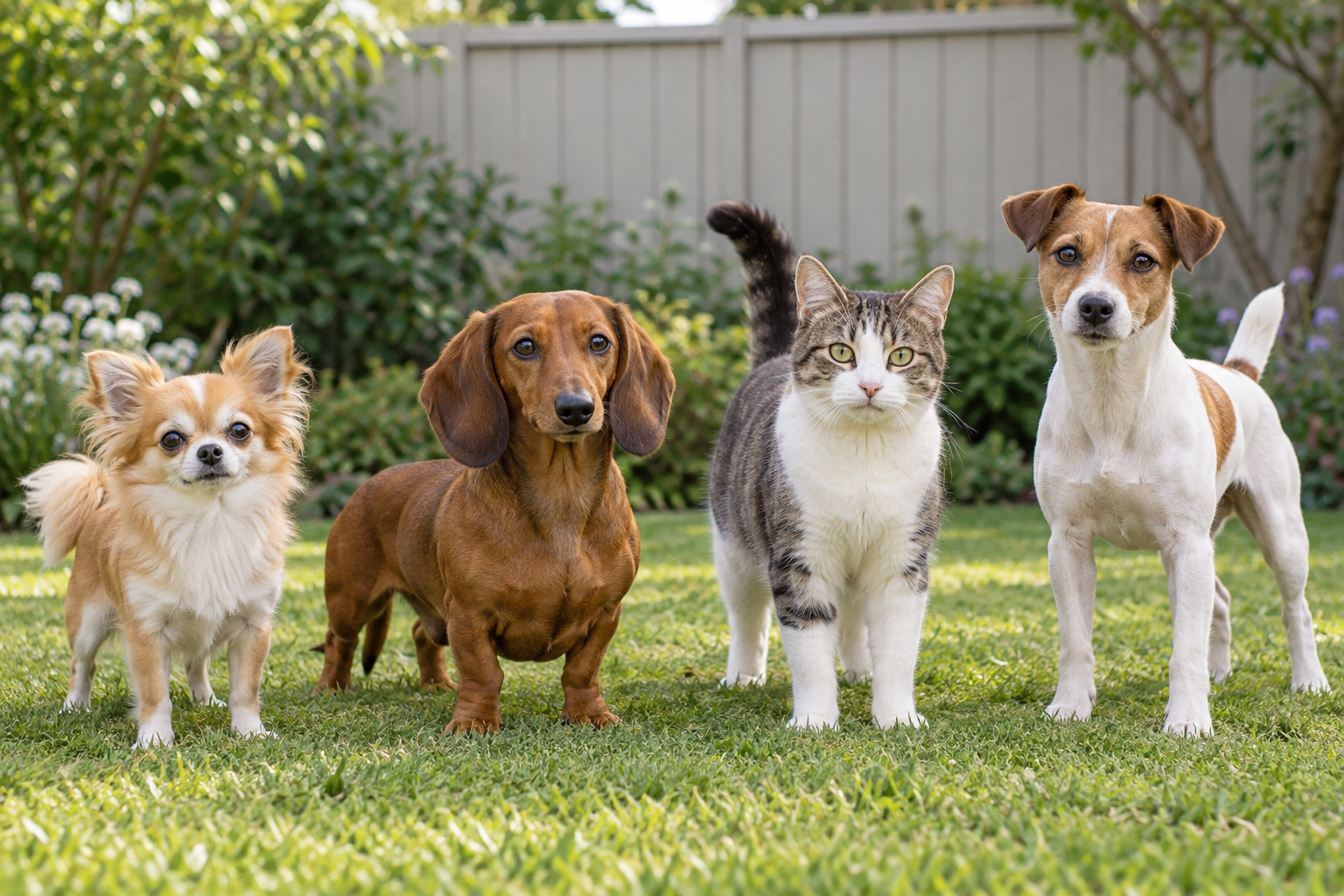
“Cat-sized dog” is an informal description, not a breed category. It usually means a small adult dog weighing roughly as much as a typical domestic cat, but weight alone can be misleading. Height, body length, bone structure, coat and healthy body condition all change how large a dog looks and feels.
Which dogs are about the size of a cat?
Chihuahuas, Pomeranians, Toy Poodles, Yorkshire Terriers, Papillons, Japanese Chins and some other toy breeds often overlap with domestic cats in weight. Miniature Dachshunds and Italian Greyhounds may also feel “cat-sized” in weight while being much longer or taller. Always use the expected adult range for the individual dog’s parents and breed, not a puppy’s current size.
What does cat-sized actually mean?
Many healthy adult domestic cats weigh about 8 to 12 lb (3.6 to 5.4 kg), with substantial variation by sex, breed and body frame. A small dog can share that weight while having a completely different silhouette. A 6 lb long-legged dog may stand taller than a 10 lb cat, while a compact 12 lb dog may feel heavier when lifted.
If size matters for housing, travel or lifting, compare four measurements: expected adult weight, shoulder height, body length and chest circumference. Also consider whether you can safely carry the dog during illness; choosing an unusually tiny animal is not necessary to make daily care manageable.
Small dog breeds that may be similar in size to a cat
| Breed | Typical adult weight | How it compares | Important context |
|---|---|---|---|
| Chihuahua | Up to 6 lb (2.7 kg) | Usually lighter than most adult cats | Small frame; still needs training, exercise and dental care |
| Pomeranian | 3-7 lb (1.4-3.2 kg) | Cat-like weight, fuller outline from coat | Active, alert companion with regular grooming needs |
| Toy Poodle | 4-6 lb (1.8-2.7 kg) | Often lighter and taller-looking | Highly trainable; coat requires professional-level upkeep |
| Yorkshire Terrier | Commonly around 7 lb (3.2 kg) | Similar to a smaller cat | Terrier character in a small body; coat and dental care matter |
| Papillon | 5-10 lb (2.3-4.5 kg) | Overlaps many cats | Athletic and mentally active despite toy size |
| Japanese Chin | 7-11 lb (3.2-5 kg) | Close overlap with many cats | Companion breed; flat-face health and heat tolerance need attention |
| Italian Greyhound | 7-14 lb (3.2-6.4 kg) | Similar weight but much taller | Fine-boned, fast and sensitive to cold |
| Miniature Dachshund | Up to about 11 lb (5 kg) | Similar weight but much longer | Back protection, appropriate body condition and controlled jumping are important |
Ranges describe breed expectations, not promises. Dogs can mature outside them, and mixed-breed puppy size is especially difficult to predict without reliable information about both parents.
Small size does not mean low maintenance
A small dog needs the same fundamentals as any dog: positive training, daily movement, scent exploration, preventive veterinary care, a nutritionally complete diet and opportunities to rest undisturbed. Some toy breeds are energetic, vocal or highly social. Others require intensive coat or dental care. Apartment suitability depends more on behaviour, noise, exercise and management than body size alone.
Exercise and enrichment
Short legs do not remove the need for activity. Match distance and intensity to age, health and conformation. Sniffing, food-search games and training provide mental work without relying only on long walks.
Training
Small dogs are sometimes picked up when a larger dog would be taught an alternative behaviour. This can leave barking, guarding or fear unresolved. Reward-based training helps small dogs navigate handling, visitors, grooming and other animals with confidence.
Health and handling
Toy dogs can be physically vulnerable around falls, rough play and much larger animals. Use a well-fitted harness where appropriate, supervise children, and do not allow jumping from high furniture if the dog’s build or health makes injury more likely.
Are cat-sized dogs good for apartments?
They can be, but floor area is only one factor. Consider barking, separation tolerance, toilet access, building rules, lift availability and nearby walking space. A quiet larger dog may suit an apartment better than a highly vocal toy dog. Meet adult examples of the breed and discuss realistic daily needs with reputable rescue staff or breeders.
Can a small dog live safely with a cat?
Similar size does not guarantee compatibility. Predatory chasing, resource guarding, fear and play style matter more than matching weight. Introduce the animals gradually, give the cat dog-free vertical routes and never allow chasing to become a habit.
- Begin in separate areas and exchange bedding scent.
- Use a secure barrier for calm visual contact.
- Keep early sessions short and give both animals an exit.
- Reward the dog for looking away and settling.
- Keep food, litter and resting resources separate.
- Supervise until calm behaviour is reliable over time.
A small dog can still injure a cat, and a cat can seriously injure a small dog’s eyes. Do not leave them together merely because their weights are similar.
How to choose the right small dog
- Choose temperament before appearance. Ask how the individual copes with handling, noise, strangers and other animals.
- Calculate lifetime care. Grooming, dentistry, insurance, training and veterinary needs can outweigh food savings.
- Avoid extreme miniaturisation. Labels such as “teacup” are marketing terms, not recognised sizes, and selecting for extreme smallness can increase fragility.
- Meet health-tested parents when buying. Ask for documentation relevant to the breed rather than accepting verbal reassurance.
- Consider an adult rescue dog. Adult size and much of the established temperament are easier to assess.
Questions to ask before bringing one home
Can everyone handle the dog gently? Is the home safe from falls and escapes? How many hours will the dog be alone? Can you meet grooming and dental needs? Are resident animals comfortable with dogs? Do you want an active training partner or a calmer companion? Honest answers are more useful than selecting the smallest breed on a list.
Frequently asked questions
What dog stays the size of a cat?
Several toy breeds remain in a similar weight range, including Chihuahuas, Pomeranians, Toy Poodles, Papillons and Yorkshire Terriers. No responsible source can guarantee an exact adult size for every puppy.
What is the smallest dog breed?
The Chihuahua is commonly recognised among the smallest established breeds. Extremely tiny individuals may need additional protection and should not be sought at the expense of health.
Are small dogs easier than cats?
They are different, not automatically easier. Dogs generally require outdoor toileting, training, regular exercise and more direct daily social management.
Are cat-sized dogs fragile?
Some are more vulnerable to falls, rough handling and collisions than larger dogs. Risk varies by build, health and activity, so discuss individual precautions with a veterinarian.
Can I carry a small dog everywhere?
Carrying is useful for safety at times, but dogs also need opportunities to walk, sniff, learn and make choices in suitable environments.
Size ranges are general breed references. Healthy adult size and body condition should be assessed with a veterinarian.