September 29, 2026
Why Does My Dog Lick His Paws?
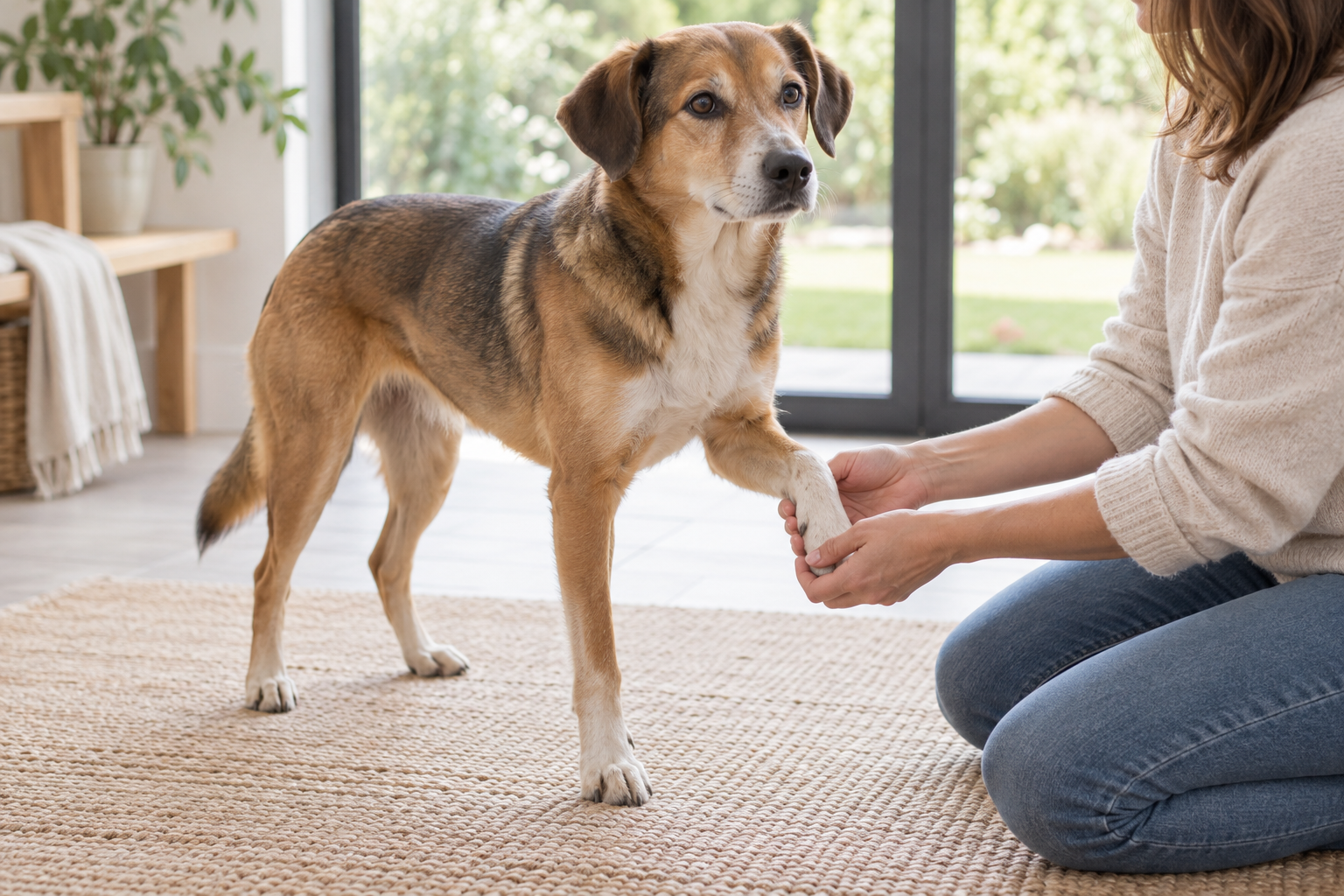
Occasional paw licking can be normal grooming, but repeated attention to one or more feet deserves a closer look.
Look at the whole dog, not one sign in isolation. Note when the change began, what else changed and whether normal eating, drinking, movement and toileting continue.
What this sign can mean
The same visible behaviour can have several explanations. Context, duration and accompanying changes help a veterinary professional narrow the possibilities; an online description cannot confirm the cause.
- Something caught between the toes, a torn nail or a small abrasion
- Itchy skin linked to environmental or food allergy
- Yeast, bacterial or parasitic skin disease
- Pain in a toe, joint or limb
- A repetitive behaviour maintained by stress or habit
What to observe before calling the vet
A short, factual record is more useful than trying several remedies. If it is safe, collect the following information without restraining or repeatedly testing your pet.
- Which paw is involved and whether the licking began suddenly
- Redness, swelling, odour, discharge, broken skin or staining
- Whether the dog limps, avoids stairs or resists touch
- Recent walks on hot, icy, salted or chemically treated surfaces
- A photo twice daily to show whether the area is changing
What you can do right now
- Rinse dirty paws with plain lukewarm water and dry carefully between the toes
- Check gently for a superficial foreign object without digging into the skin
- Prevent persistent self-trauma while arranging veterinary advice
- Keep a short record of timing, walks, food and other itching
Do not give human medication, use leftover prescriptions or force food and water. Those steps can obscure symptoms or create a second problem.
When to arrange a veterinary appointment
Arrange an examination when licking lasts more than a day, keeps returning, affects sleep, causes hair loss or accompanies ear trouble or itching elsewhere.
Seek prompt care for marked swelling, bleeding, pus, severe pain, sudden lameness, a deeply embedded object or suspected chemical burn.
A useful 24-hour record
Write down the time of each episode, meals, water, urine, stool, sleep, activity and medication. Take clear photographs or short videos when doing so does not delay urgent care. In a multi-pet home, separate observation periods may be necessary to identify which animal ate or used the litter area.
Patterns matter: a single event after a clear trigger differs from a change that repeats, intensifies or appears alongside appetite, weight, breathing, mobility or personality changes. Your veterinary team can also tell you whether monitoring is reasonable or an examination is needed sooner.
Frequently asked questions
Should I put cream on the paw?
Not without veterinary guidance. Human creams can irritate skin, hide important changes or be unsafe when licked.
Can boredom cause paw licking?
It can contribute to repetitive licking, but physical causes should be considered first, especially when one paw is targeted.
Does brown fur mean infection?
Saliva can stain pale fur. The colour alone does not diagnose infection; odour, inflammation and microscopy may matter.
Reliable reference
This guide was prepared as general education and reviewed against veterinary reference material. Read the supporting source: veterinary guidance used for this topic.
This article does not diagnose or replace examination by a veterinarian. When symptoms are sudden, severe or worsening, contact a veterinary professional.