October 10, 2026
Homemade Beef Cat Treats
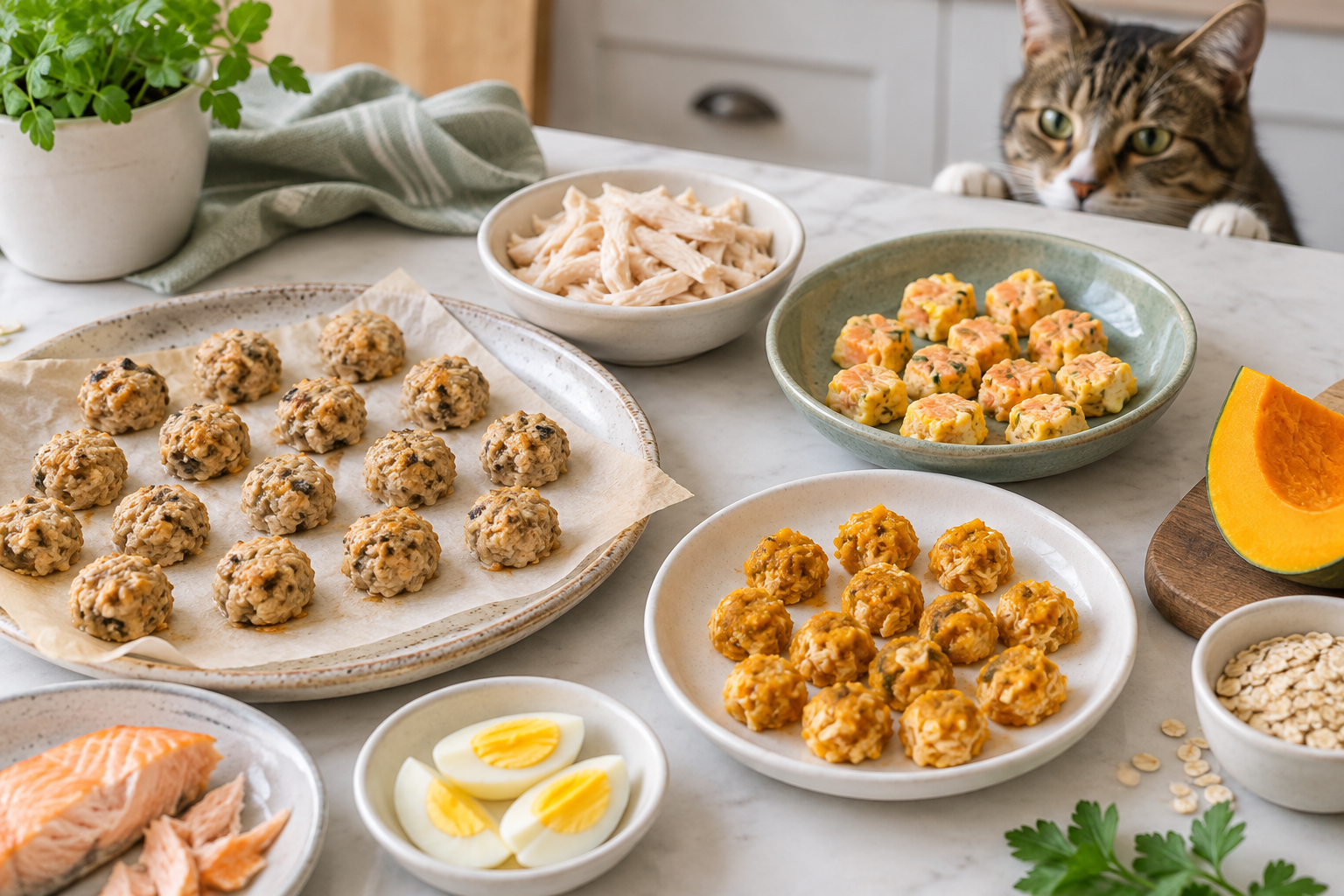
Soft, pea-size beef treats for cats made from fully cooked lean beef without salt, stock, dairy or seasoning.
This recipe is not formulated to replace balanced cat food. Keep all treats and extras to 10% or less of daily calories unless your veterinarian gives a different plan.
Ingredients
- 1 cup fully cooked lean beef, finely minced
- 1 egg
- 1/2 cup finely ground rolled oats
- 1–2 tablespoons water if needed
How to make homemade beef cat treats
- Heat the oven to 325°F (165°C) and line a tray with parchment.
- Blend the cooked beef and egg into a thick paste. Add ground oats and only enough water to make it spoonable.
- Pipe or spoon pea-size dots onto the tray and flatten them so they cook evenly.
- Bake for 12–16 minutes until the egg is completely set. Cool before offering one small piece.
Portion guide
Most cats need only one pea-size piece at a time. Cut every treat small enough to chew comfortably and stop if the cat tries to swallow pieces whole. The practical limit depends on body size, usual food, activity and medical history. When introducing any new ingredient, offer one small piece and observe appetite, stool, skin and behaviour before offering it again.
Storage and food safety
Refrigerate for up to 3 days or freeze measured portions for up to 1 month. Thaw only the amount needed in the refrigerator. Label the container with the recipe and date. Use clean hands, separate raw animal ingredients from ready-to-eat food and wash bowls, boards and utensils promptly.
Poultry should reach 165°F (74°C), fish 145°F (63°C), ground meat 160°F (71°C), and egg dishes 160°F (71°C). A thermometer is more reliable than colour. Cool cooked treats promptly and never leave moist meat-based treats at room temperature for extended periods.
Before you offer the first piece
- Check every packaged ingredient for onion, garlic, chives, xylitol, excess salt and added flavourings.
- Do not use this recipe during an elimination diet unless the veterinarian supervising that trial approves every ingredient.
- Ask first if your pet has pancreatitis, kidney disease, diabetes, urinary disease, food allergy, gastrointestinal disease or a prescription diet.
- Stop and seek veterinary advice for repeated vomiting, diarrhoea, facial swelling, marked itching, weakness or breathing difficulty.
Recipe note
Use plain lean meat rather than deli beef, gravy-covered leftovers or meat cooked with onion and garlic. This is a treat and does not replace complete cat food.
Frequently asked questions
Can this replace a meal?
No. It does not contain the complete balance of amino acids, fats, vitamins and minerals required for long-term feeding. A home-prepared main diet needs an individual recipe from a board-certified veterinary nutrition specialist.
How many can I give?
There is no universal piece count because the size and calories of homemade treats vary. Keep pieces tiny, weigh ingredients when possible and keep all extras within 10% of daily calories.
Can I change the ingredients?
A substitution changes texture, calories and suitability. Do not improvise with sweeteners, seasoning, stock, flavoured spreads or mixed baby foods. When an allergy or medical condition is involved, ask your veterinarian.
What foods should never be added?
Do not add chocolate, caffeine, alcohol, grapes, raisins, onion, garlic, chives, macadamia nuts, xylitol, raw yeast dough or cooked bones. Avoid unnecessary salt, sugar and fat.
Educational recipe for healthy adult pets. Individual veterinary advice takes priority.