August 1, 2026
How to Stop Puppy Biting: A Practical Training Plan
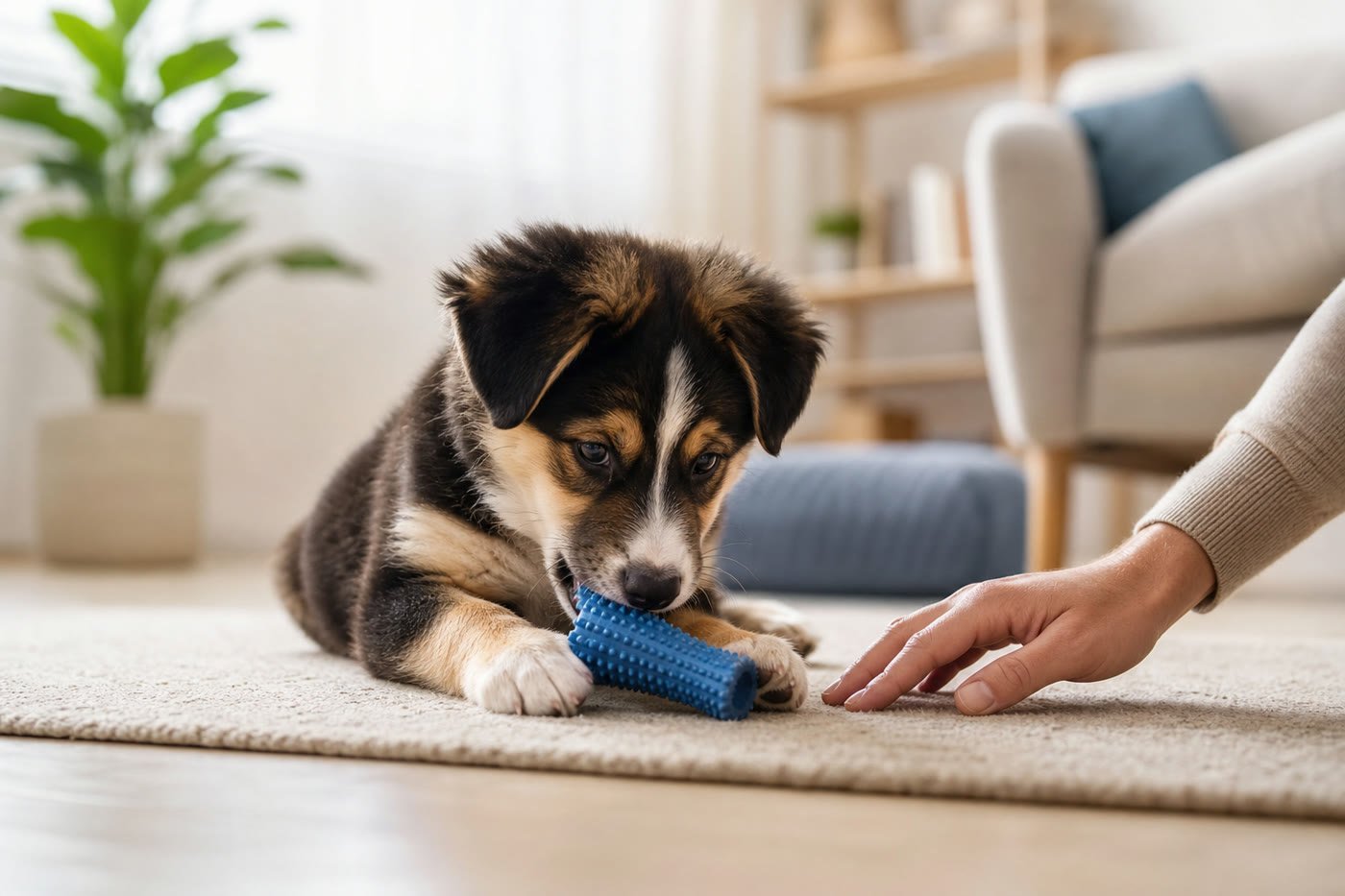
Puppy biting is usually a normal part of play, exploration and teething, but that does not mean people have to endure sharp teeth. The goal is to teach a puppy what to bite, how gently to use the mouth and how to settle before excitement becomes unmanageable.
This guide explains how to stop puppy biting with practical management and reward-based training, plus the warning signs that call for veterinary or professional help.
How do you stop a puppy biting?
Keep an appropriate chew or toy within reach, redirect before teeth reach skin, pause interaction calmly when biting continues and reward gentle play. Protect sleep, toilet breaks and quiet time because overtired or frustrated puppies bite more. Avoid punishment, shouting and holding the muzzle.
Why puppies bite
- Exploration: puppies investigate objects and social reactions with their mouths.
- Play: chasing, grabbing and wrestling are normal elements of puppy play.
- Teething: chewing may increase as adult teeth develop.
- Over-arousal: a puppy can lose control after prolonged play or an exciting arrival.
- Fatigue: young puppies need considerable sleep and may become frantic when overtired.
- Unmet needs: hunger, a toilet break, discomfort or insufficient appropriate activity can contribute.
The American Kennel Club describes mouthing as normal puppy behaviour and recommends teaching bite inhibition, redirecting to suitable toys and ending play briefly when teeth become too hard.
A step-by-step plan
- Before play begins, place several safe puppy chews and toys within reach.
- Start interaction when the puppy is rested and has recently toileted.
- Move the toy along the floor so it is more interesting than hands or clothing.
- If the puppy approaches skin, become still and offer the toy without pushing it into the mouth.
- If teeth continue to contact skin, calmly stand up or step behind a barrier for 10 to 20 seconds.
- Resume quietly and reward four paws on the floor or engagement with the toy.
- After repeated biting, end the session and provide a toilet opportunity followed by calm rest.
The pause is not a frightening punishment. It simply makes rough teeth stop social play while appropriate choices keep it going. Repetition and consistency matter more than a dramatic reaction.
Teach gentle mouth control
Puppies learn that pressure has consequences. During calm play, soft contact can be redirected while harder contact ends the interaction immediately. The long-term rule should still be that teeth do not belong on human skin, but a graduated response helps the puppy learn control rather than merely suppressing every warning.
Children should not conduct this exercise. Their fast movements, high voices and difficulty remaining still can intensify chasing. An adult should supervise all puppy-child interaction and use a gate or pen when active supervision is not possible.
What to do when a puppy bites clothes or ankles
Stop moving because tugging makes fabric act like prey. Scatter a few pieces of the puppy’s measured food away from your feet or redirect to a longer toy, then move behind a barrier if necessary. Plan for predictable times: keep a toy beside the hallway, garden door and sofa rather than searching after biting begins.
Manage the environment
- Use gates and a puppy-safe area to prevent rehearsing attacks on feet.
- Wear practical clothing temporarily and avoid loose trailing fabric.
- Rotate safe chews so novelty does not depend on hands.
- Schedule short play and training sessions instead of one exhausting session.
- Provide sniffing, food-search and calm enrichment as well as physical activity.
- Protect regular naps in a quiet place.
What not to do
| Response | Why it can backfire | Better option |
|---|---|---|
| Hold the muzzle shut | May create fear of hands and restraint | Create space and redirect |
| Shout or squeal | Can frighten or excite the puppy | Use a calm, brief pause |
| Push the puppy away | Movement and touch can become play | Become still and step behind a barrier |
| Use hands as toys | Creates an inconsistent rule | Use toys that keep teeth away from skin |
Teething and safe chewing
Choose items made for the puppy’s size and chewing style, inspect them frequently and supervise anything that could break or be swallowed. Very hard objects may damage teeth. Ask a veterinarian about suitable options, especially after a dental problem or when the puppy attempts to eat non-food material.
A realistic daily rhythm
Alternate short periods of toileting, training, play, food and rest. Many apparently difficult evening episodes happen after a puppy has been awake too long. A calm food-search activity and protected nap may help more than additional high-intensity exercise. Keep a simple log for several days; patterns in time, visitors or fatigue often become obvious.
When biting needs professional help
Arrange a veterinary check when biting begins suddenly, handling a particular body area triggers a response or the puppy seems unwell. Seek a qualified reward-based trainer or veterinary behaviour professional for repeated bites that break skin, stiff guarding, growling around resources, fear, escalating intensity or a household safety concern. Early help is valuable and does not mean the puppy is bad.
Frequently asked questions
At what age does puppy biting stop?
There is no exact deadline. Teething and experience influence the pattern, while consistent teaching and management determine whether rough mouthing becomes a habit.
Should I say “ouch”?
Some puppies pause, but others become more excited or worried. A quiet withdrawal of attention is usually clearer and easier to repeat consistently.
Why is my puppy worse in the evening?
Fatigue, accumulated excitement and an unmet toilet or rest need commonly converge late in the day.
Can I use a crate as a time-out?
Do not make a safe resting place predict punishment. Calmly separate with a gate, then support rest when the puppy is ready.
Why does my puppy bite only me?
Your movement, play style or availability may differ from other people’s. Compare what happens immediately before each episode.
Is growling during play normal?
Play can include vocalisation, but evaluate the whole body and context. Stiffness, guarding or escalating bites deserve professional assessment.
Persistent, painful or sudden biting should be discussed with a veterinarian and a qualified reward-based behaviour professional.