Dog breed profile
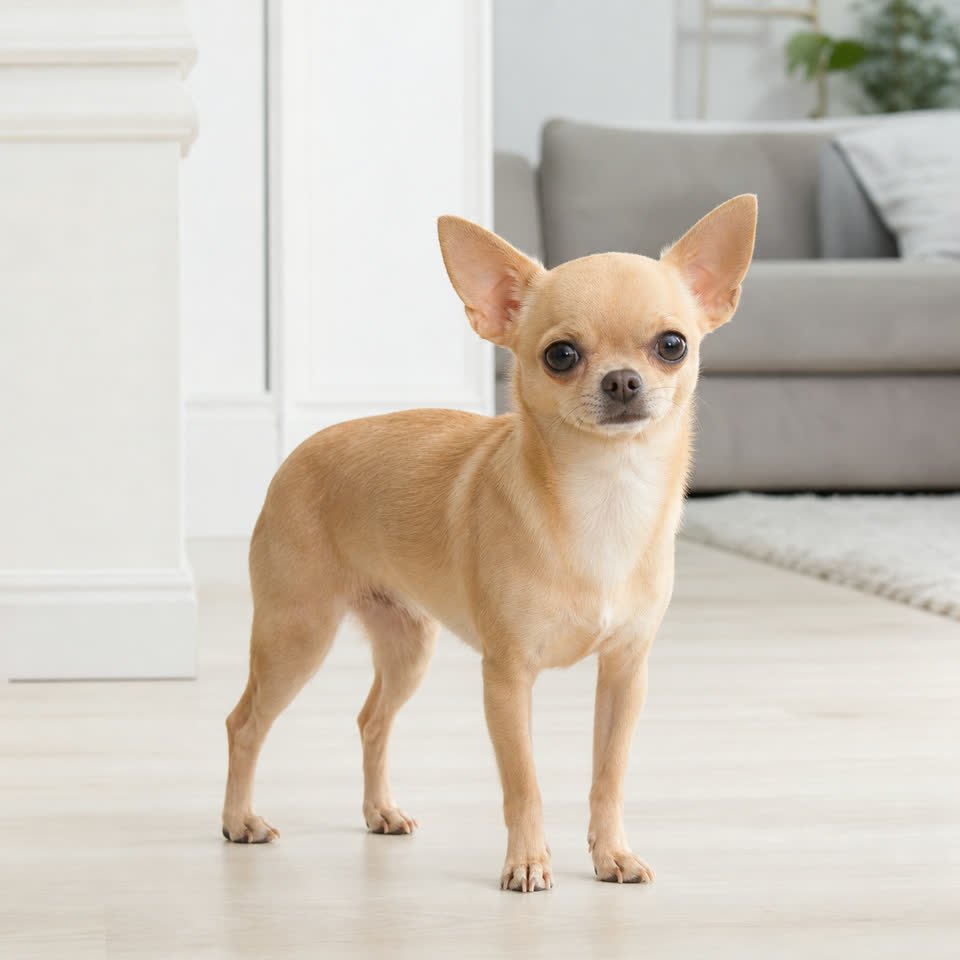
Chihuahua
A tiny, alert companion whose small body needs gentle handling, dental care and the same thoughtful training expected of a larger dog.
- Species
- Dogs
- Size
- Small
- Origin
- Mexico
- Typical lifespan
- 14-16 years
- Adult size
- Not over 6 lb (2.7 kg)
- Coat
- Smooth or long coat
- Activity
- Moderate
- Grooming
- Weekly; coat-dependent
- Best suited to
- Careful homes able to protect a very small dog without overprotecting
A complete dog in a very small frame
Chihuahuas can be observant, expressive and closely bonded companions. Carrying them through every uncertain moment can prevent useful learning, while forcing interactions can increase fear. Let the dog move, explore and make choices in appropriately safe environments.
Reward calm behaviour around visitors, handling and everyday sounds. Young children may unintentionally injure a tiny dog, so contact requires close adult supervision and genuine respect for the dog’s signals.
Movement and weather
Several short walks, sniffing and indoor training can meet many needs. Small size does not eliminate the need for exercise. Cold or wet weather may require brief outings and suitable protection, but clothing must fit without restricting movement.
Dental and physical care
Dental disease is an important concern in toy breeds. Begin gentle tooth brushing and veterinary dental planning early. Use a secure harness where appropriate, prevent falls from height and maintain a lean body condition.
Responsible selection
Avoid sellers advertising extreme miniaturisation or “teacup” dogs. Ask about heart, eye and kneecap evaluation and family history. Coughing, collapse, pain, reluctance to move or appetite change needs veterinary attention rather than assumptions based on size.
Chihuahua care in everyday life
The Chihuahua developed from Mexico and today needs to be understood as more than a recognisable appearance. With an adult size commonly described as Not over 6 lb (2.7 kg) and an activity level of moderate, this breed needs a household that can match care decisions to the individual animal rather than to assumptions about the name alone.
For a Chihuahua, early experience, inherited traits, current health and the quality of daily routines can all alter behaviour. Ask for veterinary history, socialisation details and an honest description of how the individual responds to handling, unfamiliar people, other animals and periods without company.
Movement and enrichment for a Chihuahua
Chihuahua generally benefits from a dependable balance of walks, sniffing, short learning sessions and time to settle at home.
Watch Chihuahua after activity: an ability to drink, rest and return to normal movement is more informative than a rigid daily minute target. Any limping, coughing, weakness, distress or unusual recovery in a Chihuahua should prompt a pause and veterinary advice.
Chihuahua coat and handling routine
A Chihuahua typically has a smooth or long coat, while the profile’s practical grooming baseline is weekly; coat-dependent. Adjust that baseline for season, lifestyle, age and the condition of the individual coat rather than following a calendar without observation.
For Chihuahua grooming, include calm checks of skin, ears, eyes, mouth, paws and nails. Pair each new tool with something positive, keep early sessions short and seek professional assessment for pain, odour, redness, sudden hair loss or persistent irritation.
Creating the right home for a Chihuahua
Although Chihuahua is classed as small, the success of a home depends more on routine, safe movement and access to rest than floor area alone. This breed is described as best suited to careful homes able to protect a very small dog without overprotecting.
A sensible Chihuahua home plan includes secure exits, a calm recovery space and management for visitors before relying on trained behaviour. Measure the individual Chihuahua before selecting beds, carriers, harnesses or safety equipment; breed averages are not a reliable fit guide.
A Chihuahua settling-in plan
- Use the first three days to establish Chihuahua's toilet, feeding and rest locations without demanding immediate social confidence.
- For the remainder of week one, help Chihuahua learn household sounds, surfaces and boundaries in short, manageable exposures.
- In weeks two and three, extend Chihuahua's activity only when gait, breathing and settling remain comfortable after each session.
- By the end of month one, document Chihuahua's weight trend, skin, ears, dental condition and behaviour so emerging concerns have a clear baseline.
Before choosing a Chihuahua
- Confirm that a moderate routine for a Chihuahua is realistic during ordinary working weeks, not only at weekends.
- Budget for the Chihuahua grooming expectation of weekly; coat-dependent as well as preventive veterinary and dental care.
- Compare the Chihuahua adult-size reference of Not over 6 lb (2.7 kg) with housing, transport and equipment constraints.
- Ask which health screening and medical records are relevant to the specific Chihuahua being considered.
- Check whether the observed individual matches the stated home fit: careful homes able to protect a very small dog without overprotecting.
Common Chihuahua questions
What activity routine suits a Chihuahua?
The Chihuahua profile indicates moderate activity. Build from manageable sessions and use movement quality, body condition, enthusiasm and recovery to adjust the routine for that animal.
What grooming does a Chihuahua require?
Plan around weekly; coat-dependent for the Chihuahua coat, described here as smooth or long coat. Shedding, skin health and lifestyle may justify more frequent attention.
Which household is appropriate for a Chihuahua?
The strongest general match for a Chihuahua is careful homes able to protect a very small dog without overprotecting. The final decision should still be based on the individual animal’s health, history and demonstrated temperament.
What lifespan is typical for a Chihuahua?
The reference range for a Chihuahua is 14-16 years. Weight management, preventive examinations, dental care, appropriate nutrition and safe activity all contribute to quality of life.
Continue with the Chihuahua owner’s care library or use the Pawtigo planning calculators. These Chihuahua notes are educational and cannot replace advice from a veterinarian who has examined the animal.
Source and review note
Core breed details were checked against the linked official breed resource. Health information is educational and does not replace veterinary advice.