Cat breed profile
Sphynx
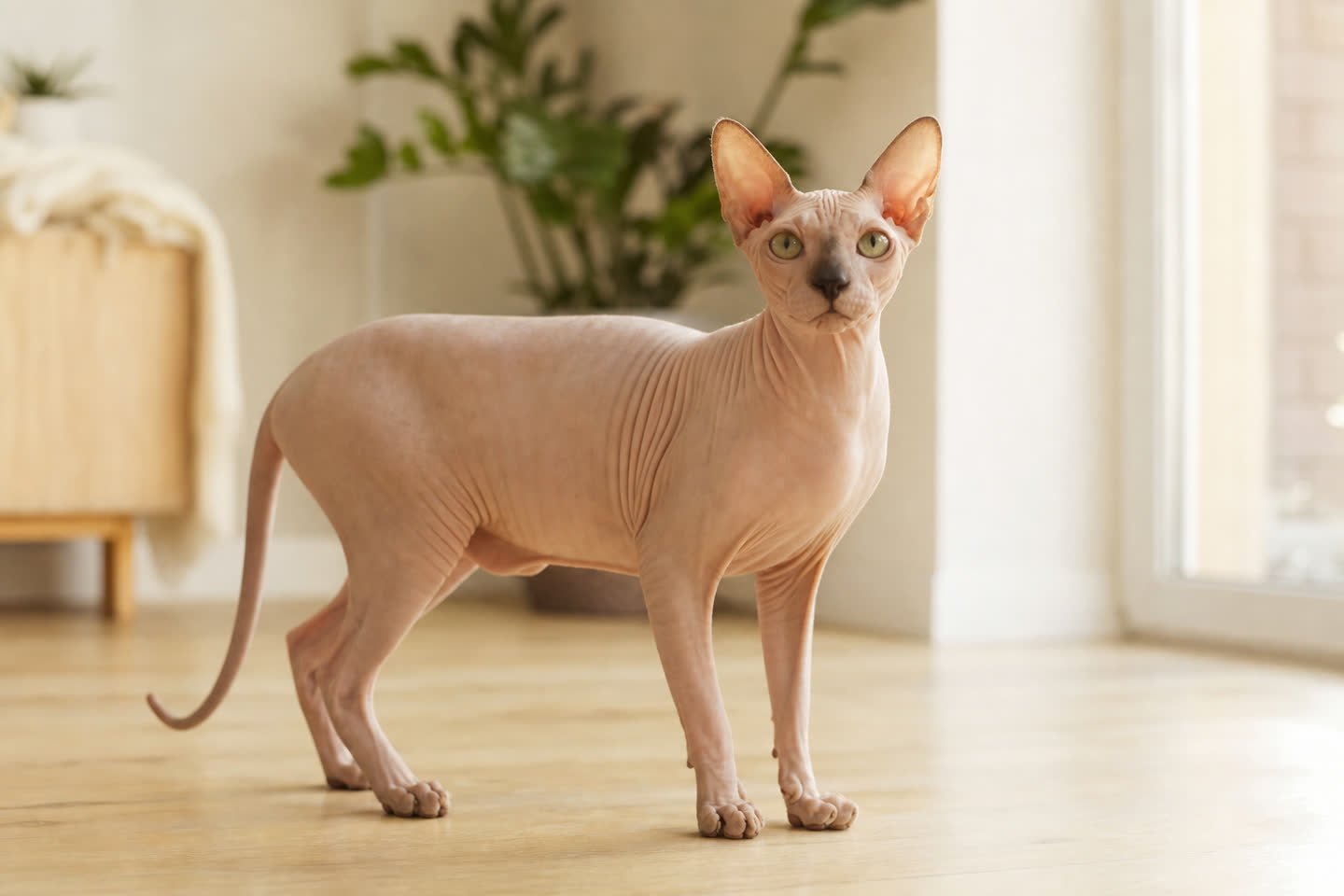
A warm-seeking, social cat whose lack of a conventional coat creates additional skin, temperature and household-care responsibilities.
- Species
- Cats
- Size
- Medium
- Origin
- Canada
- Typical lifespan
- Individual longevity varies
- Adult size
- Medium, muscular
- Coat
- Fine down with exposed skin
- Activity
- High
- Grooming
- Regular skin, ear and nail care
- Best suited to
- Warm indoor homes prepared for specialist routine care
Hairless does not mean maintenance-free
Sphynx cats usually have fine down rather than truly bare skin. Without a conventional coat to absorb oils, skin care becomes an active responsibility. Bathing too often or using unsuitable products can disrupt the skin, so routines should be guided by the individual and veterinary advice.
Warmth and environmental safety
Provide warm sleeping choices without allowing direct contact with unsafe heaters. Sun exposure can damage skin, making a controlled indoor environment particularly important. Clothing is not automatically necessary and can rub, restrict movement or cause overheating; observe the cat rather than treating clothing as decoration.
Social and activity needs
Many Sphynx are interactive, playful and interested in close contact. Daily climbing, play and puzzle opportunities remain important. Nail beds and ears can accumulate oils and need gentle routine inspection. Dental care should begin early.
Health questions
Hypertrophic cardiomyopathy is a significant concern. Ask about regular specialist cardiac screening and family history rather than relying on a one-time result. Report breathing changes, reduced activity or skin lesions promptly. Claims that the breed is hypoallergenic are unreliable because allergens are not limited to fur.
Sphynx care in everyday life
The Sphynx developed from Canada and today needs to be understood as more than a recognisable appearance. With an adult size commonly described as Medium, muscular and an activity level of high, this breed needs a household that can match care decisions to the individual animal rather than to assumptions about the name alone.
For a Sphynx, early experience, inherited traits, current health and the quality of daily routines can all alter behaviour. Ask for veterinary history, socialisation details and an honest description of how the individual responds to handling, unfamiliar people, other animals and periods without company.
Movement and enrichment for a Sphynx
Sphynx is likely to benefit from several short, energetic play windows, climbing opportunities and daily problem-solving rather than one prolonged session.
A useful Sphynx routine alternates chase-style play with quieter searching tasks and finishes with a calm transition to rest. Any limping, coughing, weakness, distress or unusual recovery in a Sphynx should prompt a pause and veterinary advice.
Sphynx coat and handling routine
A Sphynx typically has a fine down with exposed skin, while the profile’s practical grooming baseline is regular skin, ear and nail care. Adjust that baseline for season, lifestyle, age and the condition of the individual coat rather than following a calendar without observation.
For Sphynx grooming, include calm checks of skin, ears, eyes, mouth, paws and nails. Pair each new tool with something positive, keep early sessions short and seek professional assessment for pain, odour, redness, sudden hair loss or persistent irritation.
Creating the right home for a Sphynx
Sphynx is described as best suited to warm indoor homes prepared for specialist routine care. A suitable home should include a quiet retreat, elevated observation points and separated feeding, water and litter resources.
Prepare for Sphynx by placing stable scratching surfaces near resting and social areas, then offer more than one route through busy rooms. Measure the individual Sphynx before selecting beds, carriers, harnesses or safety equipment; breed averages are not a reliable fit guide.
A Sphynx settling-in plan
- Start Sphynx in a low-traffic room and record eating, drinking and litter use before offering a larger territory.
- During week one, allow Sphynx to initiate contact and add new rooms only when exploration looks relaxed rather than hurried or defensive.
- Across weeks two and three, pair Sphynx's carrier, brush and body checks with rewards, stopping before avoidance increases.
- By week four, compare Sphynx's current sleep, movement, coat and social behaviour with the first days and investigate persistent changes promptly.
Before choosing a Sphynx
- Confirm that a high routine for a Sphynx is realistic during ordinary working weeks, not only at weekends.
- Budget for the Sphynx grooming expectation of regular skin, ear and nail care as well as preventive veterinary and dental care.
- Compare the Sphynx adult-size reference of Medium, muscular with housing, transport and equipment constraints.
- Ask which health screening and medical records are relevant to the specific Sphynx being considered.
- Check whether the observed individual matches the stated home fit: warm indoor homes prepared for specialist routine care.
Common Sphynx questions
What activity routine suits a Sphynx?
The Sphynx profile indicates high activity. Build from manageable sessions and use movement quality, body condition, enthusiasm and recovery to adjust the routine for that animal.
What grooming does a Sphynx require?
Plan around regular skin, ear and nail care for the Sphynx coat, described here as fine down with exposed skin. Shedding, skin health and lifestyle may justify more frequent attention.
Which household is appropriate for a Sphynx?
The strongest general match for a Sphynx is warm indoor homes prepared for specialist routine care. The final decision should still be based on the individual animal’s health, history and demonstrated temperament.
What lifespan is typical for a Sphynx?
The reference range for a Sphynx is Individual longevity varies. Weight management, preventive examinations, dental care, appropriate nutrition and safe activity all contribute to quality of life.
Continue with the Sphynx owner’s care library or use the Pawtigo planning calculators. These Sphynx notes are educational and cannot replace advice from a veterinarian who has examined the animal.
Source and review note
Core breed details were checked against the linked official breed resource. Health information is educational and does not replace veterinary advice.