July 31, 2026
How to Exercise a Dog Indoors: 15 Safe Games
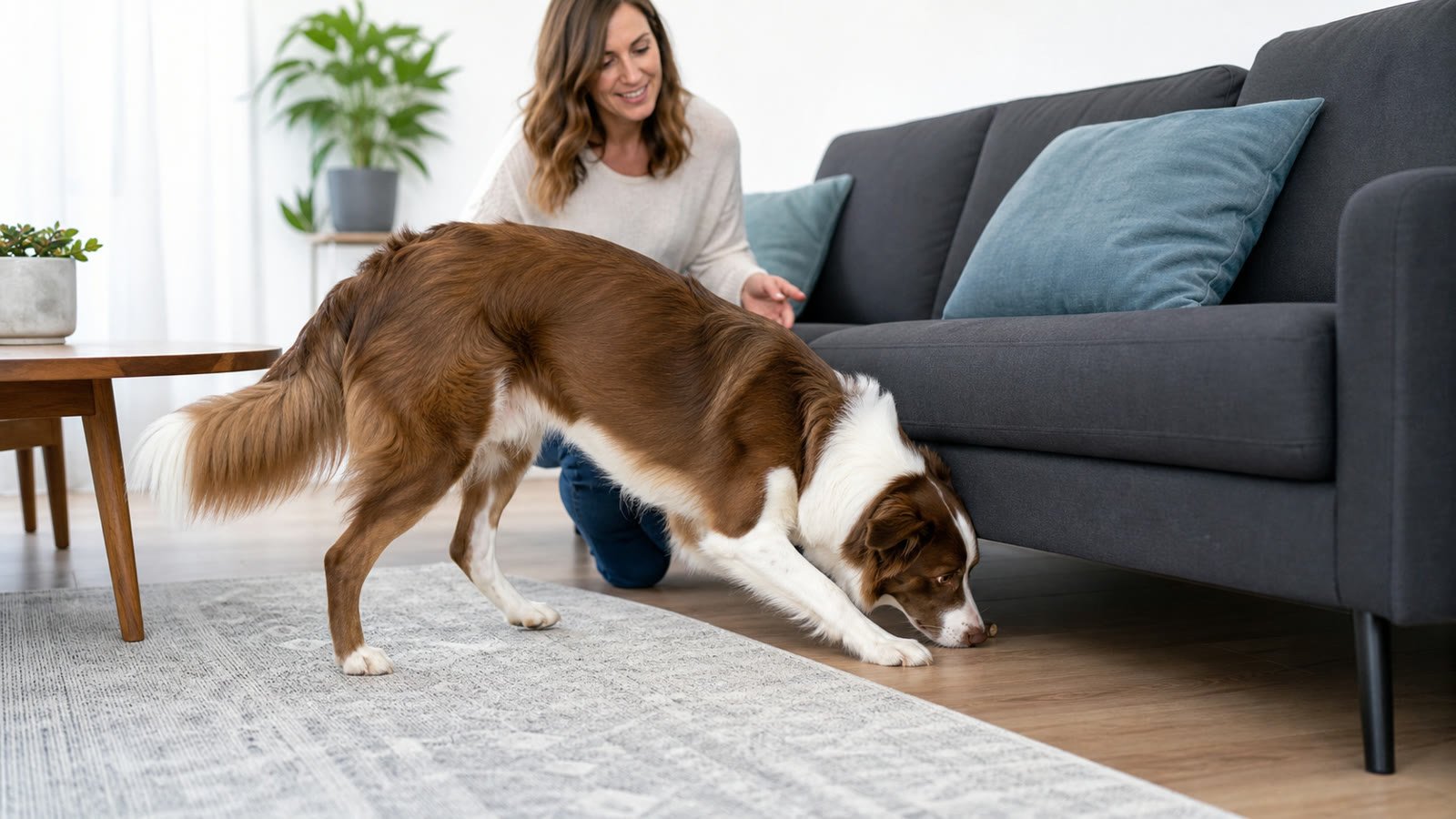
Bad weather, heat, recovery periods and apartment living can limit outdoor activity, but a dog can still use the body, nose and brain safely indoors. The goal is not to create frantic exhaustion in a small room. It is to provide controlled movement, problem-solving and opportunities to settle.
This complete guide explains how to exercise a dog indoors, which games suit different spaces and life stages, how to reduce slipping and over-arousal, and how to build a balanced indoor day without expensive equipment.
How can you exercise a dog indoors?
Combine short scent searches, reward-based training, controlled tug, hide-and-seek, gentle movement between stations and calm food-based enrichment. Choose activities for the dog’s age, health and flooring, supervise all materials and alternate activity with rest. Indoor games complement rather than permanently replace outdoor toileting, fresh air and species-appropriate exploration.
Physical exercise and mental enrichment are different
Movement supports muscles, mobility and cardiovascular health. Mental work involves choosing, remembering, sniffing and solving. Both matter, but neither should be used to overwhelm the dog. A five-minute scent search may produce calm concentration while repeated ball throwing in a hallway can produce high arousal and unsafe turns.
The American Kennel Club includes hide-and-seek among useful indoor activities and emphasises that exercise requirements depend on age, breed and health. Your veterinarian should guide exercise during recovery or with joint, heart, respiratory or neurological conditions.
Prepare a safe indoor exercise area
- Clear cables, glass, sharp corners and unstable furniture.
- Use non-slip rugs or mats on smooth flooring.
- Close stairs and rooms that are not part of the activity.
- Keep children and other pets away if competition could develop.
- Use pieces from the normal food allowance where possible.
- Stop before the dog becomes frantic, frustrated or physically tired.
Long-backed breeds, puppies, seniors and dogs with joint concerns should avoid repetitive stairs, tight turns and jumping. Even a healthy dog can slip when chasing on laminate or tile.
15 indoor games for dogs
1. Find the food
Let the dog watch you place several pieces of kibble around one room. Release with a consistent cue. As skill grows, use slightly more concealed but always accessible positions.
2. Find a person
One person holds the dog while another hides behind an interior door. Call once, reward the search and switch roles. Never hide where furniture may fall or the dog could become trapped.
3. Box search
Place open, empty cardboard boxes apart and hide food in one. Supervise closely and remove boxes if the dog eats cardboard or guards finds.
4. Hand target
Teach the dog to touch an open palm with the nose. Move the target gradually between safe positions to create gentle movement and focus.
5. Go to mat
Reward stepping on a mat, then lying down and remaining while you take one step away. This trains calm control as well as movement.
6. Toy name
Teach one toy’s name, then ask the dog to choose it from two objects. Keep sessions short and use durable items already safe for the dog.
7. Controlled tug
Use start, release and finish cues. Keep the toy low, avoid violent neck movement and stop if teeth contact skin.
8. Hallway recall
Two people call the dog alternately over a short non-slip distance. Reward arrival; never punish a slow response.
9. Which hand?
Hide food in one closed fist and let the dog indicate a choice. Open only after a gentle nose response, not biting or scratching.
10. Follow the trail
Lay a short, visible food trail that leads to a small final reward. Make it harder by increasing spacing, not by hiding unsafe food.
11. Object exploration
Reward voluntary investigation of safe household textures: a towel, low box or stable cushion. Do not force feet onto unfamiliar surfaces.
12. Gentle obstacle route
Walk around cones made from stable household objects and step over a very low pole. Avoid jumping and unstable homemade structures.
13. Settle after action
After a short game, reward resting on a bed. Learning to come down from excitement is part of a complete exercise plan.
14. Choice walk
Place two safe stations in a room and let the dog choose which to investigate. Choice itself provides information and confidence.
15. Short skill session
Practise two or three known cues with generous reinforcement. End while accuracy and enthusiasm remain high.
Indoor exercise by life stage
| Dog | Priorities | Avoid |
|---|---|---|
| Puppy | Brief exploration, training and gentle play | Forced repetition, jumping and slippery chasing |
| Healthy adult | Varied movement, sniffing and problem-solving | Endless high-arousal games |
| Senior | Traction, slow searches and comfortable range of motion | Tight turns, stairs and sudden acceleration |
| Recovering dog | Only veterinarian-approved activity | Unapproved exercise despite apparent enthusiasm |
How long should indoor sessions last?
Use several short sessions rather than one exhausting block. Two to ten minutes may be enough depending on difficulty and the dog. Quality is measured by relaxed engagement and recovery, not panting or collapse. Stop for lagging, repeated displacement sniffing, avoidance, frantic grabbing, stiffness or loss of accuracy.
A sample rainy-day schedule
- Morning: outdoor toilet break, five-minute sniff search, breakfast and rest.
- Midday: short training session, gentle play and another toilet opportunity.
- Afternoon: box search or hide-and-seek, followed by protected sleep.
- Evening: weather-appropriate outdoor walk where possible, then settle practice.
How to build an indoor exercise plan that actually works
Start with the dog’s normal routine rather than an arbitrary target. Write down when walks usually happen, when the dog is naturally alert and when the household can supervise. Replace each disrupted outdoor period with a small combination of movement, sniffing and recovery. A useful plan might pair five minutes of searching with three minutes of familiar cues, followed by a genuine rest. The sequence matters: constant stimulation can leave a dog more agitated rather than more satisfied.
Progress one variable at a time. Increase duration, complexity or distraction, but not all three in the same session. If the dog begins barking, grabbing, racing around or abandoning food, the task may have become frustrating. Return to the last easy version. Record which activities produce calm engagement and which create excessive excitement; that observation is more useful than copying another dog’s schedule.
Indoor exercise mistakes to avoid
- Chasing exhaustion: repeated high-speed activity can increase arousal and physical risk without teaching the dog to settle.
- Using slippery floors: fast turns on tile or laminate can strain joints and frighten dogs that lose footing.
- Making every meal difficult: enrichment should remain achievable. Dogs also deserve uncomplicated access to food.
- Leaving homemade puzzles unattended: cardboard, fabric and plastic can become ingestion hazards.
- Ignoring pain or fatigue: reluctance, stiffness, limping or unusual panting means the activity should stop.
How to measure success
The best outcome is not a dog that collapses from fatigue. Look for willing participation, relaxed body language, normal sleep and an ability to disengage when the session ends. Behaviour across the rest of the day matters too. If destructive behaviour, pacing or vocalisation persists, consider whether the dog also needs outdoor decompression, social contact, a revised routine or professional assessment. Indoor games are one part of welfare, not a substitute for veterinary care or a permanently restricted life.
Frequently asked questions
Can indoor exercise replace a walk?
Temporarily, when weather or medical guidance requires it. It does not fully replace outdoor scents, toileting and environmental experience.
How do I tire out a high-energy dog indoors?
Aim for fulfilled rather than exhausted. Alternate scent work, training, controlled movement and rest instead of escalating intensity continuously.
Are stairs good indoor exercise?
They can be strenuous and unsuitable for puppies, seniors, long-backed dogs and dogs with joint problems. Choose safer level-floor games unless a veterinarian approves them.
Can I use a laser pointer with my dog?
Avoid games the dog can never physically complete. They can create frustration or compulsive light chasing in susceptible dogs.
What if my dog destroys puzzle materials?
Stop, remove the material and use simpler supervised searches without loose parts.
Why is my dog more excited after indoor play?
The activity may be too intense or lack a calm finish. Shorten it, reduce speed and teach a predictable settling phase.
Ask a veterinarian before exercising a dog with pain, illness, breathing difficulty, injury or post-operative restrictions.