July 31, 2026
12 Signs Your Dog Is Bored—and What to Do
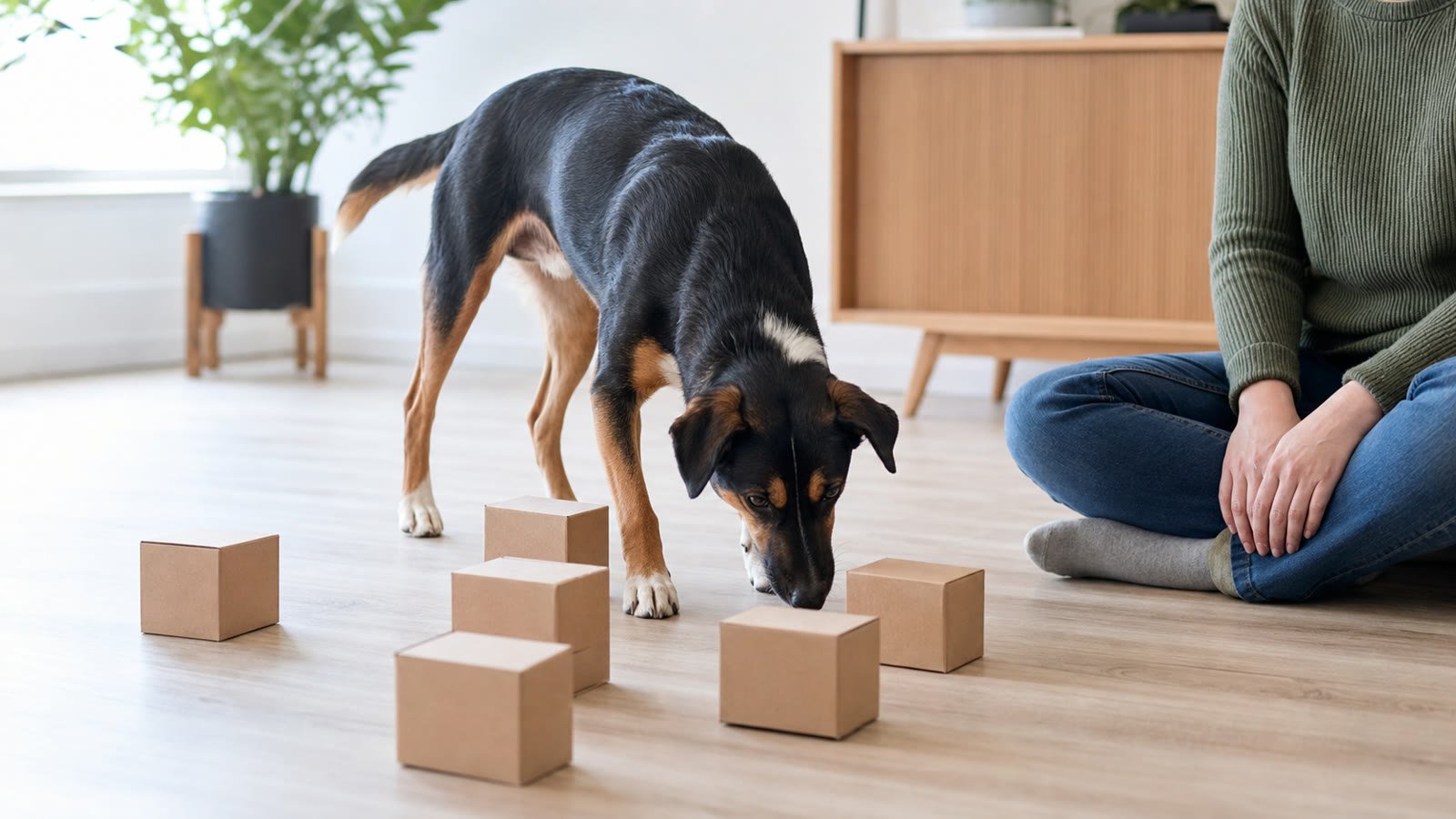
A bored dog does not always look inactive. Boredom may appear as pacing, stealing objects, barking, digging or repeatedly demanding interaction. The same behaviours can also arise from anxiety, pain, inadequate sleep or normal age-related needs, so context matters.
This guide explains signs your dog is bored, how boredom differs from separation distress and how to build a balanced enrichment plan rather than simply adding more intense exercise.
What are the signs of boredom in dogs?
Possible signs include restlessness, repeated attention seeking, destructive chewing, digging, scavenging, barking and inventing games with household objects. No single sign proves boredom. Review when the behaviour happens, rule out health issues and check whether the dog receives suitable physical, mental, social and sensory activity.
Twelve possible signs of canine boredom
- Pacing or moving repeatedly between rooms
- Bringing objects constantly but struggling to settle
- Chewing furniture or stealing clothing
- Digging indoors or outdoors
- Emptying bins or searching counters
- Barking at every movement outside
- Repeatedly pawing, nudging or jumping for attention
- Creating chase games with forbidden objects
- Escaping or patrolling boundaries
- Overexcited greetings after ordinary short absences
- Restlessness at the same unstructured time each day
- Rapid loss of interest in repetitive activities
AKC guidance links boredom with self-created activities such as chewing, shredding and digging, while cautioning that destructive behaviour can also indicate separation anxiety.
Boredom, anxiety or an unmet physical need?
| Pattern | More consistent with | Next step |
|---|---|---|
| Improves after varied activity and the dog remains emotionally relaxed | Possible under-stimulation | Build a balanced routine |
| Begins around departure cues with panting, vocalising or escape attempts | Possible separation distress | Veterinary and behavioural assessment |
| Appears suddenly with sleep, appetite, movement or toileting change | Possible health problem | Veterinary examination |
| Occurs when overtired and unable to settle | Possible insufficient rest | Protect quiet sleep and reduce intensity |
The four parts of useful enrichment
Physical movement
Use age- and health-appropriate walks, play and free movement. More intensity is not always better; recovery matters.
Mental work
Short reward-based training, choice exercises and simple problem-solving give the dog information to process.
Sensory exploration
Sniffing is a primary way dogs investigate. Allowing time to smell on walks can be more enriching than covering distance quickly.
Social and rest needs
Dogs need appropriate companionship and substantial undisturbed sleep. Constant entertainment can create over-arousal rather than contentment.
A seven-day enrichment framework
Use this as a menu, not a rigid challenge. Adjust activities to health and temperament.
- Day 1: a slow sniffing walk on a familiar safe route.
- Day 2: five minutes of a new reward-based skill.
- Day 3: scatter part of a measured meal in a safe search area.
- Day 4: visit a quiet new location at the dog’s pace.
- Day 5: practise settling while ordinary household activity continues.
- Day 6: controlled play suited to the dog’s body and preferences.
- Day 7: a lower-intensity recovery day with gentle sniffing.
Simple no-cost enrichment ideas
- Hide a few pieces of the normal food allowance in one room.
- Place safe empty boxes on the floor and reward investigation.
- Teach hand targeting, chin rest or going to a mat.
- Change the walking route or allow the dog to choose direction where safe.
- Roll kibble across the floor one piece at a time.
- Practise finding a familiar person behind an interior door.
Supervise cardboard, fabric and food games. Remove items if the dog shreds and swallows material, guards resources or becomes frustrated.
Common mistakes
- Trying to solve every behaviour with a longer, faster walk
- Offering complex puzzles before teaching the dog how they work
- Adding extra treats instead of using part of the normal ration
- Leaving “enrichment” unattended without testing safety
- Changing activities constantly without providing predictable rest
- Ignoring breed traits and individual preferences
How to know whether the plan is working
Track behaviour for two weeks: activity, duration, time of day, sleep and recovery. Improvement looks like easier settling, fewer self-created unwanted activities and relaxed engagement—not merely physical exhaustion. Change one element at a time so you can identify what helps.
Frequently asked questions
Do dogs get bored at home?
Yes. A predictable environment with little opportunity to explore, learn or interact can be under-stimulating.
Is chewing always a sign of boredom?
No. Puppies chew during development, and pain, anxiety or access to tempting items can also contribute.
Can too much exercise make a dog more restless?
Yes. Constant high-intensity activity can increase fitness and arousal without teaching relaxation.
How much mental stimulation does a dog need?
There is no universal duration. Several short successful activities are often more useful than one long frustrating task.
Is sleeping all day a sign of boredom?
Dogs normally sleep a great deal. A sudden increase in sleep, low energy or loss of interest needs veterinary assessment.
When should I consult a professional?
Seek help for sudden change, compulsive behaviour, aggression, panic when alone, self-injury or activity that does not improve after needs are reviewed.
This article provides general behavioural information. Medical and emotional problems can resemble boredom and require professional assessment.