July 31, 2026
Why Is My Cat Not Using the Litter Box? Complete Checklist
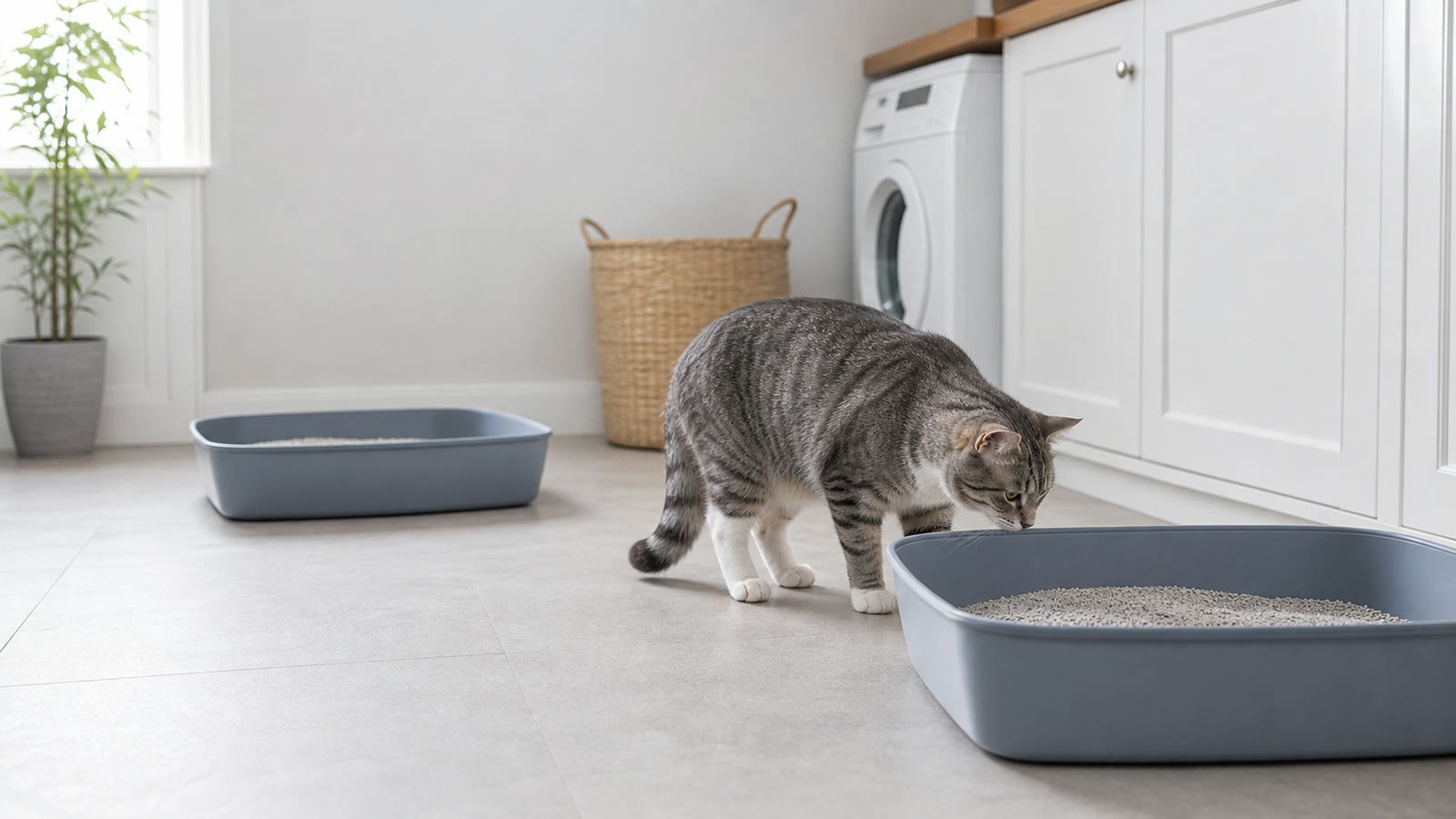
When a cat stops using the litter box, it is communicating that something about health, access, safety or the box itself has changed. It is not revenge. Punishment increases stress and can make the problem more difficult to solve.
This guide explains why a cat is not using the litter box, which symptoms require urgent veterinary care and how to audit the home systematically.
Why is my cat not using the litter box?
Common causes include urinary or digestive illness, pain entering the tray, an unclean or disliked box, an unsafe location, conflict with another pet and stress. A sudden change should be assessed by a veterinarian first. Straining or inability to urinate is an emergency.
First decide: urine, stool or both?
Record what happened, where, posture, frequency and approximate amount. Urine on vertical surfaces with a standing tail may be marking, while a puddle on a horizontal surface may indicate elimination—but visual clues alone cannot rule out disease.
Do not delay veterinary care while experimenting with litter. Cats Protection recommends ruling out medical reasons first when a previously clean cat begins toileting in the home.
Emergency warning signs
- Repeatedly entering the tray but producing little or no urine
- Straining, crying or licking the genital area repeatedly
- Blood in urine, vomiting, weakness or a painful abdomen
- Collapse, severe lethargy or hiding with obvious distress
A urinary blockage can become life-threatening, particularly in male cats. Contact an emergency veterinarian immediately if the cat cannot pass urine.
Medical causes a veterinarian may investigate
Urinary inflammation, infection, stones, kidney disease, diabetes, constipation, diarrhoea, arthritis and cognitive change can affect litter-box use. Older cats may need lower sides and boxes closer to their resting areas even when they previously managed stairs.
The complete litter-box audit
1. Number
Provide one tray per cat plus one extra. Spread them across separate areas; a row of trays functions as one location.
2. Size
The cat should be able to enter, turn and dig without pressing against every side. Many commercial boxes are too small for large adults.
3. Entry
Kittens, seniors and cats with pain may need a low entrance. High-sided boxes can become inaccessible.
4. Litter
Many cats prefer a fine, unscented, sand-like substrate. Introduce changes gradually and offer a choice rather than replacing every tray at once.
5. Depth
Around 3 cm is a useful starting point, adjusted to individual preference.
6. Cleanliness
Scoop at least twice daily and wash the entire box regularly using mild cat-safe methods without strong fragrance.
7. Location
Choose quiet, accessible places away from food, water, noisy appliances and routes another animal can block.
Multi-cat conflict can be subtle
A cat does not need to be attacked to feel unsafe. Staring, following, waiting in a corridor or occupying the route to a tray may be enough. Provide multiple routes and distribute all resources. A covered box with one entrance can become a trap for a worried cat.
How to clean accidents
- Blot urine or remove stool promptly.
- Use a cleaner intended to remove pet-odour residue and suitable for the surface.
- Follow dilution and safety instructions, then allow the area to dry.
- Avoid ammonia-smelling products and never mix chemicals.
- Temporarily restrict access only if doing so does not increase stress.
Cleaning prevents odour cues but does not solve the medical or environmental reason.
What not to do
- Never shout, rub the cat’s nose in waste or carry it to the tray as punishment.
- Do not abruptly change every box, location and litter simultaneously.
- Do not rely on attractants while ignoring pain or conflict.
- Do not remove indoor trays because the cat normally toilets outside.
Frequently asked questions
Why does my cat pee beside the litter box?
The cat may want to use that area but find entry, litter, cleanliness or the box itself uncomfortable. Medical causes still need exclusion.
Why does my cat poop in the box but pee elsewhere?
Some cats prefer separate trays, while urinary pain or a negative association may affect one behaviour. Provide choice and arrange a health check.
Should I move the box to the accident location?
It can be a useful temporary step if the place is quiet and safe, but investigate why the original setup failed.
Why has my senior cat stopped using it?
Arthritis, urgency, cognitive change and disease are common considerations. Offer low-entry nearby trays and consult a veterinarian.
Can stress cause litter-box problems?
Yes, but stress should not be assumed until medical causes have been evaluated.
How quickly should the problem improve?
That depends on the cause. Urgent symptoms need immediate care; behavioural recovery may require gradual environmental changes.
Difficulty passing urine is an emergency. Contact a veterinarian immediately rather than waiting for behavioural advice.