July 31, 2026
How to Stop a Cat Scratching Furniture Without Punishment
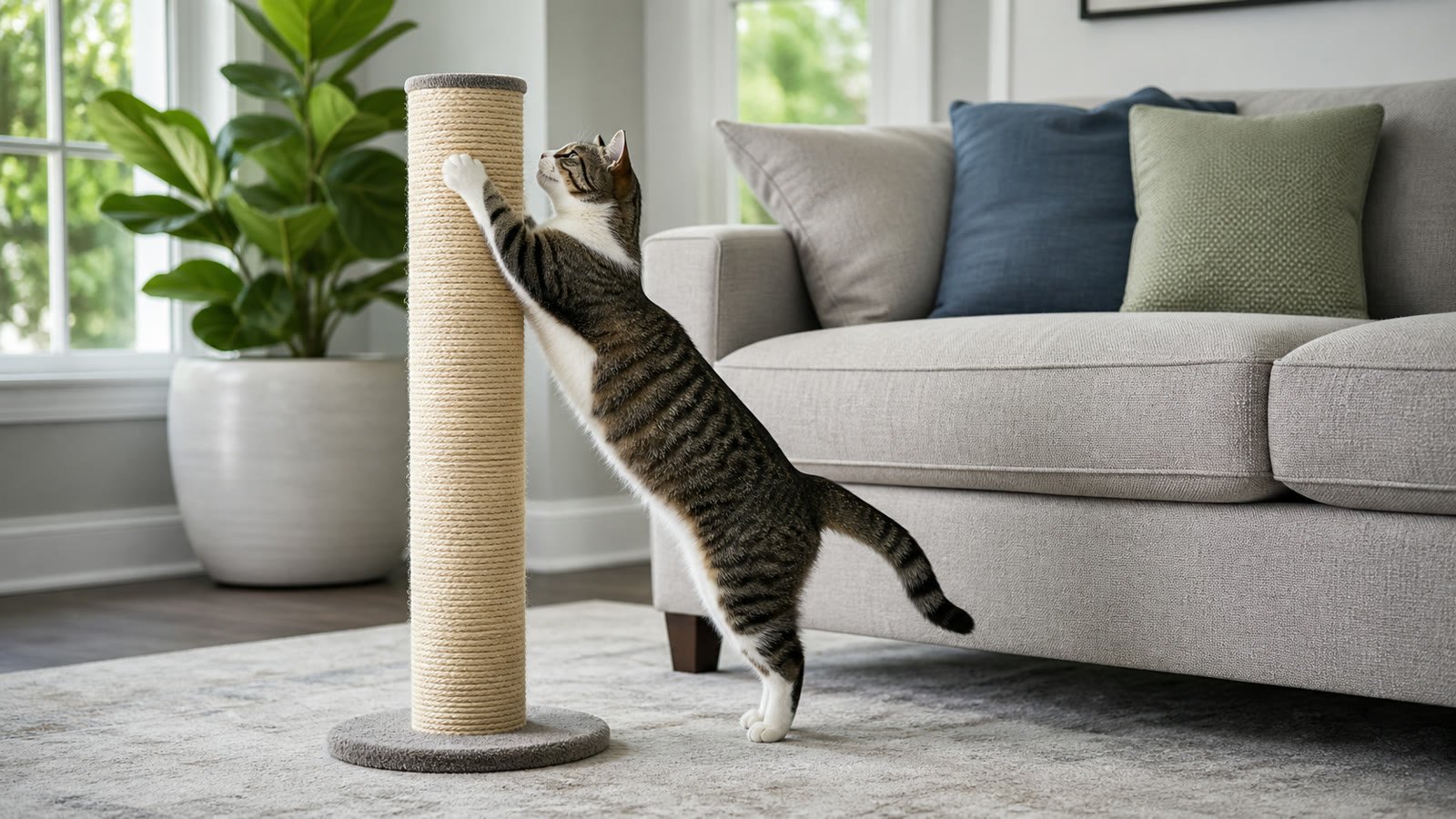
Scratching is not misbehaviour. Cats scratch to maintain their claws, stretch their bodies and leave visual and scent information. A sofa often wins because it is tall, stable, textured and positioned in an important social area—not because the cat is being spiteful.
This guide explains how to stop a cat scratching furniture by preserving the natural behaviour while redirecting it to a surface that works equally well for the cat.
How do you stop a cat scratching furniture?
Place a tall, stable scratching post directly beside the damaged area, match the cat’s preferred vertical or horizontal angle, protect the furniture temporarily and reward use of the new surface. Do not punish scratching or remove the cat’s ability to perform it.
Why cats scratch furniture
- Claw maintenance: scratching helps remove the outer claw sheath.
- Stretching: the action extends the back, shoulders and legs.
- Communication: marks and scent from the paws leave information.
- Location: sofas and doorframes sit in socially significant routes.
- Material: woven fabric and wood provide resistance.
- Learned attention: a strong human reaction can make a particular spot more interesting.
- Stress: increased marking near doors or windows may relate to other cats or change.
Cats Protection describes scratching as normal instinctive behaviour used for claw condition and communication. Effective management provides a better outlet instead of attempting to suppress the need.
Identify your cat’s scratching pattern
For three days, note the location, direction, material and timing. A cat scratching the sofa arm vertically needs a different replacement from one scratching a flat carpet. Measure the height of the marks: the replacement should allow a full body stretch.
Timing also matters. Cats frequently scratch after waking, during energetic play or when entering an important room. A post hidden in an unused corner may be excellent equipment in the wrong location.
Choose a scratching surface the cat can actually use
| Observed preference | Replacement to test |
|---|---|
| Upright sofa arm or doorframe | Tall vertical post with a heavy, non-wobbling base |
| Carpet or stair tread | Wide horizontal mat that cannot slide |
| Both directions | Angled scratcher plus vertical post |
| Rough wood outdoors | Stable coarse-textured indoor surface |
Material preferences vary. Sisal rope, sisal fabric, cardboard and wood feel different. Offer more than one rather than assuming the cat dislikes scratching posts generally.
A seven-step furniture protection plan
- Put the chosen scratcher immediately against the existing scratch site.
- Make sure it does not wobble, slide or tip.
- Temporarily cover the furniture with a smooth, securely fixed protective surface.
- Encourage investigation with play nearby or a small amount of catnip if the cat responds to it.
- Reward voluntary scratching calmly and immediately.
- Keep the post in place until the new habit is reliable.
- Move it only a few centimetres at a time if a different final location is necessary.
What not to do
- Do not shout, spray water or chase the cat.
- Do not place paws on the post and move them manually.
- Do not use essential oils or deterrents that may be unsafe.
- Do not declaw. It removes part of each toe and creates serious welfare concerns.
- Do not trim claws as the only solution; cats still need to scratch.
When scratching may indicate stress
New intense scratching around windows, doors or cat flaps may appear when another cat is visible outside or when household relationships change. Add visual privacy, separated resources, hiding areas and high places. If scratching accompanies spraying, hiding, fighting, appetite change or overgrooming, consult a veterinarian and qualified feline behaviourist.
How many scratching posts do cats need?
Provide multiple surfaces in meaningful locations: near sleeping areas, room entrances and current targets. In multi-cat homes, distribute them so one cat cannot block access. A single post beside all resources does not offer genuine choice.
Frequently asked questions
Why does my cat ignore the scratching post?
It may be too short, unstable, the wrong angle or material, or placed away from the cat’s preferred route.
Does trimming claws stop furniture scratching?
No. It may reduce sharpness temporarily, but scratching also serves stretching and communication.
Can I move a scratching post?
Yes, after the cat uses it reliably. Move it gradually so the established location cue is not lost.
Why does my cat scratch after waking?
Scratching provides a full-body stretch and is a common transition after rest.
Will more play stop scratching?
Play can support wellbeing but cannot replace scratching. The cat still needs suitable scratching surfaces.
When should I seek help?
Seek advice for a sudden major increase, stress signs, damaged claws, pain or conflict with other pets.
Scratching is an essential feline behaviour. The aim is safe redirection, not elimination.