July 31, 2026
How to Introduce Two Cats: A Calm, Gradual Plan
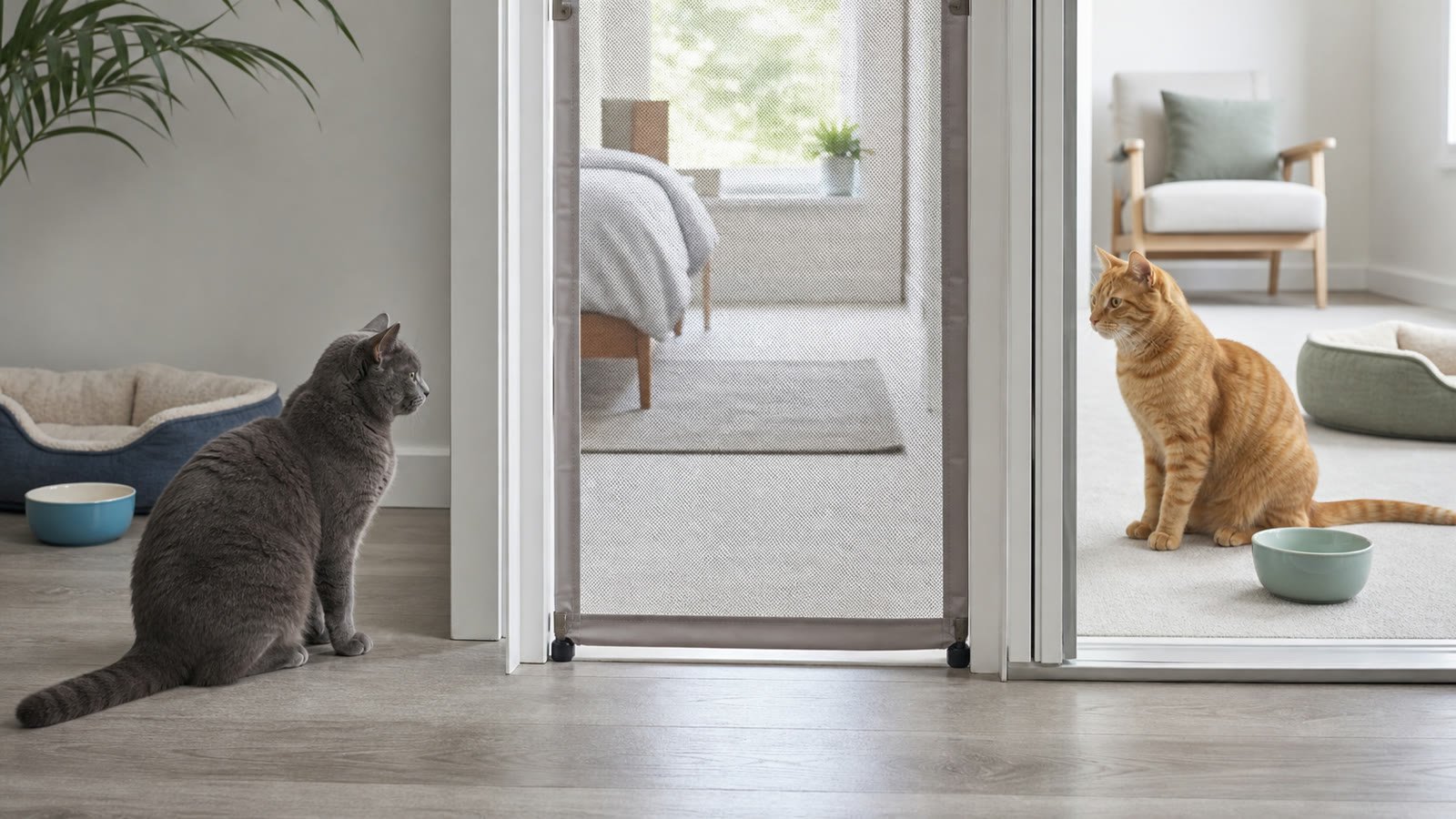
Introducing two cats is not a single meeting. It is a sequence: separate territories, scent exchange, protected visual contact and carefully managed time together. Moving slowly at the beginning usually saves time later.
This guide explains how to introduce two cats, how long each stage can take and how to distinguish tension from genuine progress.
How to introduce two cats: six stages
- Prepare a sanctuary room for the newcomer.
- Let both cats settle without seeing each other.
- Exchange scent using cloths and bedding.
- Build positive associations on opposite sides of a closed door.
- Allow visual contact through a secure barrier.
- Begin short supervised sessions with escape routes available.
Before the new cat arrives
Create separate resources: food, water, beds, hiding places, scratching areas and litter boxes. Use at least one litter box per cat plus one extra, spread across the home. The newcomer needs a quiet room the resident cat cannot enter.
Consider personality, age, health and previous experience. A kitten is not automatically welcomed by an adult, and two friendly cats do not necessarily want to share every resource.
Stage 1: let the newcomer settle
Keep the cats fully separate. Allow the new cat to eat, toilet, play and rest normally in the sanctuary room. Maintain the resident cat’s familiar routine. Do not carry either cat to the closed door or force investigation.
Stage 2: scent swapping
Gently rub a clean cloth around one cat’s cheeks, then place it in the other cat’s space where it can be approached or ignored. Swap bedding and, when both are calm, let each explore the other’s area separately.
Cats Protection recommends a sanctuary room, scent swapping and visual interaction as distinct stages. Move forward only when scent no longer produces a strong negative response.
Stage 3: positive closed-door sessions
Offer meals, play or rewards on opposite sides of the door at a comfortable distance. If either cat stops eating, stares at the door, growls or retreats, increase distance. The aim is calm awareness, not proximity at any cost.
Stage 4: protected visual contact
Use a secure glass or mesh barrier that neither cat can climb over or push through. Keep the first sessions brief. Both cats need places to retreat and elevated options. Cover part of the barrier if full visibility is too intense.
Stage 5: supervised time together
Open access in a large room with multiple exits, after calm barrier sessions. Use parallel play or scattered rewards to reduce pressure. Do not hold the cats, place them nose to nose or let one corner the other. End while both remain calm.
Signs of progress and warning signs
| Progress | Slow down |
|---|---|
| Eating, grooming or playing within sight | Fixed staring, stalking or blocking routes |
| Brief glance followed by disengagement | Persistent growling, swatting or chasing |
| Choosing distance without panic | Hiding, appetite loss or toileting change |
A brief hiss communicates a boundary and does not necessarily mean failure. Repeated pursuit, fights or chronic stress require separation and qualified behavioural help.
Frequently asked questions
How long does it take cats to accept each other?
It can take days, weeks or months. Progress depends on individual behaviour, not a fixed timetable.
Should I let cats fight it out?
No. Fighting can cause injury and lasting fear. Separate safely without putting hands between fighting cats.
Can cats share food and litter boxes?
Provide separate resources even when they occasionally share. Choice reduces competition and blocking.
What if my resident cat stops eating?
Separate the cats, restore safety and contact a veterinarian promptly. Appetite loss in cats should not be ignored.
Will they eventually become friends?
Some bond closely; others coexist by keeping distance. Peaceful, low-stress sharing is a successful outcome even without cuddling.
Consult a veterinarian or qualified feline behaviourist for injury, persistent aggression, appetite loss or ongoing stress.