July 31, 2026
Are Cat Window Hammocks Safe? Installation & Placement Guide
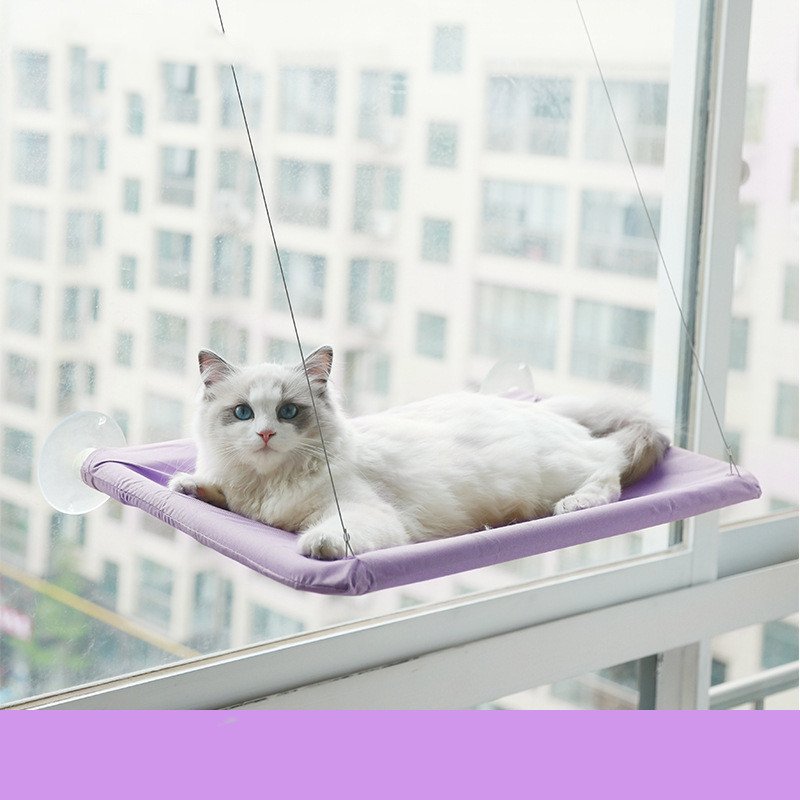
A window hammock can give an indoor cat a raised place to rest, watch movement outside and use vertical space without taking up floor area. Its safety, however, depends on the cat, the glass, the installation and regular checks—not simply on pressing suction cups against a window once.
This guide answers are cat window hammocks safe, explains how to install a suction-cup perch, where to place it, how to introduce it and when a floor-standing or wall-mounted alternative is more appropriate.
Cat window hammock safety: quick checklist
- Confirm the product’s stated weight limit and leave a sensible safety margin.
- Use only smooth, intact, clean and dry glass.
- Inspect the frame, fabric, cables and suction cups before installation.
- Test the empty hammock firmly before allowing access.
- Position it where the cat can climb up and down without a dangerous leap.
- Check every attachment regularly and remove the hammock if anything shifts.
Why do cats like window hammocks?
Many cats seek elevated resting places because height offers a view of the room and some distance from activity on the floor. Cats Protection explains that access to high areas lets cats observe family life while creating personal space. A window adds changing visual interest such as people, leaves and birds.
Preference is individual. A confident climber may investigate immediately; a cautious, older or less mobile cat may prefer a lower, stable platform. A hammock should expand the cat’s choices, not replace all existing beds and hiding places.
Are suction-cup cat hammocks safe?
They can be safe when the product suits the cat’s weight, every component is intact and the cups maintain a secure seal on suitable glass. They are not maintenance-free. Dust, grease, condensation, textured glass, ageing material and temperature changes can weaken suction.
Do not guess a weight rating that the manufacturer has not supplied. Weigh the cat, check the exact product instructions and avoid allowing two cats to share unless their combined weight remains comfortably within the stated limit. If no reliable limit or installation guidance is available, choose a support method with clearer specifications.
How to install a cat window hammock
- Choose suitable glass. It should be smooth, intact and away from cracks, loose panes or damaged seals.
- Clean both surfaces. Remove dust and grease from the glass and suction cups, then follow the supplied preparation instructions.
- Assemble the structure fully. Check that the fabric, plastic frame and steel support wires are correctly seated.
- Press each cup individually. Expel trapped air and confirm the full edge is sealed.
- Test it empty. Apply controlled downward pressure from several directions. Any movement means it must be reinstalled.
- Observe the first uses. Stay nearby as the cat climbs on, turns and gets down.
Always follow the instructions supplied with the exact model over generic internet tricks. Do not glue suction cups to glass or alter safety components.
Where should a cat window perch go?
Choose a quiet window with a stable approach. A nearby chair, cat tree or shelf can act as an intermediate step. Keep the perch clear of blind cords, hot radiators, opening mechanisms, fragile objects and cooking areas.
Do not install it where a fall could reach sharp furniture, stairs or a hard obstacle. The window itself must remain secure: screens are not reliable fall prevention unless specifically designed and installed for that purpose.
Choosing height for kittens, adults and senior cats
- Kittens: use a low position, supervise closely and prevent chewing of cables or cups.
- Healthy adults: provide an easy route rather than expecting a long vertical jump.
- Senior cats: use low, wide steps and watch for stiffness or hesitation. Cats Protection notes that older cats may still want high places while finding climbing more difficult.
- Cats with mobility or vision problems: ask a veterinarian whether an elevated suction-mounted bed is appropriate.
How to help a cat use a new hammock
- Let the cat inspect it before installation.
- Install it low and near a familiar route.
- Place familiar bedding or a few treats on the surface.
- Reward voluntary investigation without lifting or forcing the cat onto it.
- Keep another comfortable bed available.
Some cats need days or weeks. If it remains unused, reassess location, stability, sunlight and surface texture instead of repeatedly placing the cat on it.
Maintenance and warning signs
Before use, check for lifting cup edges, stretched fabric, bent supports, frayed wires, loose joints and condensation. Clean the fabric according to its instructions and reinstall only when every part and the glass are fully dry.
Remove the hammock after any slip or impact. Replace cracked, hardened or misshapen suction cups rather than waiting for failure. Re-test after cleaning, moving it or a major temperature change.
Window hammock vs cat tree vs wall shelf
| Option | Best feature | Main consideration |
|---|---|---|
| Suction window hammock | Uses glass and no floor space | Requires compatible glass and repeated seal checks |
| Cat tree | Multiple levels and scratching areas | Needs floor space and a stable base |
| Wall shelf | Creates a permanent climbing route | Requires secure installation into the correct structure |
| Window-sill perch | May avoid suction cups | Needs a suitable, strong sill |
Frequently asked questions
How often should suction cups be checked?
Check them before every use and perform a closer inspection regularly. Reinstall immediately if an edge lifts, the frame changes angle or a cup moves.
Can two cats share a window hammock?
Only when the exact product explicitly permits their combined weight with adequate margin and both can enter and exit without conflict. Separate perches are usually the clearer option.
Will suction cups work on textured glass?
Usually not reliably, because texture prevents a continuous seal. Follow the product instructions and use a different mounting style when the surface is unsuitable.
Can a hammock go on an opening window?
A fixed pane is simpler. A perch must never interfere with locks, hinges or safe ventilation, and an open window requires appropriate cat-safe protection.
Why did my cat stop using it?
Check stability, temperature, noise and access first. A sudden broader change in jumping, sleeping or movement can indicate discomfort and deserves veterinary advice.
Test the installation before every use
Clean and dry the mounting surface, follow the manufacturer’s installation method and apply gradual pressure before allowing access. Position a stable step nearby for cats with limited mobility. Recheck every attachment regularly and remove the hammock immediately if the frame, fabric or mounting points show wear.
This guide provides general information. Product instructions and an individual cat’s mobility and behaviour take priority.