July 29, 2026
Dog Eating Too Fast? 9 Safe Ways to Slow Mealtimes
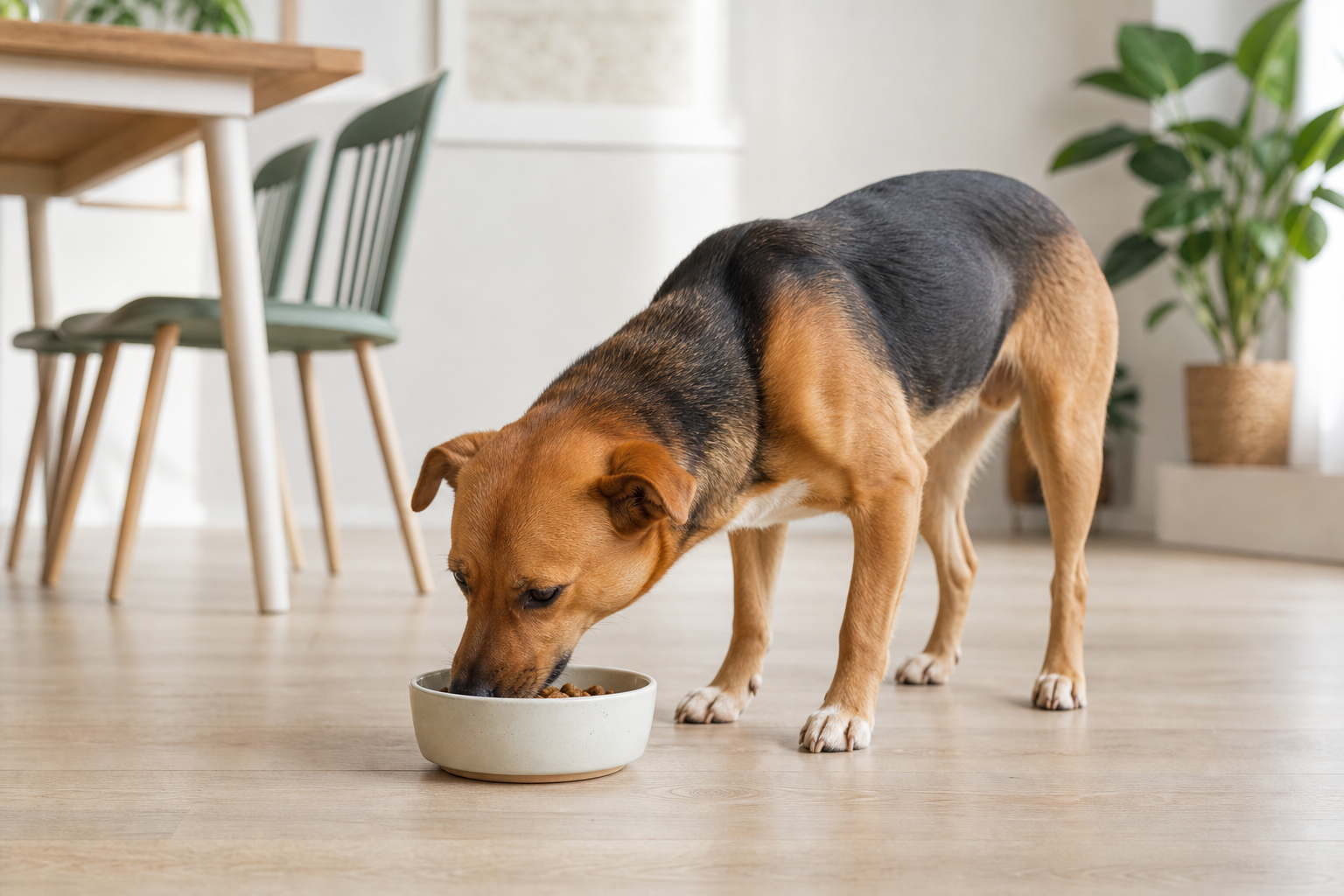
Some dogs finish a bowl in seconds, barely pausing between mouthfuls. If that sounds familiar, the useful question is not simply how to make your dog eat slowly. It is why the behaviour is happening and which safe, practical change suits your dog.
This guide explains how to slow down a dog eating too fast, when rapid eating needs veterinary attention, how slow feeders and puzzle feeders differ and how to introduce a food-dispensing toy without creating frustration.
Why does my dog eat so fast?
For many dogs, enthusiasm and habit are enough to explain a fast meal. Puppies may have learned to compete with littermates, multi-dog households can create perceived competition and highly food-motivated dogs may simply have practised eating quickly for years.
Environment also matters. Irregular feeding, another pet approaching the bowl or a feeding place with lots of activity can make a dog feel hurried. Occasionally, a sudden increase in appetite can be associated with medication, parasites or a medical condition. Contact your veterinarian when fast eating begins suddenly or appears alongside weight change, unusual thirst, diarrhoea, repeated vomiting or other concerning signs.
Is eating too fast dangerous for dogs?
Rapid eating can lead a dog to swallow more air and may contribute to coughing, gagging, regurgitation or vomiting after meals. The American Kennel Club’s guidance on fast eating also notes an association with the risk of bloat. A slow feeder can change the pace of a meal, but no bowl or toy can guarantee prevention of gastric dilatation-volvulus (GDV).
A swollen or painful abdomen, repeated unproductive retching, restlessness, drooling, weakness or collapse can indicate an emergency. Seek urgent veterinary care rather than trying to manage those symptoms with a feeding accessory.
9 ways to slow down a dog who eats too fast
1. Rule out a medical cause
Start with veterinary advice if the behaviour is new, extreme or accompanied by illness or weight change. A feeding tool should not mask an underlying problem.
2. Feed dogs separately
Give each dog a quiet space where another animal cannot approach the bowl. Removing competition can reduce urgency and also helps prevent food-related conflict.
3. Divide the daily ration
Ask your veterinarian whether the same daily amount can be divided into several smaller meals. Measure the full daily ration first so that more frequent feeding does not accidentally increase calories.
4. Try a slow-feeder bowl
Ridges and channels make food less accessible in one mouthful. Choose a design appropriate for your dog’s muzzle and food type, and make sure it can be cleaned thoroughly.
5. Use a puzzle feeder
A food-dispensing puzzle asks the dog to nudge, roll or manipulate an object to release individual pieces. Veterinary guidance from NC State describes interactive feeders as a way to add mental stimulation while dispensing food more slowly.
6. Turn part of the meal into training
Use measured pieces of the normal ration to reward simple cues or calm behaviour. Short sessions slow delivery and create useful interaction without adding uncounted treats.
7. Scatter feed in a safe area
For suitable dry food, spreading pieces across a clean floor, lawn or snuffle mat encourages sniffing and foraging. Avoid areas treated with chemicals and supervise dogs that pick up non-food objects.
8. Keep the feeding environment calm
Use a predictable location away from children, doorways and household traffic. Do not repeatedly remove the bowl to force slower eating; that can create anxiety around food.
9. Monitor the result
Time a normal meal, introduce one change and observe again. The goal is comfortable, controlled eating—not making access so difficult that the dog becomes frantic or gives up.
Slow feeder bowl vs puzzle feeder
| Feature | Slow-feeder bowl | Interactive puzzle feeder |
|---|---|---|
| How food is accessed | Around fixed ridges or channels | Released by rolling, nudging or solving |
| Movement | Usually stays in one place | Often moves around the floor |
| Difficulty | Generally straightforward | Varies with openings and food size |
| Enrichment | Adds some foraging challenge | Adds movement and problem-solving |
| Best for | Dogs needing a familiar bowl format | Food-motivated pets who enjoy interactive play |
There is no universal winner. Flat-faced dogs may need a shallow design, senior dogs may prefer something stable and a powerful chewer should never be left with a plastic food toy unsupervised. Some households rotate between methods to keep the challenge appropriate.
How to introduce an interactive feeder
- Begin when your pet is calm. Do not wait until an extremely hungry dog is already frustrated.
- Use familiar food. Add a small amount of dry kibble or treats that fit easily through the opening.
- Make the first success easy. Move the toy once so food appears and allow the pet to investigate.
- Supervise closely. Redirect chewing and remove the toy if your pet attempts to break it apart.
- Keep the first session short. Finish after a few successful releases instead of waiting for frustration.
- Increase gradually. Add more of the measured ration only when your pet understands how the dispenser works.
How much food should go in a puzzle feeder?
A puzzle feeder changes delivery, not nutritional requirements. Measure food from your pet’s usual daily allowance. Treats and training rewards still count towards total calories, and the appropriate amount depends on size, age, health and diet.
Use pieces small enough to dispense freely. Food trapped inside can encourage biting or cause the pet to abandon the toy. Unless the manufacturer explicitly approves wet food, use dry pieces and clean away crumbs after every session.
Safety checklist for food-dispensing toys
- Choose a size that cannot be swallowed or lodged in the mouth.
- Use only food pieces compatible with the dispensing opening.
- Supervise every session, particularly during the introduction.
- Remove the toy if your pet starts chewing the body or wheels.
- Inspect for cracks, sharp edges and loose parts before each use.
- Wash and dry it fully to prevent food residue building up.
- Separate pets if food creates guarding or competition.
- Stop if the task produces persistent frustration or fear.
Can cats use slow feeders and puzzle toys?
Many cats enjoy batting or nudging a dispenser to release dry food. Start with an easy setup and a quiet area, since cats may walk away from a challenge that feels unfamiliar. Monitor the total ration just as you would for a dog and avoid assuming that extra play justifies extra calories.
Frequently asked questions
Do slow feeders actually work?
They can increase the time needed to access food, although effectiveness varies by design and by how quickly an individual dog learns it. Monitor the actual eating time and choose another approach if the feeder no longer changes the pace.
Can a slow feeder prevent bloat?
No product can promise to prevent bloat or GDV. Slower eating may reduce gulping and swallowed air, but breed, anatomy, meal size and other factors also matter. Discuss individual risk with your veterinarian.
Why does my dog vomit after eating quickly?
Rapid eating can contribute to regurgitation or vomiting, but repeated episodes require veterinary assessment. Record when it happens and whether the food appears undigested to help your veterinarian evaluate the problem.
Are puzzle feeders good for puppies?
A simple, appropriately sized puzzle can provide supervised enrichment. Use the puppy’s normal ration, begin at an easy level and remove any product the puppy tries to chew apart.
Should every meal use a slow feeder?
Not necessarily. Choose a routine that keeps eating comfortable and allows you to clean and inspect the equipment. Rotating a bowl, training, scatter feeding and a puzzle can provide variety.
How long should it take a dog to eat?
There is no universal number of minutes that defines healthy eating. Bowl shape, food texture, meal size, age and the individual dog all affect timing. The useful comparison is your dog’s own pattern: can they chew and swallow comfortably, pause naturally and finish without coughing, gagging, regurgitating or becoming frantic?
Measure a few ordinary meals before changing anything. After introducing one strategy, record the time again and note behaviour during the meal and for the following hour. A modest improvement that keeps the dog relaxed is more valuable than turning every meal into a difficult challenge.
A seven-day plan for slowing down dog eating
- Day 1: observe. Time a normal meal and note gulping, coughing, vomiting, guarding and the presence of other pets.
- Day 2: create calm. Feed in a quiet place where people and animals cannot approach.
- Day 3: measure carefully. Confirm the full daily ration and divide it only when that suits the dog’s veterinary and nutritional needs.
- Day 4: change delivery. Try one appropriate method, such as a slow bowl, supervised scatter feeding or part of the ration used in training.
- Day 5: reassess. Compare eating time and comfort with the original meal rather than assuming slower is automatically better.
- Day 6: check practicality. Make sure the method is safe, easy to clean and not creating frustration or guarding.
- Day 7: choose a routine. Keep the approach that works, rotate safe methods for variety or contact a veterinarian if concerning signs continue.
Change only one main factor at a time. If food type, portion, location and equipment all change together, it becomes difficult to understand what actually helped.
This guide provides general educational information and does not replace veterinary advice. Contact a veterinarian about persistent fast eating, vomiting, abdominal discomfort or sudden appetite changes.